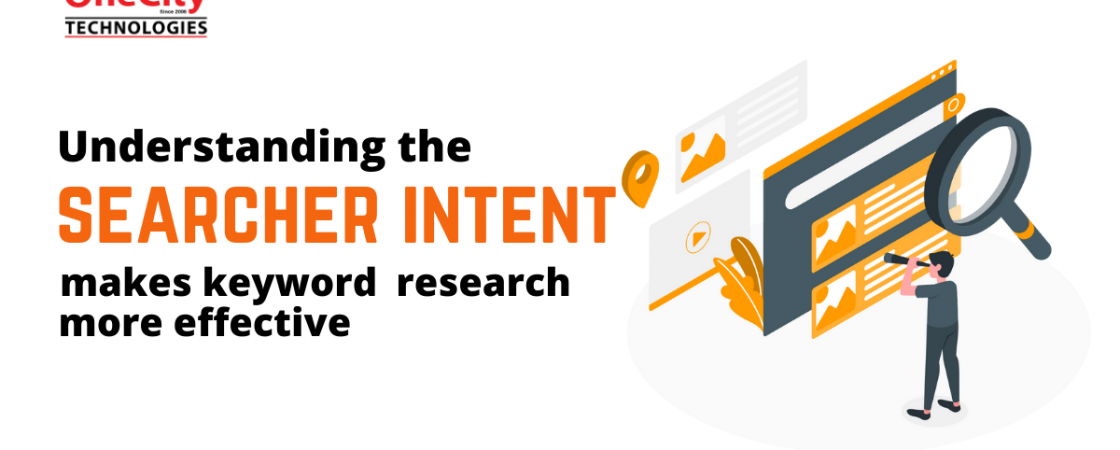
Keyword research without searcher intent analysis produces a list of words. Keyword research with searcher intent analysis produces a content strategy. The difference between the two is the difference between knowing that a thousand people per month search a particular phrase and understanding what those people are actually trying to accomplish , which is the information that determines what content you should create and how it should be structured.


I am L.K. Monu Borkala, founder of OneCity Technologies in Bangalore. Understanding searcher intent has been central to the content and SEO work we do for clients across Karnataka and India since 2006. Google’s ability to match pages to searcher intent has become considerably more sophisticated over the last five years, and ignoring intent in keyword strategy now carries a direct ranking penalty. This post explains what searcher intent means and how to apply it to keyword research effectively.
The Four Categories of Searcher Intent
SEO professionals typically categorise searcher intent into four types, each reflecting a different goal the searcher is trying to accomplish.
Informational intent covers searches where the person wants to learn something. “What is off-page SEO guide,” “how does Google rank websites,” “what is a backlink” , these are informational queries. The person is not ready to buy and is not comparing options. They want an explanation, a guide, or an answer. The content that satisfies informational intent is educational: blog posts, explainers, tutorials, and definitions.
Navigational intent covers searches where the person is trying to find a specific website or location. “OneCity Technologies Bangalore,” “JustDial login,” “HDFC Bank Koramangala branch” , these searches have a specific destination in mind. Navigational queries are typically dominated by the target itself, and the primary task for a business is to rank for its own branded and location terms.
Commercial investigation intent covers searches where the person is comparing options before making a decision. “Best SEO agency Bangalore,” “Ahrefs vs Semrush comparison,” “top digital marketing companies in Karnataka” , these searchers are evaluating alternatives. They are not yet ready to buy but are actively forming a shortlist. The content that serves this intent is comparative: reviews, comparisons, rankings, case studies, and detailed service descriptions that allow the searcher to evaluate options.
Transactional intent covers searches where the person is ready to act. “Hire SEO consultant Bangalore,” “buy running shoes online India,” “book digital marketing consultation” , these searches have immediate commercial intent. Service pages, product pages, and landing pages with clear calls to action are the appropriate content format.
Why Mismatching Intent and Content Hurts Rankings
Google has become very good at identifying when a page does not satisfy the intent behind a query. If a page targeting “how to choose an SEO agency in Bangalore” is structured as a sales page for an SEO agency rather than as an objective guide to the selection process, Google will learn , through engagement signals like bounce rate, time on page, and whether users return to search results , that the page is not satisfying what searchers want. Over time, it will rank lower despite having the target keyword.
The reverse is also true. A page written as an informational guide targeting “SEO agency Bangalore” , a query with clear transactional intent , will underperform because searchers arriving with intent to hire want to see service descriptions, credentials, and a clear path to contact, not an educational overview of what SEO agencies do.
For businesses in Bangalore, this intent mismatch is one of the most common causes of content that ranks initially and then drops, or content that generates traffic but produces no leads. The traffic arrives, finds content that does not match what the query promised, and leaves immediately.
How to Identify Intent for a Keyword
The most reliable method for diagnosing the intent behind a keyword is to look at what Google currently ranks on page one for that query. The format and angle of the top five results reflects Google’s current understanding of the dominant intent behind the search.
If page one for a query is dominated by long-form guides and explainer articles, the intent is informational. If it is dominated by product pages and category listings, the intent is transactional. If it is dominated by comparison articles and review posts, the intent is commercial investigation. The existing top rankings are Google’s revealed preference , follow the format rather than working against it.
People Also Ask boxes and the search query structure itself also signal intent. Questions starting with “how,” “what,” “why,” and “when” typically carry informational intent. Queries including “best,” “top,” “vs,” or “compare” typically carry commercial investigation intent. Queries including “hire,” “buy,” “book,” “contact,” “near me,” or a specific location typically carry transactional intent.
Applying Intent Analysis to a Keyword Research Project
When building a keyword list for a Bangalore business, sorting keywords by intent type before assigning them to page types produces a cleaner content architecture. Informational keywords feed the blog or resource section. Commercial investigation keywords inform comparison pages, service overviews, and case study content. Transactional keywords map directly to service pages, landing pages, and product pages.
This intent-to-page-type mapping prevents keyword cannibalisation , multiple pages competing for the same term , and gaps , important terms with no page targeting them. A business in Bangalore with ten service areas, fifteen blog posts, and five case studies should be able to map every target keyword to exactly one page with matching intent.
Intent Shifts Over Time
Search intent for a keyword is not fixed permanently. Google’s understanding of intent shifts as search behaviour changes. A query that was primarily informational two years ago may have shifted toward commercial investigation as the market around it matured. Periodic re-evaluation of intent for your most important target keywords , by checking what currently ranks rather than relying on historical assumptions , keeps your content strategy aligned with how Google is currently interpreting those queries.
At OneCity Technologies, keyword research and intent analysis is part of the SEO strategy work we do for businesses across Bangalore and India. If you want to discuss how intent-aware keyword research can improve your content performance, contact us at +91 99023 30233.
Expert insight from L.K. Monu Borkala: Long-tail keywords , phrases of four or more words , account for 70% of all search queries and convert at 2.5x the rate of head terms, yet most Bangalore businesses focus their SEO on short, highly competitive keywords they cannot realistically rank for within 12 months (Semrush Long-Tail Keyword Guide). Google’s 2024 Search On event confirmed that 15% of all searches every day are queries Google has never seen before , making intent analysis more valuable than volume alone. Ahrefs data shows that the #1 result for a keyword gets 39.8% of all clicks on average, but the gap between position 1 and position 3 in click-through rate is only 10 percentage points , making page-one visibility, not just position one, the realistic and profitable ranking target for most businesses (Ahrefs CTR Study).
Why Searcher Intent Is the Most Important Keyword Dimension
Search volume tells you how many people search a keyword. Keyword difficulty tells you how hard it is to rank. Searcher intent tells you why those people are searching , what they actually want to find, do, or know. Of the three dimensions, intent is the one that determines whether ranking for a keyword produces business value, because a page that matches search volume and beats the competition but mismatches intent will not convert , and will eventually lose its rankings as engagement signals reveal the mismatch.
At OneCity Technologies, intent analysis is the first step in every keyword prioritisation decision we make for clients across Bangalore and Karnataka. We have seen too many well-optimised pages fail to convert or rank because the content type, depth, or angle did not match what searchers in that query context actually wanted. This guide explains how to read intent signals, apply them to content decisions, and avoid the most common intent-mismatch mistakes in Indian SEO.
The Four Intent Categories in Practice
Informational Intent: The Research Phase
Informational queries are searches where the user wants to learn something. They are not yet looking for a vendor, comparing prices, or ready to purchase. “What is technical SEO,” “how does Google rank websites,” “what is the difference between on-page and off-page SEO” , these are informational. The user wants an explanation, a definition, or a how-to.
Content that serves informational intent: comprehensive guides, how-to articles, explainer posts, listicles, educational videos. The conversion goal is not a direct sale , it is building brand familiarity and email list growth. Do not put your primary call-to-action (“hire us now,” “get a quote”) as the dominant element on an informational page. Offer a content upgrade , a related checklist, a free audit, a relevant guide , that extends the educational relationship.
For Bangalore businesses, informational content serves a specific strategic purpose: it positions you as the knowledgeable authority in your field before the prospect enters the buying stage. A business owner in Koramangala who has read three of your informational posts about SEO before they are ready to hire an agency will think of your brand first when that decision point arrives.
Navigational Intent: The Brand Lookup
Navigational queries are searches where the user is trying to reach a specific website or brand. “OneCity Technologies Bangalore,” “Google Analytics login,” “Ahrefs trial” , these users know where they want to go and are using Google as a navigation aid rather than a discovery tool. For your own brand terms, you should always rank first. If you do not, there is a brand authority problem worth investigating.
Navigational intent for competitor terms is worth monitoring: if users search “OneCity Technologies alternative” or “compare OneCity vs [competitor],” these are high-value queries from prospects who are aware of your brand and evaluating alternatives. Ranking for comparative navigational queries , by publishing comparison content that fairly addresses these searches , captures decision-stage prospects at a critical moment.
Commercial Investigation Intent: The Evaluation Phase
Commercial investigation queries are searches from people who are researching before a purchase decision. They are comparing options, understanding what they get for their money, and building confidence in their eventual choice. “Best SEO agency Bangalore,” “SEO vs Google Ads management for small business India,” “how much does web design cost in Bangalore” , these queries indicate a prospect who is close to a decision but not quite there.
Content that serves commercial investigation intent: comparison articles, buying guides, pricing pages, case studies, review and testimonial aggregation pages. The conversion goal is a consultation booking, a form submission, or at minimum a newsletter subscription that keeps the prospect in your nurture funnel until the decision is made.
Commercial investigation content is the highest-ROI content type for most Bangalore service businesses because it targets the segment of the audience with purchase intent but without full commitment , the group that is most convertible with the right content.
Transactional Intent: The Purchase Moment
Transactional queries indicate readiness to act: “hire SEO agency Bangalore,” “web design company Koramangala contact,” “book digital marketing consultation.” The user has decided they want a specific service and is taking the next step.
Content that serves transactional intent: service pages with clear pricing information (or pricing ranges), prominent calls to action, social proof at the decision point (testimonials, client logos, certifications), and frictionless contact mechanisms. Everything on a transactional page should reduce the psychological distance between the visitor's current position and taking the desired action.
The most common mistake on transactional pages: too much information. A prospect searching “hire SEO agency Bangalore” does not want to read a 3,000-word educational guide about SEO. They want to quickly confirm you are credible, understand what working with you looks like, see what it costs (or how to find out), and contact you. Service pages should be thorough enough to build confidence and concise enough to not impede conversion.
How to Read Intent from Search Results
The fastest and most reliable way to determine searcher intent for any keyword is to examine the first page of Google results. Google's algorithm has analysed millions of interactions with that query and has determined what content type, depth, and angle most satisfies the searcher. The SERP is Google showing you what intent it has classified the query as.
Content Type Signals
- First page dominated by blog posts and guides: informational intent
- First page dominated by service/product pages: transactional or commercial investigation intent
- First page includes a local pack (map results): local transactional intent
- First page includes video results: the searcher wants to see something demonstrated, not just read about it
- First page includes a featured snippet with a direct answer: informational intent where Google believes a single-paragraph answer satisfies the query
Content Format Signals
If the top results are all listicles (“10 best SEO tools”), a listicle format is most likely to rank. If top results are all step-by-step tutorials, a numbered how-to format performs best. If top results are all comparison tables, the user wants a structured side-by-side evaluation. Producing content in a different format than what Google is serving , however high-quality the content , reduces ranking probability because the format mismatch signals intent misalignment.
Content Depth Signals
The average word count of top-ranking pages indicates how much depth the query demands. For a question like “what is a canonical tag,” 500–800 words from a highly authoritative site may rank. For “how to fix canonical tag issues on an e-commerce site,” 2,000–3,000 words with technical detail and examples may be the minimum for competitive ranking. Check the top 3–5 results and estimate their depth before deciding how long your competing page needs to be.
Intent Mismatch: The Most Expensive SEO Mistake
Intent mismatch occurs when you publish a page targeting a keyword but serve the wrong intent , putting a service page on an informational keyword, or a blog post on a transactional keyword. The consequences:
- The page does not rank because Google's content type filter excludes it from serving for that query, regardless of its on-page optimisation
- If the page does rank, users quickly leave (high bounce rate, low engagement) because the content does not match what they were looking for , producing negative engagement signals that suppress rankings further
- The mismatched page occupies URL real estate that could serve an intent-matched page , every URL should serve a purpose in your keyword-to-page mapping
Diagnosing intent mismatch on existing content: in Google Search Console, find pages receiving impressions for queries where the page type does not match the dominant SERP content type for those queries. A service page appearing in impressions for primarily informational queries is likely intent-mismatched. Either create a separate informational page for those queries or restructure the service page to serve both intents if they are genuinely compatible.
Intent Changes Over Time
Search intent for specific keywords evolves as the market matures. “Artificial intelligence marketing” five years ago was almost entirely informational , people wanted to understand what it was. In 2026, the same query has significant commercial investigation intent , people are evaluating AI marketing tools and services. A page targeting this keyword that was written in 2020 as a definition post now mismatches the current intent and is losing ranking to vendor comparison pages.
Review the SERP for your target keywords annually. If the dominant content type has shifted , from informational to commercial, or from listicle to how-to , your page may need restructuring to remain competitive. This is one reason content maintenance is a continuous activity rather than a one-time optimisation exercise.
For intent-based keyword research and content strategy for your Bangalore business, contact OneCity Technologies at +91 99023 30233. Author: L.K. Monu Borkala, Founder & CEO, OneCity Technologies, 20 years in business.
Applying Intent Analysis Across Your Existing Content
Intent analysis is most valuable when applied systematically to an existing content library, not just to new keyword targets. For Bangalore businesses with 20+ published pages, an intent audit of existing content frequently reveals the root cause of pages that are not ranking despite reasonable optimisation.
The intent audit process: Export all indexed pages from Google Search Console. For each page, identify the primary keyword it targets (from GSC impression data) and check the current SERP for that keyword. Compare the dominant content type on the SERP to your page type. Flag any mismatch. For flagged pages, decide: restructure to match current intent (if the topic is worth pursuing), create a new intent-matched page and redirect the old one, or noindex the page if the topic no longer warrants investment.
A systematic intent audit on a 50-page site typically takes 4–6 hours and produces a prioritised list of content improvements with predictable ranking impact. OneCity runs this audit for new SEO clients as part of the onboarding process , it consistently reveals 8–15 pages with fixable intent mismatches that account for a disproportionate share of the site's ranking underperformance. Contact us at +91 99023 30233 to discuss an intent audit for your site.
Frequently Asked Questions
How do I find the intent behind a keyword?
Search the keyword in Google from an incognito window (to remove personalisation) and examine the first page results. The dominant content type (blog posts, service pages, videos, local results) tells you Google's intent classification. For a more systematic approach, Ahrefs labels keywords with intent categories (Informational, Navigational, Commercial, Transactional) in their Keywords Explorer , a useful starting point, though manual SERP review is always more reliable for high-priority targets.
Can one page target multiple intent types?
Yes, for keywords where intent is mixed , where the SERP shows both informational and commercial results. A page about “SEO cost in Bangalore” can serve both commercial investigation (providing pricing ranges and what affects cost) and transactional intent (providing a clear path to get a quote). The page structure should serve the dominant intent first (pricing information) and support the secondary intent second (contact mechanism). Trying to force a single page to serve three or four distinctly different intents typically results in a page that serves none of them well.
Does voice search change intent analysis?
Voice searches tend to be more conversational and more locally focused than typed searches. “OK Google, find me an SEO agency near Koramangala” has clear transactional local intent. “Hey Siri, how long does SEO take” has informational intent. The intent classification is the same as for typed searches , the difference is in the query phrasing, which is more natural language and more question-format for voice. FAQ-structured content that uses natural question phrasing is best positioned to capture voice search intent.
What happens if I target an informational keyword with a service page?
In most cases, the service page will not rank for the informational keyword because Google's intent filter excludes commercial pages from informational SERPs. If it does rank , usually only if the keyword has low competition , the bounce rate will be high because informational searchers encountering a sales page leave immediately. Create a separate informational page (a blog post or guide) for informational keywords and link from that page to your service page for visitors who are ready to take the next step.
Frequently Asked Questions
What are the four types of searcher intent?
Informational, navigational, commercial investigation, and transactional intent, each reflecting a different goal the searcher is trying to accomplish.
What's the difference between informational and commercial investigation intent?
Informational intent means the searcher wants to learn something and isn't ready to buy, while commercial investigation intent means the searcher is actively comparing options and forming a shortlist before a purchase decision.
Does ignoring searcher intent actually hurt rankings?
Yes. Google's ability to match pages to searcher intent has become considerably more sophisticated in recent years, and content that ignores intent now carries a direct ranking penalty.