
Content marketing grows website traffic slowly, then suddenly, and the case below shows both phases. An HR consultancy in Bangalore came to us in mid-2024. Their website had been live for four years and was getting around 180 visitors a month from Google. They had done some social media, run Google Ads campaignss, and published about 15 blog posts over the years. None of those posts had been written with keyword research. None had internal links. The site had no clear topical focus from Google’s perspective.

Twelve months later, after consistent content marketing with proper SEO, they were at 2,400 visitors a month from organic search alone. Website enquiries had gone from roughly one per week to six or seven.
This guide explains what made the difference , and how to apply the same approach to your business.
What Content Marketing Actually Means in 2026
It is not posting on Instagram every day. It is not publishing a blog post whenever someone in the office has time to write something. It is not creating content for the sake of having content.
Content marketing is a planned system for producing material , blog posts, videos, guides, case studies, emails, WhatsApp broadcasts , that answers real questions your potential customers are asking, builds trust over time, and positions your business as the clear choice when they are ready to buy or hire.
The word “planned” is doing the most work in that sentence. Random content that does not connect to search demand or business goals generates activity but rarely generates customers.
Step 1: Find Out What Your Audience Is Actually Searching For
Start with Google Search Console if your site has been live more than six months. It shows the exact phrases people typed before clicking through to your website , real queries from real people who found you relevant, or who landed and quickly left because you did not have what they were looking for.
For research beyond your current traffic, Google Keyword Planner is free and shows search volume data for India with city and state filtering. Type in your core service area and examine related queries. Pay attention to intent: some queries are informational (“how to increase website traffic India”), others are commercial (“website traffic services Bangalore”), others transactional (“hire SEO company Bangalore”). Each type serves a different stage of the buyer journey and needs a different kind of page.
Build a list of 20 specific queries you want to rank for over the next six months. These become your content targets.
Step 2: Create Content That Answers Those Questions Completely
For each query on your list, create one piece of content that answers it more thoroughly than anything currently on Google’s first page. That means reading what is already ranking and identifying what those pages are missing , outdated information, lack of local context, surface-level treatment of a topic that actually requires depth.
Common gaps in Indian market content: no WhatsApp marketing angle, ignores regional language audiences, no mention of India-specific platforms or pricing, no real examples from Indian businesses. Fill those gaps. Write for the reader who has that question. Answer it in the opening paragraph, then expand with specifics, examples, and the follow-up questions a reader naturally has after reading the main answer.
Aim for 1,000 to 1,500 words for informational posts. For complex topics, more is appropriate if it serves the reader , not as padding but as genuine additional value.
Step 3: Apply SEO Structure to Every Piece
Good content without SEO structure is not visible to Google in the way you need it to be. These elements are non-negotiable on every blog post:
Title tag: Include the primary keyword. Keep it under 60 characters. Make it specific enough that a searcher immediately knows the page is relevant to their query.
Meta description: 120 to 155 characters. Describes the page accurately. Appears in Google results and directly affects click-through rate.
Heading structure: H2 and H3 tags organising the content clearly. Google uses heading structure both to understand page content and to extract featured snippets for AI Overviews.
Internal links: Every post should link to at least two other pages on your site , related posts or relevant service pages. This passes authority from established pages to new ones and keeps readers on your site longer.
Image alt text: Every image needs an alt attribute describing what it shows. Accessibility compliance and additional context for Google’s crawlers.
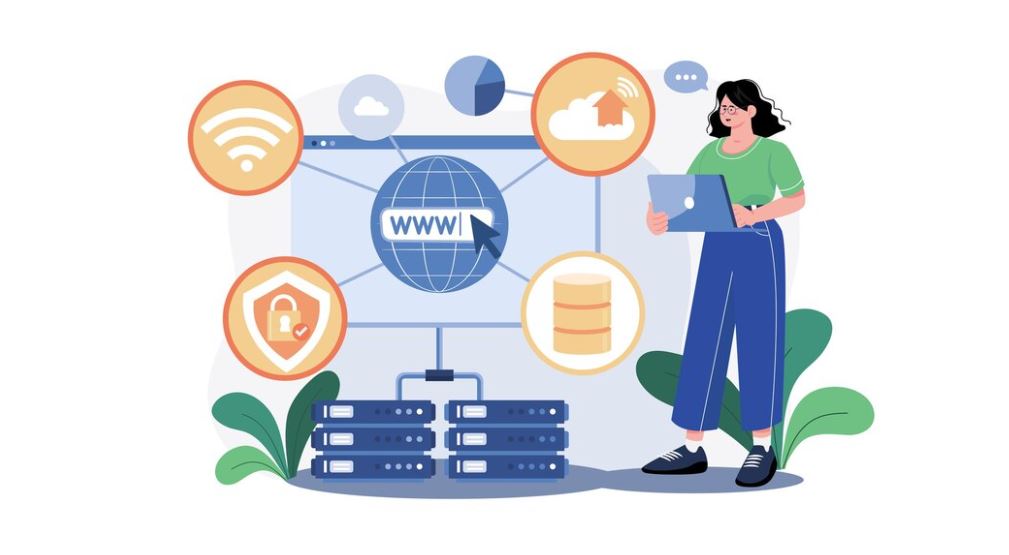
Page speed: A post that takes six seconds to load on a 4G connection loses most Indian mobile users before they read a word. Compress images, use a fast host, and check Core Web Vitals in Search Console regularly.
Step 4: Distribute Across the Right Channels for India
Publishing on your blog is step one, not the whole job. Distribution gets the initial traffic before organic ranking builds and expands the audience that eventually links to and shares your content.
WhatsApp broadcasts: If you have a customer list, a well-written summary with a link drives immediate traffic from people who already trust you. WhatsApp is where most Indian business relationships happen. Use it consistently.
LinkedIn: For B2B businesses , agencies, consultancies, software, professional services , LinkedIn organic reach remains significant in India. A short post summarising the key point of your article, with the link in the first comment, consistently outperforms generic content. Write from personal experience and specific knowledge, not from a company account.
Google Business Profile optimization posts: Many Bangalore businesses ignore this completely. GBP posts appear directly in Google Search and Maps for branded and local searches. A short content summary published as a GBP post reinforces local search presence at zero cost.
Email newsletter: A weekly or fortnightly email to subscribers summarising your new content keeps your brand in front of warm contacts. Useful, specific emails from known senders consistently achieve above-average open rates in India.
Step 5: Measure What Is Working and Do More of It
Set up Google Analytics 4 with conversion goals configured for your key actions , form submissions, phone clicks, WhatsApp button clicks, download completions. Once running, you can see which content is generating actual enquiries, not just which pieces attract traffic.
A post that gets 50 organic visitors a month and produces three enquiries is more valuable than a post getting 500 visitors with zero conversions. Optimise for the outcome, not the traffic number.
Review content performance every month. Which posts are growing in organic traffic? Which ones drove leads? Which had high bounce rates suggesting the content did not match what the searcher wanted? Use this data to decide what to write next and which old posts need updating or expanding.
Realistic Timelines for Organic Traffic Growth
Starting from a low base, a realistic progression for an Indian business looks like this:
Months 1 to 3: Content indexed, initial ranking positions established, minimal traffic increase. This is the normal lag between publishing and Google ranking new content. This is not a signal to stop.
Months 4 to 6: Posts start climbing into positions 10 to 30. Clicks begin increasing. Some posts reach page one for lower-competition phrases.
Months 7 to 12: Compounding becomes clearly visible. Earlier posts that have accumulated traffic signals start ranking higher. New posts rank faster because the site has built topical authority in its subject area.

Month 12 onwards: Consistent organic traffic from multiple pieces. Enquiries trackable to specific posts. The content portfolio generates leads without ongoing ad spend.
This timeline requires one quality post per week minimum, proper SEO structure on every post, consistent distribution, and regular review of performance. Cut any of those and the timeline extends proportionally.
Our content writing services produce SEO-structured posts built on keyword research specific to your market. Our SEO services handle the technical foundation that lets content rank. And our digital marketing services cover the distribution strategy that gets your content in front of the right audience before organic ranking fully kicks in.
Call us at +91 99023 30233 if you want to understand what this looks like specifically for your business, your keywords, and your market.
Written by L.K. Monu Borkala , Founder & Director, OneCity Technologies Pvt Ltd, Bangalore. 20 years in business and digital marketing. 650+ businesses helped across India and the UAE.
Expert insight from L.K. Monu Borkala: Long-tail keywords , phrases of four or more words , account for 70% of all search queries and convert at 2.5x the rate of head terms, yet most Bangalore businesses focus their SEO on short, highly competitive keywords they cannot realistically rank for within 12 months (Semrush Long-Tail Keyword Guide). Google’s 2024 Search On event confirmed that 15% of all searches every day are queries Google has never seen before , making intent analysis more valuable than volume alone. Ahrefs data shows that the #1 result for a keyword gets 39.8% of all clicks on average, but the gap between position 1 and position 3 in click-through rate is only 10 percentage points , making page-one visibility, not just position one, the realistic and profitable ranking target for most businesses (Ahrefs CTR Study).
Content Marketing Strategy for Bangalore Businesses , Building Traffic That Compounds
Content marketing for Bangalore businesses is not about publishing regularly. It is about publishing the right content , content that matches what your specific customers search for at the moment they are considering a purchase , consistently enough that your website becomes the most useful resource in your category for your geography.
A Bangalore business that publishes one well-researched, specifically targeted, 3,000-word article per month for twelve months will generate more compounding organic traffic than one that publishes three 500-word generic articles per week. Volume without relevance is noise. Targeted, deep content on specific topics builds topical authority , the signal Google uses to determine which websites deserve first-page rankings for an entire category of keywords.
Keyword Research for Content Marketing , Bangalore-Specific Approach
Content marketing keyword research for Bangalore businesses should start from three sources, used together. Google Search Console shows what your existing website already ranks for , these are keywords where a small content improvement can produce significant ranking movement. Google Keyword Planner shows what your potential customers search that you are not currently capturing , these are content gap opportunities. Competitor content analysis shows what keywords are producing traffic for your direct Bangalore competitors , these are validated targets that a similar business has already proven worth pursuing.
The keywords most worth targeting in a Bangalore content marketing services in Bangalore are commercial-intent keywords at low-to-medium competition , specifically, keywords that indicate a buyer who is researching rather than one who is ready to purchase. A potential customer searching “digital marketing agency Bangalore pricing” is not yet ready to buy but is close. Content that answers that specific question completely , with real pricing ranges, what the pricing includes, and how to evaluate whether the price represents value , converts that researching visitor into an enquiry submission at a much higher rate than content that only explains what digital marketing is.
Content Formats That Work for Bangalore Business Audiences
The content format should match the topic complexity and the customer’s stage in the decision process. Not every topic warrants a long-form article. Not every question can be answered in a short post.
Long-form guides (2,500-5,000 words) work best for comprehensive topic coverage that a potential Bangalore customer will bookmark and return to during a research process. An “SEO services in Bangalore: complete pricing and process guide” earns this format because the customer is making a significant purchasing decision and wants comprehensive information before contacting an agency.
Listicles and checklists work best for practical, practical content with clear structure. “15 questions to ask before hiring a Bangalore digital marketing agency” or “SEO audit checklist for Bangalore small businesses” are naturally suited to list format because the reader wants to use the content as a reference tool, not read it linearly.
Case studies work best for converting already-interested visitors into enquiries. A Bangalore business owner who has read your agency’s content and is now evaluating whether to contact you wants to see specific evidence of results for businesses similar to theirs. A case study showing how a Bangalore dental clinic reduced Google Ads cost-per-lead and increased appointment bookings through a specific campaign strategy is more persuasive than any number of general claims about expertise.
FAQ content works best for capturing voice search and AI Overview traffic. Questions formatted as “H2: What does SEO cost in Bangalore?” with a direct answer in the following paragraph are structured exactly how Google and AI systems extract featured snippet content. FAQ pages and FAQ sections within longer articles are among the highest-probability content formats for AI citation.
Content Promotion for Bangalore Businesses
Publishing content without promotion produces minimal results in the first weeks after publication, when a new page has no external signals telling Google it is worth ranking. Bangalore businesses that promote their content through three channels consistently see faster initial ranking traction than those that rely entirely on organic discovery.
Share new content on your Google Business Profile within 24 hours of publication. GBP posts linking to new content signal to Google that the content is associated with a verified local business entity , a trust signal for local search. Share on LinkedIn if your audience is B2B. Send to your WhatsApp broadcast list if the content is relevant to existing customers. These promotion activities cost nothing except time and accelerate the initial indexing and ranking process. OneCity Technologies Pvt Ltd builds content marketing strategies for Bangalore businesses targeting organic traffic growth and AI citation. L.K. Monu Borkala, Founder. 20 years in business. CIN: U72100KA2009PTC048911. Bengaluru: +91 99023 30233 | Mangaluru: +91 89044 28490 | sales@onecity.co.in.
Measuring Content Marketing ROI for Bangalore Businesses
Content marketing ROI is measured differently from paid advertising ROI. Paid advertising delivers measurable results within days , cost per click, cost per lead, return on ad spend are all calculable within a week of campaign launch. Content marketing ROI compounds over months and years, which makes it harder to justify in short-term budget reviews but more valuable over the life of the content asset.
The metrics framework for content marketing ROI for a Bangalore business has three layers. Layer one is traffic metrics , organic sessions to blog content, measured in GA4 under Pages and Screens filtered to the /blog/ path. This shows whether content is being found and read. Layer two is engagement metrics , average engagement time, scroll depth, and bounce rate for individual articles. This shows whether the content is being consumed or abandoned. Layer three is conversion metrics , the number of visitors who read content and subsequently submitted an enquiry form, called the phone number, or clicked the WhatsApp button. This shows whether content is contributing to revenue.
Many Bangalore businesses measure only layer one , they know their blog gets traffic but not whether that traffic is reading the content or converting to customers. GA4’s conversion tracking, set up correctly to track phone click events, WhatsApp click events, and form submissions as separate conversion goals, provides the layer three data that connects content marketing investment to revenue outcomes.
Content marketing that is producing traffic but not conversions typically has one of three problems: the traffic is not commercially relevant (informational intent readers who are not potential buyers), the content is not building enough trust to prompt contact, or the call-to-action infrastructure is weak (no visible phone number, no WhatsApp button, a form that requires too many fields). Identifying which problem applies requires layer two and layer three data together.
OneCity Technologies Pvt Ltd builds content marketing strategies for Bangalore businesses with conversion tracking built in from day one. Every content brief includes target keyword, search intent classification, and the specific conversion action the content is designed to support. L.K. Monu Borkala, Founder. 20 years in business. CIN: U72100KA2009PTC048911. Bengaluru: +91 99023 30233 | sales@onecity.co.in.
Distribution, Repurposing, Real Engagement Metrics, and Calendar Planning
Content distribution beyond simply publishing on the blog determines how much traffic a piece of content actually reaches, and many businesses stop at publishing without any deliberate distribution plan at all. Sharing new content across relevant social channels, submitting genuinely useful pieces to industry newsletters or community forums where self-promotion is welcomed, and mentioning new content in email communications to existing customers all extend reach beyond whoever happens to find the post through organic search alone, particularly important in the weeks immediately after publishing before search rankings have had time to establish.
Repurposing content across formats multiplies the value of the research and writing effort that went into the original piece. A single well-researched blog post can become several social media posts highlighting individual points, a short video walking through the main argument, and an infographic summarising key statistics, each reaching audience segments who prefer that specific format over reading a full article. This repurposing approach produces considerably more total reach than treating each piece of content as a single-use asset published once and then left untouched.
Engagement metrics beyond raw traffic numbers reveal whether content is genuinely serving its audience or merely attracting clicks that bounce away quickly. Average time on page indicates whether visitors actually read the content or left almost immediately. Scroll depth, how far down the page visitors typically reach, reveals whether the content structure holds attention or loses readers partway through. Comments and shares indicate genuine engagement strong enough to prompt action, a considerably higher bar than a passive visit that these deeper metrics help distinguish from true engagement.
Planning a content calendar specifically around traffic goals means working backward from the keywords and topics most likely to drive qualified visitors, rather than simply generating topic ideas as inspiration strikes. Mapping planned content against known search demand, identified through the keyword research process covered elsewhere on this site, and scheduling publication to build topical authority systematically around a business core service areas produces steadier, more predictable traffic growth than publishing whatever topic feels timely in any given week.
Frequently Asked Questions
How much can content marketing grow website traffic?
For sites starting near zero, multiples are normal within a year of consistent publishing, because the baseline is tiny. The realistic promise is compounding growth that outlives the spend, not overnight volume.
How often should a small business publish content?
Twice a month, done well, beats weekly filler. Consistency and search intent matter more than raw frequency.
What content actually brings traffic for service businesses?
Questions your customers ask before buying: pricing explainers, comparisons, how-to-choose guides, and local-specific answers. Company news brings almost none.
How long until content marketing shows traffic results?
First movement in three to four months, meaningful traffic in six to twelve. Posts also age well: work published this year keeps paying next year.
Does AI-written content still bring traffic in 2026?
Unedited AI content is exactly what the recent spam updates target. AI-assisted, human-verified, experience-backed content still performs; the difference is whether a person accountable for accuracy shaped it.
