Digital Marketing Tips for Bangalore Businesses
Digital marketing advice for Bangalore businesses is often written at two unhelpful extremes: too theoretical to act on, or too tactical to make sense without the strategic context that explains why the tactic works. This post takes a different approach , specific, immediately applicable guidance drawn from what actually produces results for businesses operating in Bangalore’s market in 2026-27.


I am L.K. Monu Borkala, founder of OneCity Technologies in Bangalore. Since 2006 we have worked on digital marketing for businesses across Karnataka and India. The tips in this post reflect real campaigns, real data from Bangalore’s market, and the specific adjustments that the March 2026 Spam Update, December 2025 Core Update, and August 2025 Spam Update have made necessary in the current environment.
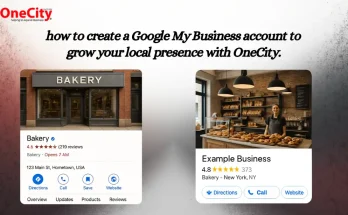
Tip 1: Audit Your Google Business Profile This Week
The single highest-return thirty-minute digital marketing task for most Bangalore businesses is a Google Business Profile audit. Open your GBP dashboard and check: Is your primary category the most specific available option? Are your hours correct including holiday hours? Have you added a services list with descriptions? Is your business description using all 750 characters? Have you posted in the last two weeks? Most Bangalore businesses will answer “no” to at least three of these questions. Each gap is a missed lead opportunity from searches already happening.
Tip 2: Check Mobile Page Speed Before Spending on Ads
Running paid advertising to a slow mobile website is spending money to demonstrate that your website does not convert. Before allocating any budget to Google Ads or Facebook Ads, test your site at pagespeed.web.dev on the mobile setting. A score below 50 means your site is losing a significant percentage of paid traffic before visitors have read anything , they abandon the slow-loading page and return to search results. For most Bangalore business websites in 2026-27, image compression is the single largest speed improvement available with minimal technical effort. Compressing all images to under 150KB produces measurable load time improvement.
Tip 3: Publish One Genuinely Useful Blog Post Per Month
One thoroughly researched, genuinely useful blog post per month consistently outperforms eight thin posts in ranking outcomes. The December 2025 Core Update reinforced this , Google’s ability to distinguish content written with genuine expertise from content written to fill a publishing schedule has improved substantially. For Bangalore businesses, the most effective blog content addresses the specific questions your target customers ask before buying from you , questions you know from customer conversations, sales calls, and support interactions. That specificity , local, expert, practical , is what ranks and what the March 2026 Spam Update rewarded over generic content.
Tip 4: Request Reviews Systematically, Not Occasionally
The difference between a Bangalore business with thirty Google reviews and one with three is almost never service quality , it is whether the business has a systematic review request process or relies on customers volunteering reviews spontaneously. The most effective method: a WhatsApp message sent within two hours of completing a service, with a direct link to the GBP review compose page. Not a link to the general profile , a direct link opening the review form immediately. This single step doubles follow-through rates for most businesses. The August 2025 Spam Update penalised inauthentic review patterns , only request reviews from genuine customers.
Tip 5: Build One Strong Content Cluster Before Expanding
Scattered content across unrelated topics produces scattered authority signals. A Bangalore business that publishes fifteen thorough articles about local SEO for Karnataka businesses signals topical authority to Google more strongly than the same business with one article each on fifteen unrelated marketing topics. Pick the core topic most relevant to your primary product or service, build a pillar page covering it comprehensively, build five to eight supporting pages on specific sub-aspects, link them internally, and publish them over three to four months. This cluster approach consistently produces stronger ranking improvements than an equivalent volume of disconnected content.

Tip 6: Track the Metrics That Connect to Revenue
Most Bangalore businesses tracking digital marketing metrics track the wrong ones. Page views, follower counts, and social media engagement are easy to track and largely disconnected from revenue. The metrics worth tracking monthly: organic search clicks from Google Search Console (are they growing?), cost per lead from each paid channel (is it improving?), and conversion rate from organic traffic (what percentage of organic visitors take a meaningful action , contact, form submission, purchase). These three metrics connect digital marketing activity directly to business outcomes.
Tip 7: Fix Your Oldest High-Traffic Pages First
Most Bangalore businesses have pages that generate significant organic traffic but convert poorly , because the content no longer matches what searchers expect (search intent drift), or because the page was built years ago without modern conversion design. Identifying and refreshing these pages typically produces faster improvements than publishing entirely new content. Google Search Console shows your highest-impression pages alongside their click-through rates. A page with high impressions but low clicks needs a better title and meta description. A page with reasonable traffic but no conversions needs a conversion path review.
Frequently Asked Questions About Digital Marketing for Bangalore Businesses
How much should a Bangalore small business spend on digital marketing in 2026-27? A practical starting benchmark is five to ten percent of target monthly revenue. For a small Bangalore service business targeting Rs. 5 lakh in monthly revenue, Rs. 25,000 to 50,000 per month in digital marketing investment is a reasonable range , split between SEO, content, and paid advertising based on the timeline for results you need.
Which digital marketing channel produces the fastest results for a Bangalore business? Google Ads produces leads within days for businesses targeting high-intent local searches. Google Business Profile optimization optimisation produces map pack visibility improvements within three to five months. SEO produces organic ranking improvements in six to eighteen months depending on competition level. For immediate results, paid advertising , for compounding long-term returns, SEO.
At OneCity Technologies, we work with businesses across Bangalore and Karnataka on integrated digital marketing strategy and execution. Contact us at +91 99023 30233 to discuss what digital marketing priorities make sense for your business in 2026-27.
The Single Biggest Digital Marketing Mistake Bangalore Businesses Make in 2026
After twenty years of working with businesses across Karnataka, the most consistent and expensive digital marketing mistake I see Bangalore businesses make is measuring activity rather than outcomes. Counting how many social media posts were published, how many blog articles were written, how many email newsletters were sent , and using those counts as evidence that digital marketing is “working” , without connecting any of that activity to leads generated, customers acquired, or revenue produced.
Activity is not the same as impact. A Bangalore business that published thirty blog articles in 2024 but cannot say how many leads those articles produced has no basis for deciding whether to continue that investment in 2025 or redirect the resources to something that would produce a measurable return. The December 2025 Core Update reinforced the importance of content quality over content volume , thirty average articles are worth less than five excellent ones in both ranking impact and business value.
The fix is straightforward: before any digital marketing activity, define the specific metric that will tell you whether it is working. For a blog post, the metric is organic traffic to that post and the conversion rate of that traffic to leads or enquiries. For a Google Ads campaigns, the metric is cost per qualified lead. For a Google Business Profile update, the metric is the change in call clicks and direction requests in GBP Insights. For a WhatsApp review generation campaign, the metric is the increase in review count and the impact on map pack ranking position.
When every digital marketing activity has a defined success metric tracked consistently, budget allocation decisions become data-driven rather than intuition-driven. Activities that produce measurable returns receive more investment. Activities that produce no measurable returns are reformed or replaced. This systematic approach to digital marketing measurement is what separates Bangalore businesses that grow efficiently through digital channels from those that spend consistently without compounding results.
Expert insight from L.K. Monu Borkala: India’s digital advertising market reached Rs 39,000 crore in 2024 and is projected to grow at 15% annually through 2028, driven primarily by mobile internet penetration exceeding 850 million users (Statista Digital Advertising India). HubSpot’s 2024 State of Marketing Report found that businesses that align their SEO, content, and social media strategies see 3x higher lead generation than those running disconnected campaigns , a pattern OneCity has consistently observed across its 650+ client engagements in Bangalore and Mangalore (HubSpot State of Marketing 2024). For Bangalore businesses, the most significant growth channel in 2025 is AI search visibility , being cited in Google AI Overviews, Perplexity, and ChatGPT results.
Reference sources: TRAI India internet data.
Digital Marketing for Bangalore Businesses: The 2026 Reality
Bangalore's digital marketing environment in 2026 is more competitive than it has ever been, and more accessible than it has ever been , simultaneously. The same tools available to a multinational with a ₹10 crore marketing budget are available to a founder-run business in Jayanagar with ₹30,000 per month. What differentiates outcomes is not access to tools but the clarity of strategy and the discipline of execution.
At OneCity Technologies, we have worked with businesses across Bengaluru, Mangaluru, and Mysuru since 2017. The tips below are drawn from what has consistently worked across those engagements , not generic advice, but patterns confirmed through campaign data in the specific context of Karnataka's business market.
Foundation: Get These Right Before Spending on Anything Else
Google Business Profile Is Your Most Valuable Free Asset
For any Bangalore business serving local customers, a fully optimised Google Business Profile will generate more qualified enquiries per rupee invested than any paid channel. A GBP listing with complete business information, 20+ recent photos, regular posts, and a consistent flow of new reviews can appear in the local pack for dozens of relevant searches daily , at zero ongoing cost.
Most Bangalore businesses claim their GBP but never complete it. The difference between a sparse listing and a fully optimised one , in terms of local pack visibility and click-through , is significant. Spend two hours getting your GBP right before committing budget to any paid channel.
Your Website Must Convert Mobile Traffic
Every digital marketing channel you invest in sends traffic to your website. If the website converts at 0.5% when it should convert at 2–3%, you are effectively wasting 75–80% of your marketing investment at the last step. Before scaling any channel, verify that your site loads in under 3 seconds on a mid-range Android device, that the contact form works on mobile, and that the phone number is a clickable link. These are not advanced optimisations , they are basic requirements that a significant proportion of Bangalore business websites still fail.
Install GA4 and Configure Conversion Tracking
You cannot optimise what you do not measure. Google Analytics 4 is free and takes under an hour to install correctly. Configure conversion events for every action that matters: form submissions, phone clicks, WhatsApp button clicks, and for e-commerce, transactions. Without conversion tracking, you are spending marketing budget without knowing which channels or campaigns are generating actual business outcomes.
SEO Tips for Bangalore Businesses
Target Neighbourhood Keywords, Not Just City-Level Terms
A new business attempting to rank for “digital marketing agency Bangalore” competes against companies with 8–10 years of domain authority and thousands of backlinks. A business targeting “digital marketing agency Koramangala” or “SEO services Whitefield” competes in a far smaller field with higher local intent. Neighbourhood-level keywords convert better because the searcher is often specifically looking for a business near them , and competition is low enough to achieve first-page rankings within months rather than years.
Publish One Comprehensive Post Per Month Over 10 Average Posts
Content volume without content quality is the most common SEO mistake in the Bangalore market. Google's Helpful Content system penalises sites with high volumes of thin, generic content. A single 3,000-word post that genuinely addresses a specific question from a Bangalore business perspective , written with real operational knowledge, local examples, and verifiable claims , will outperform ten 400-word generic posts that could have been written by anyone, anywhere.
Build Internal Links Deliberately
Every blog post you publish should link to 3–5 relevant service pages using descriptive anchor text. Every service page should link to supporting blog posts and related services. This internal linking structure distributes PageRank across your site and signals to Google which pages are most important. It is entirely within your control and costs nothing , yet most Bangalore business websites treat internal links as an afterthought.
Social Media Tips That Produce Business Results
LinkedIn for B2B, Instagram and Facebook for B2C
Platform selection should follow your audience, not trend. For B2B businesses in Bangalore targeting IT companies, manufacturers, or professional services firms, LinkedIn organic reach and LinkedIn Ads produce the best cost-per-qualified-lead of any social channel. For B2C businesses , retail, food, real estate, education, beauty, fitness , Instagram and Facebook reach the right audience demographics at a cost that makes Meta Ads economically viable.
Spreading thin content across five platforms produces mediocre results on all five. Pick two platforms based on where your customers actually are, publish consistently on those two, and measure whether you are generating enquiries , not just followers.
Video Content Produces Disproportionate Organic Reach
Across all major social platforms in 2026, video content receives 3–5x more organic reach than static image posts. Short-form vertical video , Instagram Reels, YouTube Shorts , is the format with the highest reach per unit of production effort. For Bangalore businesses, even simple formats work: a 60-second walkthrough of a service, a before-and-after result, a client testimonial recorded on a phone, or a founder answering a common customer question. Production quality matters less than relevance and frequency.
Engage with Comments Before Posting New Content
Platform algorithms reward accounts that engage with their audience. Spending 15 minutes responding to comments, replying to DMs, and engaging with posts from your followers before publishing new content consistently produces better organic reach than simply broadcasting content and moving on. This is the most underused social media tactic among Bangalore small businesses.
Paid Digital Marketing Tips
Start with Google Ads Search Before Display or Social
Search intent is the most valuable targeting signal in digital advertising. A user searching “SEO company Bangalore pricing” is actively looking for what you sell, right now. A user seeing a display ad or a social media post may or may not be interested , you are interrupting them. For businesses with limited paid budgets, Google Search Ads targeting high-intent commercial keywords produce the most consistent return on ad spend in the early stages of a digital marketing programme.
Set Up Conversion Tracking Before Launching Ads
Running Google Ads without conversion tracking configured is the single most expensive mistake Bangalore businesses make with paid digital. Without conversion events, Google's smart bidding algorithms cannot optimise for outcomes that matter , they optimise for clicks, which do not always correlate with business results. Confirm that form submissions, phone click events, and WhatsApp clicks are all tracked as conversions in GA4 and imported into Google Ads before a single rupee is spent.
Negative Keywords Save More Than Positive Keywords Earn
For most Bangalore businesses running Google Ads, 20–30% of ad spend goes to irrelevant search terms that will never convert. Comprehensive negative keyword lists , excluding terms like “free,” “jobs,” “course,” “how to,” “DIY,” and competitor brand names where appropriate , eliminate wasted spend and improve Quality Score, which in turn reduces cost-per-click on the terms that do convert. Build your negative keyword list before launch, not after three months of wasted spend.
Email and WhatsApp Marketing Tips
Build Your Email List Before You Need It
Email lists take time to build to a scale that produces meaningful revenue. A business that starts building its list today , with a clear opt-in offer on the website, newsletter signup at events, and lead magnet downloads , will have a valuable owned audience asset in 12–18 months. A business that waits until it needs the list and then tries to build it quickly invariably finds the process slower and more expensive than anticipated.
WhatsApp Business API for Service Updates
The WhatsApp Business API , available through platforms like Interakt, AiSensy, and Wati , allows businesses to send template messages to opted-in customers for appointment reminders, order updates, service notifications, and promotional campaigns. Open rates for WhatsApp Business messages exceed 90% compared to 20–25% for email. For Bangalore businesses with an existing customer base, setting up a WhatsApp broadcast for relevant service updates is one of the highest-ROI digital investments available.
Measurement and Optimisation Tips
Review GSC Weekly for Quick Wins
Google Search Console's Performance report, filtered to show queries where your average position is between 6 and 15, reveals pages that are close to page one but not quite there. These are your quickest SEO wins , improving the content depth, internal links, or title tag on a page ranking at position 8 for a relevant keyword can move it to positions 2–5 within weeks, with a corresponding increase in clicks. Fifteen minutes in GSC weekly is more productive than hours spent on new content if your existing pages have untapped ranking potential.
Attribute Revenue to Channels, Not Just Traffic
Traffic is not a business outcome. A channel that sends 500 visitors per month who never convert is less valuable than a channel sending 50 visitors who convert at 10%. Configure GA4 to track the full journey from channel to conversion, and evaluate marketing performance based on cost per enquiry or cost per acquisition , not traffic volume or social media reach.
For a complete digital marketing programme , SEO, Google Ads, social media, email, and website optimisation , managed by a team with specific experience in the Bangalore market, contact OneCity Technologies at +91 99023 30233 or visit our office in Rajajinagar.
Frequently Asked Questions
How much should a Bangalore small business spend on digital marketing?
A practical starting point for a small Bangalore business is 8–12% of revenue allocated to total marketing, with digital comprising the majority of that budget. For a business generating ₹20 lakh monthly, that is ₹1.6–2.4 lakh per month across all digital channels. The split between SEO, paid ads, social media, and email depends on the business model and sales cycle , service businesses with longer cycles should weight toward SEO and content; businesses needing immediate leads should weight toward paid search.
Which digital marketing channel gives the fastest results in Bangalore?
Google Search Ads produce the fastest visible results , campaigns can be live and generating clicks within 24 hours. The trade-off is that results stop the moment the budget stops. SEO takes 3–6 months to show meaningful organic traffic but compounds over time without proportional ongoing spend. For most Bangalore businesses, the optimal approach is Google Ads for immediate pipeline while SEO builds in the background , transitioning budget from paid to organic as organic rankings mature.
Should I hire a digital marketing agency or build an in-house team?
For businesses below ₹5 crore annual revenue, an agency typically provides better value than an in-house team , an agency brings specialist skills across SEO, paid ads, content, and analytics that would require four or five separate hires to replicate internally. Above that revenue threshold, a hybrid model , a small in-house content and social team supported by an agency for technical SEO guide and paid media , often produces the best balance of cost and capability. The decision depends on whether your marketing needs are consistent enough to justify the fixed cost of full-time employees.
L.K. Monu Borkala
Founder & SEO Director, OneCity Technologies
20 years running SEO campaigns from Bangalore. Full author profile · LinkedIn
Frequently Asked Questions
What's the single highest-return digital marketing task for most Bangalore businesses?
A thirty-minute Google Business Profile audit, checking category accuracy, hours, services list, business description completeness, and recent posts. Most businesses have at least three gaps costing them leads.
Should I check page speed before running paid ads?
Yes. A mobile PageSpeed score below 50 means significant paid traffic is lost before visitors even read the page. Image compression to under 150KB is typically the biggest quick win available.
Is publishing more blog posts always better for SEO?
No. One thoroughly researched, genuinely useful post per month consistently outperforms eight thin posts, a pattern the December 2025 Core Update specifically reinforced by better distinguishing genuine expertise from content-mill output.