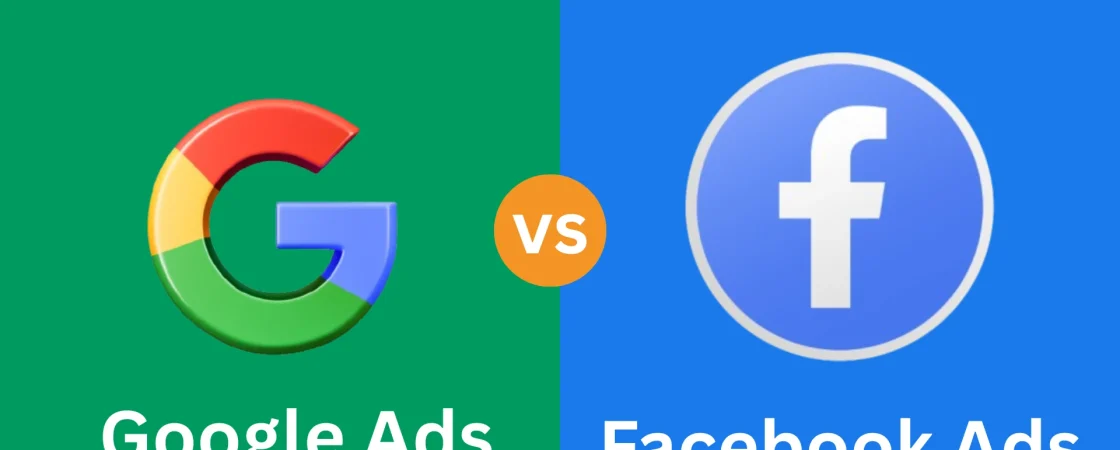
Google Ads vs Facebook Ads in 2026 is still the first budget question Bangalore businesses ask us. When a Bangalore business decides to invest in paid advertising, the first question is almost always the same: Google Ads or Facebook Ads? Both platforms are widely used, both can produce real leads and revenue, and both can produce expensive disappointment if used for the wrong objective with the wrong setup. The choice between them is not a matter of which platform is “better” , it is a matter of which is better suited to your specific business, customer, and goal at this particular stage.
I am L.K. Monu Borkala, founder of OneCity Technologies in Bangalore. Since 2006 we have managed paid advertising campaigns for businesses across Karnataka , across both platforms and across most business categories. This post covers how each platform works, what types of Bangalore businesses get the best results from each, and how to decide where to put your budget in 2026.
How Google Ads and Facebook Ads Work Differently
The fundamental difference between Google Ads and Facebook Ads is the intent of the person seeing your ad. Google Ads appear in response to a search query , the person has actively typed something into Google and is looking for an answer or a solution. Your ad appears because their search matched your target keywords. This is called pull advertising: the customer’s intent pulls your ad into view.
Facebook and Instagram Ads appear in a user’s feed, stories, or reels based on demographic, interest, and behavioural targeting , not in response to a specific search. The person has not expressed immediate intent to buy or enquire. Your ad appears based on who they are and what they have done, not what they are currently looking for. This is push advertising: you push your message into their attention.
This distinction has major practical implications. Google Ads capture existing demand , people who already know they need what you offer and are searching for it. Facebook Ads create demand , they introduce your product or service to people who might want it but were not actively looking for it. The right channel depends on whether your primary challenge is capturing known demand or creating new demand for something the market does not yet know to search for.
When Google Ads Works Better for Bangalore Businesses
Google Ads in Bangalore produces the strongest return for businesses where customers actively search for what they need at the point of purchase decision. Categories where this is true in Bangalore’s market:
Local service businesses. A person searching “plumber near Whitefield” or “electrician HSR Layout” is ready to book. They have a problem, they need a solution now, and they are searching actively. Google Ads captures this moment directly. Facebook Ads cannot reach this person at the moment of need because they are not on social media looking for a plumber , they are in Google.
Professional services. CA firms, lawyers, healthcare providers, consultants, and B2B service businesses in Bangalore see strong Google Ads performance because their customers research actively and use specific search queries with clear commercial intent. Searches like “GST consultant Bangalore” or “physiotherapist Indiranagar” reflect specific, immediate needs.
High-intent e-commerce. When customers know exactly what product they want and search for it specifically , “Brooks Ghost running shoes Bangalore” or “handloom silk sarees Karnataka” , Google Shopping Ads capture purchase intent that Facebook cannot match for specificity.
When Facebook and Instagram Ads Work Better for Bangalore Businesses
Meta’s advertising platforms , Facebook and Instagram , work best in Bangalore for businesses where the customer journey starts with discovery rather than search. Categories where this is most true:
Consumer products and lifestyle brands. If you sell something that people want once they see it but would not necessarily search for , fashion, home decor, beauty products, artisan food , Instagram’s visual format reaches Bangalore consumers in a mindset receptive to discovery. The impulse purchase dynamic that social media enables does not exist in Google search.
Events and experience businesses. Restaurants, entertainment venues, workshops, fitness studios, and experiences benefit from Facebook and Instagram’s ability to reach people based on interests and demographics in Bangalore. A newly opened rooftop restaurant in Indiranagar can reach Instagram users in Bangalore aged 25-40 who follow food accounts , a relevant audience that Google search cannot target this specifically before they have heard of the restaurant.
B2C services with a long consideration cycle. Interior design, wedding planning, real estate, and similar categories where customers do not purchase immediately benefit from Facebook’s retargeting capabilities. A person who visited your interior design website but did not enquire can be shown Instagram ads for weeks afterward , maintaining top-of-mind awareness through the long consideration period.
The Cost Reality in Bangalore’s Market in 2026
Cost per click for Google Ads in Bangalore’s competitive professional service categories ranges from Rs. 50 to Rs. 300 per click for well-targeted campaigns. For e-commerce product terms, Rs. 15 to Rs. 80 is more typical. These numbers mean a Rs. 20,000 monthly Google Ads budget produces between 70 and 400 clicks depending on the category , a wide range that makes pre-campaign economic modelling important.
Facebook and Instagram Ads in Bangalore typically have lower cost per click , Rs. 5 to Rs. 40 for most B2C categories , but the conversion rate from click to enquiry is generally lower than Google, because the traffic is lower intent. The relevant comparison is not cost per click but cost per qualified lead, which varies significantly by category and creative quality.
The December 2025 Core Update reminded advertisers that organic SEO and paid advertising complement each other rather than compete. Businesses investing in Google Ads for immediate lead generation while simultaneously building SEO for long-term organic visibility consistently outperform those treating paid and organic as alternatives.
How to Choose Between Google Ads and Facebook Ads for Your Bangalore Business
The decision framework is straightforward. If your customers search for what you offer when they need it, start with Google Ads. If your customers need to see your product or service to know they want it, start with Facebook and Instagram. If your category has both active searchers and a visual discovery dimension, test both with a split budget and let the data from real Bangalore customers tell you which performs better.
The August 2025 Spam Update and March 2026 Spam Update both reinforced that sustainable business growth requires building genuine audience relationships rather than purely transactional ad-driven traffic. Businesses that combine paid advertising for immediate results with organic SEO and content marketing services for compounding long-term growth consistently outperform those who rely on either channel alone.
Frequently Asked Questions
Which is cheaper , Google Ads or Facebook Ads for a Bangalore business? Facebook typically has a lower cost per click, but Google Ads often has a higher conversion rate from click to lead for service businesses. The relevant comparison is cost per qualified lead, not cost per click. Run small tests on both before committing budget.
Can I run Google Ads and Facebook Ads simultaneously on a small budget? With a budget under Rs. 20,000 per month, splitting between both platforms typically produces diluted results on each. Pick the better-fit platform for your business type and concentrate the budget there first. Add the second platform once the first is producing consistent results.
Do I need a professional agency to run Google Ads or Facebook Ads in Bangalore? Small campaigns under Rs. 10,000 per month can be managed independently with Google and Meta’s self-serve interfaces. Above that level, the optimisation complexity , keyword management, audience layering, creative testing, bid strategy , typically justifies professional management for the return it produces.
At OneCity Technologies, we manage Google Ads and Facebook Ads campaigns for businesses across Bangalore and Karnataka. Contact us at +91 99023 30233 to discuss which channel is right for your specific business and what a test campaign would involve.
Expert insight from L.K. Monu Borkala: Google Ads delivers an average return of Rs 2 for every Rs 1 spent for businesses with properly structured campaigns , but the top 10% of advertisers see returns 5x higher than the average, primarily because of Quality Score optimisation and negative keyword management (Google Economic Impact Report). For Bangalore’s competitive service sectors , legal, healthcare, real estate, and education , the average cost-per-click has risen 40% since 2022, making campaign structure and landing page alignment more critical than ever. WordStream’s analysis of 10,000 Google Ads accounts found that the average Quality Score for high-performing accounts is 7/10 or above, directly reducing cost-per-click by up to 50% (WordStream Google Ads Benchmarks).
Reference sources: Google Ads resources India.
Why the Google Ads vs Facebook Ads Question Has No Universal Answer
The Google Ads vs Facebook Ads question is one of the most frequently asked in Bangalore digital marketing consultations , and one of the most frequently answered incorrectly, because the correct answer is entirely dependent on the specific business, audience, and objective. A Bangalore legal firm asking this question needs a completely different answer from a Bangalore fashion e-commerce brand asking the same question. Applying one business's answer to another's situation produces wasted budget and false conclusions about which channel “works.”
At OneCity Technologies, we manage both Google Ads and Meta Ads campaigns for Bangalore businesses across multiple categories. The comparative analysis below is grounded in campaign data from actual Bangalore market performance, not theoretical channel characteristics.
The Core Difference: Intent vs Interest
Google Ads reaches people who are actively searching for something specific. A person who types “CA firm for GST filing Bangalore” into Google is expressing intent , they have a need and are looking for a solution right now. Google Ads places your ad in front of this active need.
Facebook and Instagram Ads reach people based on who they are and what they are interested in , not what they are actively searching for at that moment. A Facebook ad for a Bangalore CA firm reaches business owners in Bangalore who match a demographic profile, not specifically those with an immediate GST filing need. The audience may include people who will need the service eventually, but the targeting is based on characteristics rather than expressed intent.
This fundamental difference , intent vs interest , determines which channel is more appropriate for which business type and objective more reliably than any other factor.
When Google Ads Is the Stronger Choice for Bangalore Businesses
High-Intent, Specific Service Searches
Any Bangalore business where the purchase decision begins with a specific Google search , “dentist near Koramangala,” “Python developer Bangalore,” “chartered accountant for startup compliance” , is in Google Ads territory. The searcher has identified their need and is actively looking for a provider. A well-configured Google Ads campaigns capturing this intent converts at 3–8% , significantly higher than Facebook Ads for the same audience because the audience has already done the hardest part of the conversion journey (deciding they need the service) before encountering your ad.
B2B Professional Services
For Bangalore B2B categories , IT services, legal, accounting, consulting, HR, recruitment , Google Search Ads targeting specific service queries consistently outperforms Facebook Ads in cost-per-qualified-lead. B2B buyers use Google Search as their primary vendor discovery tool; they do not expect to find a cloud infrastructure vendor or a tax consultant through Facebook. Google Ads meets them where they actually search; Facebook interrupts them where they are socialising.
Local Service Businesses
For Bangalore local services , electricians, plumbers, painters, pest control, home cleaning , Google Ads combined with Google's Local Service Ads format reaches customers with immediate, expressed need at the exact moment they are looking. Facebook Ads for home services reaches people who may not need the service today but might in future , a much lower-converting audience for an immediate-need service category.
When Facebook and Instagram Ads Are the Stronger Choice
Consumer Products with Strong Visual Appeal
For Bangalore consumer brands in fashion, food, beauty, home decor, and lifestyle categories , products that photograph well and inspire desire rather than solve an acute problem , Facebook and Instagram Ads create demand that Google Ads cannot, because no one searches Google for a product they do not yet know exists. A Bangalore handcrafted jewellery brand introducing a new collection cannot target “people who want this specific design” in Google Search , the query does not exist. But they can target women in Bangalore aged 25–45 with interest in jewellery and fashion on Instagram, where the visual format creates aspiration that converts to purchase.
Brand Building and Remarketing
Facebook and Instagram Ads excel at two activities Google Ads does not serve as efficiently: building brand awareness among defined demographic audiences and remarketing to past website visitors. A Bangalore real estate developer building awareness for a new project in Whitefield reaches their target audience , IT professionals aged 30–45, household income above ₹15 lakh, interested in property investment , most efficiently through Facebook's demographic targeting. The same audience is not concentrated in any specific Google search query.
E-Commerce with Dynamic Product Ads
For Bangalore e-commerce businesses with product catalogues on Meta's Commerce Manager, Dynamic Product Ads , which automatically show users the specific products they viewed on your website , are among the highest-ROI retargeting formats available. A Bangalore fashion e-commerce store that shows a remarketing ad featuring the exact kurta a user viewed 3 days ago achieves conversion rates of 5–15% on retargeted audiences , significantly higher than equivalent Google Display remarketing for the same product category.
Cost Comparison in the Bangalore Market
Cost benchmarks from active Bangalore campaigns (approximate, as costs vary by season and competition level):
Google Ads Search (Bangalore):
- Digital marketing / SEO: ₹30–80 CPC
- Legal services: ₹60–200 CPC
- Healthcare: ₹25–80 CPC
- Real estate: ₹50–150 CPC
- Education (coaching): ₹15–50 CPC
Facebook/Instagram Ads (Bangalore):
- CPM (cost per 1,000 impressions): ₹50–200
- CPC (feed link click): ₹5–40
- Cost per lead (lead generation campaigns): ₹80–400 for most categories
Facebook's lower CPC is frequently cited as a reason to prefer it over Google. The comparison is misleading because Facebook clicks are lower-intent than Google Search clicks , the raw CPC difference does not account for the conversion rate difference. A ₹10 Facebook click that converts at 0.5% costs ₹2,000 per lead. A ₹60 Google Search click that converts at 5% costs ₹1,200 per lead. The higher-CPC channel produces a lower cost per lead in this example.
For a channel analysis and paid media strategy for your specific Bangalore business, contact OneCity Technologies at +91 99023 30233. Author: L.K. Monu Borkala, Founder & CEO, OneCity Technologies, 20 years in business.
Building an Integrated Paid Media Strategy for Bangalore: Google + Meta
The most effective paid media strategy for most Bangalore businesses is not choosing between Google Ads and Facebook Ads but building an integrated programme where each platform serves its specific strength role:
Google Search Ads: Capture active, high-intent demand from people already searching for your service. Target your 10–20 highest-converting keywords with tightly matched ad groups and dedicated landing pages. This is the non-negotiable base layer for any Bangalore business with established search demand for its category.
Google Display Remarketing: Retarget website visitors who did not convert on first visit with display ads showing across Google's publisher network. Budget: 15–20% of total Google Ads spend. Audience: all website visitors in the past 30 days who did not complete a conversion event.
Meta Ads , Prospecting: Reach your target audience profile (demographic, interest, behaviour targeting) before they have an active search intent. Use video or carousel formats to demonstrate value and build brand familiarity. Objective: awareness and consideration, measured by reach, video views, and website visits , not immediate conversions.
Meta Ads , Retargeting: Serve dynamic product ads or specific offer ads to Meta users who have previously visited your website or engaged with your content. This is the highest-ROI Meta Ads format because the audience has demonstrated prior interest. Objective: conversion, measured by cost per purchase, lead, or enquiry.
This four-layer programme , Google Search, Google Display, Meta Prospecting, Meta Retargeting , covers the full acquisition funnel from awareness through conversion with each channel doing what it does best. For an integrated paid media programme for your Bangalore business with monthly performance reporting, contact OneCity Technologies at +91 99023 30233.
Attribution: Understanding Which Platform Gets Credit
One of the persistent challenges in managing both Google Ads and Facebook Ads simultaneously is attribution , understanding which platform (or combination of touchpoints) is responsible for a given conversion. Both platforms have attribution models that claim credit for conversions; when both are running simultaneously, they frequently both claim credit for the same conversion, making it appear that combined spend is producing more leads than it actually is.
The most reliable attribution approach for Bangalore businesses running both platforms: configure GA4 as the neutral third-party attribution source. GA4's data-driven attribution model analyses all touchpoints in the conversion path and distributes credit across channels based on actual contribution , unlike Google Ads and Meta Ads, which each apply last-click or platform-centric attribution that inflates their own reported contribution.
In GA4, set up a custom channel grouping that correctly identifies Google Paid Search, Google Display, Meta Feed, and Meta Stories as distinct channels. Review the Path Exploration report monthly to understand how customers are moving through Google and Meta touchpoints on their way to conversion. A customer who saw a Facebook ad, then searched on Google, then converted through Google Ads , in Google Ads' model, Google gets full credit; in Meta's model, Meta gets full credit; in GA4 data-driven attribution, both get partial credit reflecting their actual role in the conversion. For paid media attribution setup and management for your Bangalore business, contact OneCity Technologies at +91 99023 30233.
Frequently Asked Questions
Can I run Google Ads and Facebook Ads at the same time?
Yes, and for many Bangalore businesses this is the optimal approach. Google Ads captures active intent (people searching for your service now); Facebook Ads builds awareness and retargets website visitors who did not convert on first visit. The combination extends the conversion window and increases total captured conversions relative to either channel alone. With a combined budget of ₹25,000–30,000/month in ad spend, split roughly 60/40 between Google and Facebook, most Bangalore service businesses can run meaningful campaigns on both channels simultaneously.
Which platform has better targeting for Bangalore audiences?
For intent-based targeting (people actively searching for your service): Google Ads is superior , Facebook has no equivalent to keyword targeting for active search intent. For demographic and interest-based targeting (reaching a defined audience profile regardless of current intent): Facebook and Instagram are superior , Google's demographic targeting is less precise and its interest categories less granular than Meta's. Use the right platform for the targeting mechanism that serves your objective.
What budget should I start with for Google Ads vs Facebook Ads in Bangalore?
Google Ads minimum effective test: ₹10,000–15,000/month in ad spend for most Bangalore categories. Below this, insufficient data accumulates for smart bidding optimisation. Facebook Ads minimum effective test: ₹8,000–12,000/month for most Bangalore consumer brand objectives. For lead generation on Facebook, ₹10,000/month is the practical minimum for statistical significance within 30 days. Add agency management fees (₹8,000–15,000/month) to either channel's ad spend for a managed programme.
Is Facebook Ads still effective in India in 2026?
Yes, for the right business categories. Facebook's reach in India , still the world's largest Facebook market by user count , remains massive, and Instagram's growth among India's urban consumer market has strengthened Meta's ad effectiveness for visual consumer categories. The businesses reporting declining Facebook Ads effectiveness in India are typically those using it for categories where intent-based advertising (Google) is fundamentally more appropriate. Facebook remains highly effective for consumer brands, e-commerce, and awareness-objective campaigns for defined demographic audiences.
Frequently Asked Questions
What's the fundamental difference between Google Ads and Facebook Ads?
Google Ads is pull advertising, appearing in response to an active search, while Facebook Ads is push advertising, appearing based on demographic and behavioural targeting regardless of immediate intent.
When does Google Ads work best for a Bangalore business?
When customers actively search for what they need at the point of a purchase decision, such as local service businesses where searchers already know they want a specific service.
What kind of demand does Facebook Ads create versus capture?
Facebook Ads introduces a product or service to people who might want it but weren't actively searching, creating new demand rather than capturing existing demand the way Google Ads does.