
Written by L.K. Monu Borkala, Founder, OneCity Technologies (CIN: U72100KA2009PTC048911), Bangalore. 20 years in business. +91 99023 30233.
Digital marketing has always evolved quickly, but 2025 marks a turning point. With AI becoming deeply integrated into content creation, SEO, branding, customer engagement, and workflow automation, businesses are no longer just optimizing,they are reinventing the way they operate. Whether you’re running a startup, an agency, or a personal brand, the combination of AI and SEO has opened up a new level of efficiency and competitiveness. And today’s environment of AI platforms,from advanced writing assistants to automated design, scheduling, and workflow engines,is shaping the next era of growth. In this article, I explore how digital marketing is changing, the strategic role of AI, and real tools that demonstrate what today’s technology can do.
The New Reality of Digital Marketing in 2025
In the past, digital marketing relied heavily on manual research, repetitive tasks, and trial-and-error approaches. But AI changed everything. With machine-driven insights, automated content creation, predictive analytics, and personalized customer experiences, marketers now execute in minutes what previously required entire teams. This shift isn’t about replacing humans,it’s about augmenting creativity, turning data into action, and giving marketers superhuman speed. AI tools are now woven into everyday workflows:
- Content teams are using AI to produce long-form articles faster.
- Designers rely on generative models to create visuals instantly.
- Social media managers automate repetitive publishing cycles.
- Agencies simplify SEO audits and website optimization.
The result: brands are scaling at a pace previously considered impossible.
AI-Powered Content Creation: Faster, Smarter, More Human
Perhaps the biggest significant change has come in content marketing. Platforms like Writecream have enabled writers, businesses, and marketers to create blogs, emails, scripts, and branding content using conversational AI workflows. Teams that once struggled to maintain content calendars now produce consistent, SEO-aligned output without sacrificing quality. AI models can analyze competitor gaps, suggest headings, and even rewrite content for tone or clarity,helping marketers to focus on strategy rather than repetitive writing. And with conversational AI systems like AI4Chat, long workflows are replaced by interactive agents capable of drafting documents, answering complex queries, or performing research. This is especially powerful for teams handling large volumes of content that must remain on-brand and accurate.
Visual Branding Changed Through Generative AI
Digital marketing is now more visual than ever. Whether it’s social media, landing pages, or ads, businesses rely on high-quality graphics,something that generative AI has dramatically accelerated. Tools like Airbrush AI have made it possible to instantly produce artwork, product visuals, concept designs, and promotional images without needing a designer for every iteration. Similarly, Vibeaistudio provides an AI-rich suite for premium image, design, and media generation. For creators, agencies, and brands, this means:
- Rapid A/B testing of ad creatives
- Custom graphics without stock-photo fatigue
- On-demand visual identity development
Combined with SEO and content, visuals now complete the marketing environment, enhancing engagement and improving conversions.
Social Media Automation: AI as Your Always-On Manager
Posting consistently across multiple platforms is one of the biggest challenges for brands. AI-powered automation tools like Schedulifyx now manage this smoothly. With smart scheduling, AI-driven caption support, and workflow automation, businesses can:
- Keep feeds active 24/7
- Maintain a consistent brand voice
- Plan campaigns weeks in advance
- Automatically adapt content formats
This shift frees teams from the stress of manual posting and makes sure they can stay focused on strategy, engagement, and creativity.
AI Workflows: The Engine Behind smooth Marketing Operations
As AI grows more advanced, businesses increasingly need ways to connect different models and automate multi-step processes. That’s where platforms like BuildWithLLM come in. They allow businesses to build custom AI agents, automation pipelines, and intelligent tools without complex coding. These workflows can power:
- Lead qualification
- Customer support chatbots
- Content research
- Automated SEO audits
- Product descriptions and catalog management
- Code generation for web development
AI workflows are becoming the backbone of how modern businesses operate,fast, adaptable, and scalable.
The Future of Web Development & Digital Strategy
Even website development has benefited from AI integration. Platforms like FusionMindLabs are enabling businesses to build websites, troubleshoot issues, optimize SEO, and integrate AI systems into their digital stack. From backend automation to SEO-ready site structures, businesses now create and launch high-quality web experiences significantly faster than before. This is where digital marketing, SEO, and AI converge:
- AI improves content quality
- SEO drives visibility
- Websites optimized with intelligent systems convert better
Together, these pillars set the foundation for modern growth strategies.
Why AI + SEO Is the Most Powerful Marketing Combo Today
SEO is no longer just about keywords,it’s about understanding user intent, creating high-quality content, optimizing technical structure, and providing an exceptional user experience. AI enhances SEO in multiple ways:
1. Content Generation & Optimization
AI models identify search gaps, suggest improvements, and rewrite content to meet ranking criteria.
2. Predictive Analytics
Marketers can now forecast trends, search patterns, and user behavior more accurately.
3. Automated Technical Fixes
AI identifies broken links, indexing issues, meta problems, and structural errors instantly.
4. Competitive Intelligence
AI tools analyze competitor pages, backlink profiles, and SERP patterns in seconds.
5. Personalization
User-specific recommendations and custom landing pages increase engagement and dwell time. AI-driven SEO isn’t merely efficient,it is strategically superior.
A Future Where Every Business Uses AI
By 2026 and beyond, AI won’t be optional. It will become the default standard for every serious business, agency, and creator. What makes today’s AI environment powerful isn’t just individual tools, but how they complement each other:
- Writecream → Human-like content creation
- AI4Chat → Conversational intelligence & automation
- Airbrush AI → Visual generation
- Vibeaistudio → Premium creative suite
- Schedulifyx → Social media automation
- BuildWithLLM → Custom AI workflows
- FusionMindLabs → AI-integrated digital experiences
Together, they illustrate how the future of digital marketing is not just AI-assisted,it is AI-driven.
Conclusion: The Marketer of 2025 Is an AI-Enhanced Strategist
The best marketers today aren’t the ones who do the most manual work; they are the ones who use AI intelligently. SEO, digital marketing, and AI are no longer separate fields,they are interconnected components of a unified strategy. Businesses that embrace AI gain:
- Faster execution
- Stronger SEO performance
- Higher content output
- Smarter decision-making
- Better customer engagement
And most importantly,they stay competitive in a constantly evolving digital world. AI isn’t the future. It’s the present. And it’s already reshaping the brands that choose to use it.
How AI Has Changed Search Engine Optimisation in Practice
The conversation about AI in SEO tends to split into two extremes: those who believe AI has replaced everything and those who dismiss it entirely. Working with businesses across Bangalore, Mangaluru, and Mysuru at OneCity Technologies, we have tested most of the AI tools that have entered the market since 2023. The practical reality is somewhere in the middle , AI has meaningfully changed specific parts of the SEO workflow while leaving the core strategic work almost entirely human.
Content Research and Briefing
The most genuine productivity gain from AI in SEO is in the research phase. Building a comprehensive content brief , identifying subtopics to cover, questions the target audience asks, related entities, and structural patterns from competing content , used to take 2–4 hours for a complex topic. With tools like Claude, ChatGPT, or Perplexity, the same brief can be assembled in 30–45 minutes by someone who knows what questions to ask.
The critical distinction: AI accelerates the research, but the strategic decisions about which keywords to target, what angle to take, and how to differentiate from existing content remain human judgements. An AI tool can tell you that the top 10 results for “SEO cost in Bangalore” average 2,800 words and cover pricing tables, scope breakdowns, and comparison charts. It cannot tell you that your specific agency's pricing advantage is in bundled services or that your Bangalore market knowledge gives you a credibility angle that national competitors lack. That judgement comes from practitioner experience.
Content Drafting vs Content Publishing
AI can produce first drafts faster than any human writer. The problem is that first drafts are not publishable content. Google's March 2026 Spam Update explicitly targeted scaled content abuse , sites publishing large volumes of AI-generated content with minimal human expertise. The pattern Google targets is not AI assistance per se, but content that lacks genuine first-hand knowledge, specific examples, and verifiable claims.
At OneCity, our content workflow uses AI for research support and structural suggestions. Every published piece is written by a subject matter practitioner , someone who has run campaigns, managed client accounts, and observed results first-hand. The difference between AI-drafted content and practitioner-written content is immediately obvious to experienced readers and, increasingly, to Google's quality classifiers.
For content marketing services, the implication is straightforward: AI reduces the cost of the easiest parts of content production (research, outlining, structural suggestions) but does not reduce the cost of the hardest part (genuine expertise translated into authoritative writing). Agencies that have replaced writers with AI tools are producing content that is already underperforming in competitive SERPs.
Technical SEO and AI
AI tools have not meaningfully changed technical SEO workflows. Crawling a site, identifying broken links, auditing schema markup, diagnosing page speed issues, and fixing redirect chains are still accomplished with the same tools , Screaming Frog, Google Search Console, PageSpeed Insights , that existed before the current AI wave. Some AI-powered site audit tools have launched, but their output is generally less precise than established tools for technical diagnosis.
Where AI does help in technical SEO: generating schema markup from page content (JSON-LD for FAQ, HowTo, LocalBusiness), writing robots.txt rules from plain-language descriptions, and generating hreflang tags for multilingual sites. These are time-saving applications, not capability expansions.
AI Overviews and Their Impact on Organic Traffic
Google's AI Overviews , the AI-generated summaries that appear at the top of search results for many informational queries , represent the most significant change to the search results page since featured snippets launched in 2014. Their impact on organic traffic varies significantly by query type.
Queries Where AI Overviews Reduce Clicks
Simple informational queries , “what is schema markup,” “how does lazy loading work,” “what are Core Web Vitals” , are increasingly answered directly by AI Overviews without requiring a click to any organic result. For sites that depended heavily on traffic from these definition-style queries, organic click volume has declined measurably since AI Overviews rolled out in 2024–2025.
The impact is not uniform across all informational content. Long-form guides, detailed how-to content with multiple steps, and content requiring nuanced judgement are less likely to be fully captured by an AI Overview. Google's AI Overviews tend to surface brief answers to simple questions , they cannot reproduce the depth of a 3,000-word practitioner guide on a complex topic.
Queries Where AI Overviews Have Minimal Impact
Commercial and transactional queries , “SEO agency Bangalore pricing,” “web design company Koramangala,” “best email marketing platform for Indian businesses” , remain largely unaffected by AI Overviews. Users searching with purchase intent want to evaluate specific options, read reviews, compare pricing, and contact businesses. An AI-generated summary cannot replace that evaluation process.
This has accelerated a strategic shift in SEO away from targeting purely informational keywords and toward keywords with commercial and transactional intent. For Bangalore businesses investing in SEO, the highest-ROI keyword targets in 2026 are queries where the searcher is actively looking for a service or product , not queries where they are looking for a definition.
How AI Is Changing Paid Digital Advertising
Google Ads Smart Bidding and Performance Max
Google's AI-powered bidding strategies , Target CPA, Target ROAS, Maximise Conversions , have become the default for most advertisers. Manual bidding, which was standard practice five years ago, is now used primarily for highly specific, low-volume campaigns where Google's algorithm does not have enough conversion data to optimise effectively.
Performance Max campaigns , which use AI to distribute ads across Search, Display, YouTube, Gmail, and Maps from a single campaign , have produced mixed results for Bangalore businesses. For e-commerce with strong product feeds and clear conversion tracking, Performance Max consistently outperforms manually segmented campaigns. For lead generation businesses (consulting, professional services, agencies), where the definition of a “conversion” is more nuanced, Performance Max tends to optimise for lower-quality leads unless conversion tracking is configured carefully.
OneCity's Google Ads management uses smart bidding where the data supports it and manual overrides where it does not. The decision depends on conversion volume, conversion value consistency, and the maturity of the account's historical data.
Meta Ads and AI-Driven Targeting
Meta's Advantage+ campaigns use machine learning to automatically find the highest-converting audiences from broad targeting inputs. The old approach , manually building detailed audience segments based on interests, behaviours, and demographics , has been largely replaced by AI-driven broad targeting that lets the algorithm identify the best prospects from a larger pool.
For Bangalore B2C businesses running Instagram and Facebook campaigns, Advantage+ has generally improved cost-per-acquisition compared to manual targeting , provided the creative is strong. The AI handles distribution optimisation effectively, but it cannot fix weak ad creative or unclear value propositions. The human work has shifted from audience configuration to creative production and testing.
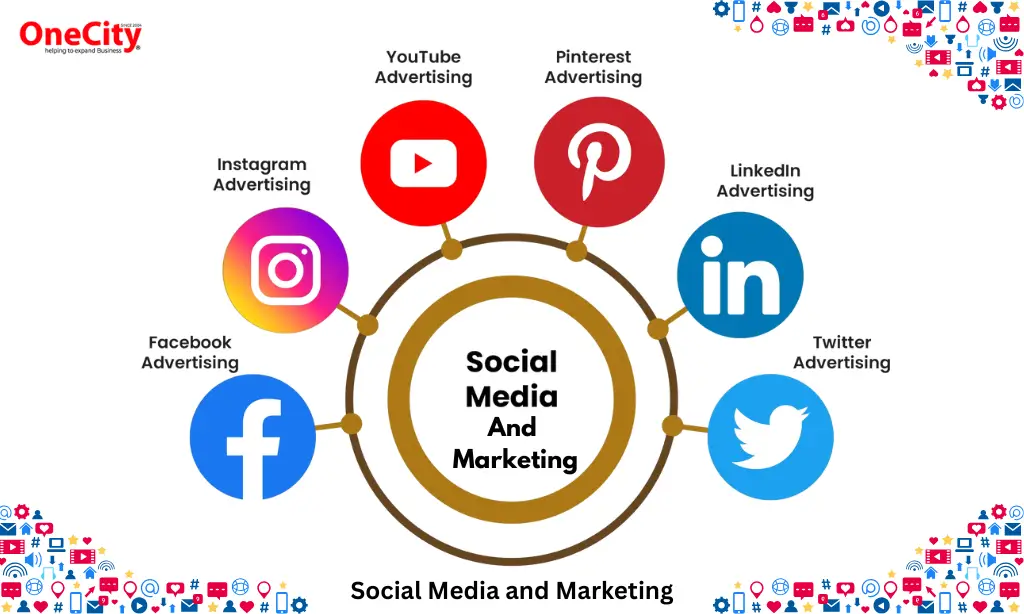
AI in Social Media Marketing
Social media platforms have integrated AI into content creation tools: Instagram has AI-generated backgrounds and image editing, LinkedIn has AI writing suggestions for posts, and all major platforms use AI to determine content distribution. The practical impact for businesses:
- Content scheduling and repurposing: Tools like Descript, Opus Clip, and Pictory use AI to extract short clips from long videos, transcribe recordings, and generate social-ready content from longer formats. This reduces the production cost of multi-platform content distribution significantly.
- Image and graphic creation: Canva's AI features, Adobe Firefly, and Midjourney enable non-designers to produce social graphics that previously required a dedicated graphic designer. The quality is adequate for social feed content, though not for brand-critical applications like websites or print materials.
- Engagement analysis: AI-powered analytics in tools like Sprout Social and Hootsuite identify optimal posting times, content types that generate the most engagement, and audience segments that respond to specific content themes. These insights improve content strategy decisions without requiring manual data analysis.
The limitation across all of these: AI can produce competent generic content at scale. It cannot produce the authentic, specific, personality-driven content that actually performs well on social platforms. A founder sharing a genuine business lesson or a behind-the-scenes look at their Bangalore office will outperform an AI-generated motivational graphic every time. Social media rewards authenticity, and that remains a human quality.
What Bangalore Businesses Should Do About AI in Marketing
The practical recommendations for businesses in Bangalore working through the current AI shift:
- Use AI for research and production efficiency , not for replacing expertise. AI tools save time on research, data analysis, image creation, and content reformatting. They do not replace the strategic judgement, local market knowledge, and client experience that differentiate your business.
- Shift keyword strategy toward commercial and transactional intent. Informational queries are increasingly captured by AI Overviews. Commercial queries , where the searcher wants to evaluate, compare, or purchase , retain their click volume and conversion potential.
- Invest in E-E-A-T signals more aggressively. Named authors, verifiable credentials, original case studies, and genuine client outcomes are the content attributes that AI cannot replicate and that Google's quality systems increasingly reward.
- Do not publish AI-generated content without substantial human editing and expertise overlay. Google's March 2026 Spam Update has made the risk-reward calculation clear: scaled AI content carries penalty risk with diminishing ranking returns.
- Test AI tools on non-critical workflows first. Before deploying AI-generated social graphics to your main brand account or AI-written email campaigns to your primary list, test on secondary channels and measure performance against human-produced baselines.
How OneCity Approaches AI in Client Work
At OneCity Technologies, we use AI tools where they provide genuine efficiency gains , content research, schema markup generation, data analysis support, and ad copy variation testing. We do not use AI to generate client-facing content, because our competitive advantage is practitioner expertise that AI cannot replicate.
Our founder, L.K. Monu Borkala, has 20 years in business and has managed digital marketing campaigns for 650+ clients across Karnataka. That operational experience , knowing what works in the Bangalore market specifically, understanding client verticals from the inside, and having measured the outcomes of thousands of campaigns , is what produces content and strategy that ranks, converts, and withstands algorithm updates. AI is a tool in our workflow, not a replacement for our team's expertise.
If you want a digital marketing programme that uses AI intelligently while protecting your brand from the risks of over-reliance on generated content, contact us at +91 99023 30233.
AI-Powered Email Marketing Automation
Email marketing platforms , Zoho Campaigns, Klaviyo, Mailchimp , have integrated AI into subject line optimisation, send time prediction, and audience segmentation. These features produce measurable improvements in open rates and click-through rates without requiring manual A/B testing for every variable. For Bangalore businesses running email campaigns at scale, AI-powered send time optimisation alone typically improves open rates by 10–15% by delivering emails when individual subscribers are most likely to check their inbox.
The limitation: AI cannot improve the quality of the email content itself. A perfectly timed, algorithmically optimised email with generic, unhelpful content will still be ignored. Subject line AI can suggest variations, but the underlying value proposition , why the recipient should care , remains a human creative task.
Frequently Asked Questions
Will AI replace SEO professionals?
No. AI has automated parts of the SEO workflow , particularly research, reporting, and schema generation , but the strategic decisions (keyword targeting, content strategy, competitive positioning, technical architecture) require human judgement informed by experience. SEO professionals who use AI tools effectively are more productive than those who do not. SEO professionals who are entirely replaced by AI tools produce work that does not survive algorithm updates.
Is AI-generated content penalised by Google?
Google has stated that AI-generated content is not automatically penalised. What is penalised is content that lacks genuine expertise, provides no original value, or is produced at scale without meaningful human oversight. In practice, AI-generated content that is published without significant expert editing consistently underperforms in search because it fails the Helpful Content criteria , not because of explicit AI detection, but because it lacks the depth, specificity, and authority that ranking content requires.
How is AI changing Google Ads management?
AI has automated bid management, audience targeting, and ad placement decisions that were previously manual. The human role has shifted from tactical execution (adjusting bids, building audiences) to strategic direction (defining conversion goals, producing creative, interpreting results, and making budget allocation decisions). Effective Google Ads management in 2026 requires understanding how the AI systems work and knowing when to override their default decisions , not replacing them.
Should small businesses in Bangalore invest in AI marketing tools?
Start with the AI tools already built into the platforms you use , Google Ads smart bidding, Meta Advantage+ targeting, Canva's AI design features. These are included in your existing subscriptions at no additional cost. Only invest in standalone AI marketing tools when you have a specific workflow bottleneck that the tool addresses and when you have enough usage volume to justify the subscription cost.
Frequently Asked Questions
Is AI in digital marketing meant to replace human marketers?
No, according to this piece. It's framed as augmenting creativity and giving marketers superhuman speed, turning data into action rather than replacing the human role.
How has AI changed content production workflows?
AI models can analyse competitor content gaps, suggest headings, and rewrite content for tone or clarity, letting content teams produce consistent, SEO-aligned output faster than manual research and trial-and-error allowed.
What tasks are commonly automated across marketing teams now?
Long-form content production, generative visual design, social media publishing cycles, and simplified SEO audits and website optimisation checks.
