Written by L.K. Monu Borkala, Founder, OneCity Technologies (CIN: U72100KA2009PTC048911), Bangalore. 20 years in business. +91 99023 30233. How to choose a digital marketing agency is really a question about how to verify claims.
Introduction
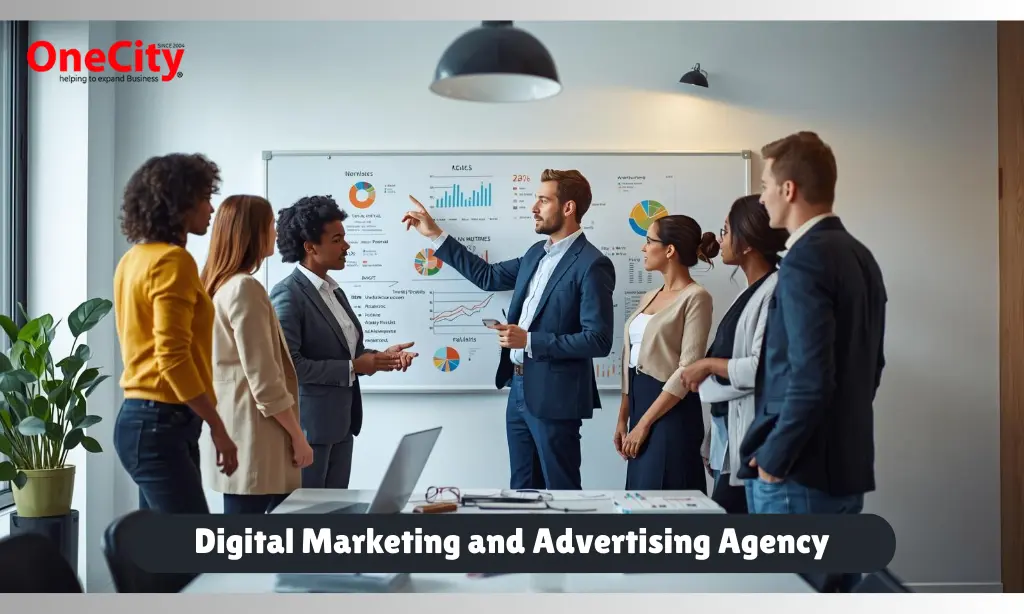
In a crowded online marketplace, even great products get lost without a clear strategy and consistent execution. That’s where the proper digital marketing and advertising agency makes the difference bringing proven frameworks, audience research, and cross-channel expertise to help you stand out. With competition rising across search, social, and marketplaces, DIY tactics and sporadic campaigns rarely deliver sustainable growth. An experienced partner aligns your brand, budget, and business goals, then uses data to prioritise what actually moves the needle whether that’s SEO, Google Ads, social media, content, or conversion optimisation. This guide shows you exactly how to evaluate agencies near you, what to look for in capabilities and culture, and how to make a confident, ROI-focused choice.
Why Your Business Needs a Digital Marketing and Advertising Agency
Growth stalls when marketing is ad-hoc, tool access is limited, and teams juggle too many roles. Partnering with an advertising agency or a digital marketing company fixes that by bringing specialist skills, proven playbooks, and always-on execution. The ROI shows up in the places that matter: higher qualified traffic, lower acquisition costs, stronger lead quality, and more consistent sales. Compared with hiring in-house, an agency gives you an entire bench strategists, SEO specialists, paid media buyers, content creators, designers, and analysts at a fraction of the cost of building every role internally. You also gain enterprise tools (ad platforms, analytics suites, tracking, CRO, and automation) without paying full licenses or running complex implementations yourself. Agencies move faster, too. They test landing pages, creatives, and keyword clusters weekly; shift budgets from low-yield channels to winners; and report against revenue-focused KPIs, not vanity metrics. When seasonality hits or a product line changes, they scale campaigns up or down without rehiring or retraining. Most importantly, a good partner aligns tactics to strategy brand positioning, ICP definition, offer design, and funnel architecture so every rupee spent compounds. If you want predictable growth instead of sporadic spikes, a capable agency is the use you’re missing.
Factors to Consider When Choosing the Right Agency
Choosing well saves months of trial and error. Use this checklist to evaluate any partner (especially when shortlisting a digital marketing agency in Bangalore):
- Expertise & Specialisation
- Look for depth in core channels you need now SEO (technical + content), Google Ads/Performance Max, Social (paid + organic), CRO/landing pages, email/marketing automation, and brand strategy. Ask who actually executes and who leads the strategy.
- Experience & Portfolio
- Request case studies with baseline → outcome (e.g, organic sessions, CAC, ROAS, pipeline). Prioritise domain familiarity B2B SaaS, healthcare, education, real estate, retail, etc. When comparing digital marketing companies in Bangalore, request local examples and industry-specific successes.
- Strategy, Not Just Tactics
- Strong agencies start with ICPs, offer design, message testing, funnel mapping, and a quarterly growth plan. They define hypotheses, experiments, and success criteria before spending.
- Transparency & Pricing
- Explicit scopes, deliverables, and SLAs. Media budgets must live in your ad accounts; you should own analytics, creatives, and data. Beware of bundled fees with vague hours or “percentage of spend” without clear value.
- Technology & Tools
- Comfort with GA4, GSC, tag management, call tracking, CRM (HubSpot/Salesforce), CDPs, and dashboards (Looker Studio). Ask how they use AI for keyword clustering, creative iteration, and anomaly detection without sacrificing human judgment.
- Reporting & KPIs
- Weekly dashboards tied to revenue outcomes: SQLs, pipeline, CAC, LTV, ROAS not vanity metrics. Expect channel mix recommendations and budget reallocation based on marginal returns.
- Communication & Workflow
- A named account lead, weekly stand-ups, monthly strategy reviews, fast-turn creative lanes, and a shared backlog. Clarify approval cycles and turnaround times for ads/pages.
- Compliance & Brand Safety
- Ad policy knowledge, privacy-first tracking (consent mode/server-side), and clear guidelines for UGC, influencer, and affiliate activity.
- Contract Flexibility
- 60–90 day pilots, exit clause, and the first 30–60–90 day plan in writing.
Selecting against these criteria surfaces partners who can ship, learn, and scale without surprises.
Local Advantage: Why Working with a Nearby Agency Helps
Working with a nearby partner compresses feedback loops and makes strategy real. In-person workshops surface customer insights faster, align sales and marketing, and accelerate creative approvals. A digital marketing agency in Bangalore understands neighbourhood intent (“near Indiranagar clinic,” “HSR Layout tuition”), seasonality (festivals, campus admissions, real-estate launches), and language nuances (English-Kannada mix), so your ads, landing pages, and content feel native improving CTR and lead quality. Local presence also sharpens execution. Nearby teams can audit stores or campuses, shoot on-location creatives, and test offers with real customers before scaling. They excel in local SEO, focusing on optimising Google Business Profile, making sure NAP consistency, and incorporating regional citations, hyperlocal keywords, and map-pack signals tied to Bangalore pin codes and landmarks. You get faster turnarounds on ad iterations, landing pages, and performance reviews because time zones and work culture match. Finally, digital marketing companies in Bangalore often bring partner ecosystems media houses, influencers, publishers, event organisers that open distribution beyond search and social. When regulations, platform quirks, or market shocks hit, a local team knows what’s changing on the ground and adapts budgets quickly the outcome: fewer misfires, tighter CAC, and growth that compounds in your core service areas.
Digital Marketing Company vs Advertising Agency: What’s the Difference?
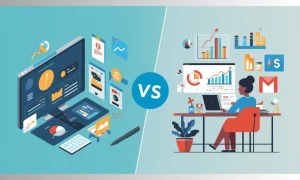 Although many use the terms interchangeably, a digital marketing company and an advertising agency address different aspects of growth. The first runs your measurable, always-on engine. The second excels at big-idea campaigns and media that shape perception at scale.
| Dimension | Digital marketing company | Advertising agency |
| Primary focus | Full-funnel performance, pipeline, CAC/LTV | Brand positioning, reach, awareness |
| Core services | SEO, paid search/social, CRO, email, automation, analytics | Creative concepts, films, OOH/TV/radio, print, influencer, media buying |
| Planning horizon | Iterative sprints; test–learn–scale weekly | Campaign waves; seasonal/product launches |
| Optimization loop | A/B tests, attribution, and budget shifts in-platform | Pre/post studies, GRPs, brand lift, creative refreshes |
| Data & tools | GA4/GSC, ad platforms, CRM/CDP, dashboards | Audience research, brand trackers, media tools |
| Best for | Revenue accountability, lead quality, unit economics | Category storytelling, mass-market impact |
Which do you need? If your priority is short-cycle revenue and compounding learnings, choose a digital marketing company. If you’re launching, rebranding, or entering a new market and need to gain visibility quickly, consider partnering with an advertising agency. Many programs blend both: brand to create demand and performance to capture it.
Red Flags to Avoid When Hiring an Agency
Choosing a digital marketing and advertising agency is high-stakes watch for these warning signs before you sign:
- Unrealistic promises: “#1 rank in 7 days,” “10x ROAS overnight,” or guaranteed outcomes in unpredictable channels.
- No strategy or KPIs: Proposals heavy on jargon but light on ICPs, funnel mapping, CAC/LTV targets, and measurable milestones.
- Data opacity: You don’t own ad accounts, analytics, or pixels; no live dashboards; vague monthly PDFs with vanity metrics only.
- Hidden fees & unclear scope: Bundled retainers without deliverables, or “percentage of spend” with no value narrative.
- Thin proof: Few case studies, no references, cherry-picked screenshots, or results not tied to revenue or pipeline.
- One-size-fits-all packages: No discovery, no industry nuance, identical plans for e-commerce, SaaS, and services.
- Poor communication: No named account lead, slow SLAs, shifting teams, or bait-and-switch seniority.
- Risky tactics include Black-hat SEO (PBNs, link schemes), brand-unsafe placements, or non-compliant tracking that jeopardises accounts.
If multiple flags appear, walk away from misfit partners, as they cost time, budget, and momentum that you won’t get back.
How to Shortlist and Make the Final Choice
Provide a step-by-step guide:
Research
Map your goals, ICP, budget, and timelines. Build a long-list from Google, LinkedIn, and referrals; note sector expertise, channel strengths, team seniority, and who will actually work on your account.
Compare pricing/services.
Request clear scopes with monthly deliverables, ownership of ad accounts and analytics, meeting cadence, and KPIs. Normalise retainers against outcomes like SQLs, ROAS, CAC, and pipeline impact.
Read reviews
Check Google reviews, testimonials, and third-party case studies. Request two recent industry references and verify their baseline actions and results, rather than just screenshots.
Request a strategy sample or proposal.
Seek a 90-day plan that includes hypotheses, a test matrix (keywords, creatives, landing pages), budgets, and measurement. Make sure it connects tactics to business goals and has clear success criteria.
Start with a trial run.
Set a 60–90 day pilot with explicit goals, weekly dashboards, and a go/no-go checkpoint. Confirm SLAs, escalation paths, and that data, creatives, and accounts remain yours.
We are reaching out to multiple digital marketing agencies to compare their services.
Invite 3–5 finalists to present, ask identical questions, and score on thinking, transparency, and systems. Choose the digital marketing and advertising agency that proves a repeatable process, not promises.
A Realistic Vetting Timeline, Reference Checks, Contract Terms, and Transitions
A realistic agency vetting timeline runs longer than most businesses initially plan for, and rushing the selection process to save a few weeks often costs considerably more time later through a poor fit that needs unwinding. Allowing two to three weeks for initial research and shortlisting, a further one to two weeks for discovery calls and proposal review across the shortlist, and time for reference calls before signing anything, typically produces a considerably better outcome than compressing the entire process into a single week under pressure to start immediately.
Reference-checking calls with a prospective agency past clients deliver far more value when the questions go beyond a generic satisfaction check. Asking specifically what the agency communication looked like when something went wrong, whether reported results held up under independent verification in the client own analytics, and whether the client would specifically recommend the same account team rather than the agency in general, all surface information a generic reference call misses. A client answering these specific questions candidly is worth more than three references who only offer vague positive impressions.
Contract red flags beyond pricing and scope deserve their own scrutiny before signing. Automatic renewal clauses that lock in another full term unless cancelled within a narrow notice window, ownership clauses that leave content or accounts with the agency rather than the client upon termination, and vague deliverable definitions that leave room for dispute about whether promised work was actually completed all create risk that becomes apparent only when a business tries to exit or enforce the agreement.
Transitioning from a current agency to a new one requires planning that many businesses handle reactively rather than proactively. Requesting full account access, historical reporting data, and content ownership documentation before formally ending the current relationship prevents the common scenario where a departing agency becomes slow or unresponsive once they know the relationship is ending. Overlapping the transition, keeping the outgoing agency briefly while the new one gets oriented, reduces the disruption a clean break can otherwise cause to ongoing campaigns and rankings.
Frequently Asked Questions
What is the first thing to check when choosing a digital marketing agency?
Whether they rank and convert for themselves. An agency that cannot market its own business is showing you its ceiling.
Which questions expose a weak agency fastest?
Who exactly works on my account, show me a client that left and why, and what happens to my content and access if we part ways. Weak agencies wobble on all three.
Should I choose a specialist or a full-service agency?
Specialist for one urgent problem, full-service once channels need to work together. Paying full-service prices for one channel of need is common and avoidable.
Which contract terms protect the client?
Monthly or quarterly exit, client-owned accounts and content, itemised deliverables, and reporting access you hold directly rather than screenshots.
How much should a digital marketing agency cost in Bangalore?
Small-business retainers commonly run Rs. 15,000 to Rs. 40,000 a month; larger scopes scale from there. Cheaper exists, but ask precisely what work fits inside that fee.
Conclusion
Choosing the right partner isn’t about glossy decks, it’s about fit, focus, and measurable impact. A capable digital marketing and advertising agency clarifies your ICP and offers, builds a test-and-learn engine across SEO, Google Ads, social, and CRO, and reports weekly against pipeline, ROAS, and CAC. Use the checklist above to shortlist, request a 90-day plan, and run a pilot with clear SLAs and shared ownership of data and ad accounts. When the agency shows thinking, transparency, and repeatable systems, you get compounding growth instead of sporadic wins. Take the first step toward impactful digital success choose a partner that acts like a growth team, not a vendor.
Expert insight from L.K. Monu Borkala: India’s digital advertising market reached Rs 39,000 crore in 2024 and is projected to grow at 15% annually through 2028, driven primarily by mobile internet penetration exceeding 850 million users (Statista Digital Advertising India). HubSpot’s 2024 State of Marketing Report found that businesses that align their SEO, content, and social media strategies see 3x higher lead generation than those running disconnected campaigns , a pattern OneCity has consistently observed across its 650+ client engagements in Bangalore and Mangalore (HubSpot State of Marketing 2024). For Bangalore businesses, the most significant growth channel in 2025 is AI search visibility , being cited in Google AI Overviews, Perplexity, and ChatGPT results.
Reference sources: TRAI India internet data.
The Evaluation Framework for Choosing a Digital Marketing Agency Near You
Choosing a digital marketing agency near your Bangalore business is a decision that affects revenue for the duration of the engagement , typically 12-24 months before organic and paid campaign results compound sufficiently to be clearly attributable. A poor agency choice costs not just the retainer but the opportunity cost of 12 months that could have been spent building genuine organic authority and paid campaign data with a competent partner.
The evaluation framework has five stages: verification, capability assessment, reference check, proposal review, and contract negotiation. Most Bangalore businesses skip stages one, three, and five entirely , they verify nothing, skip references, and sign the first proposal without reviewing contract terms. These skipped stages are precisely where the worst agency relationships begin.
Stage One: Verification Before Any Meeting
Before spending time in a discovery call with any digital marketing agency in Bangalore, complete three verification steps that take less than ten minutes. First, check the company CIN at mca.gov.in. Any legitimate agency incorporated as a private limited company has a CIN that is searchable in the MCA21 database. The database shows the company name, date of incorporation, registered address, and director names. If the agency claims to be incorporated but is not in the MCA database, they are either using a fraudulent CIN or operating without proper registration. Second, search for the agency’s Google Business Profile optimization. A credible Bangalore digital marketing agency has a complete GBP with a verifiable address, regular updates, and genuine customer reviews. An agency that cannot manage its own GBP effectively has limited credibility advising clients on GBP management. Third, check their own website’s Google PageSpeed Insights score. A digital marketing agency with a mobile PageSpeed score below 60 is not applying the same standards to their own online visibility that they will charge you to apply to yours.
Stage Two: Capability Assessment
Capability assessment is not about asking what services the agency offers , every agency in Bangalore offers SEO, Google Ads, social media, and content marketing services. It is about understanding whether they can demonstrate specific competence in the channels most relevant to your business.
For SEO capability, ask them to perform a live SEO audit of your website during the discovery call. A competent SEO practitioner can open Search Console, identify your top organic keywords, your highest-traffic pages, your crawl errors, and your Core Web Vitals status within 20 minutes without any preparation. An agency that talks about SEO in general terms but cannot perform a specific live audit is selling the concept of SEO, not the practice.
For Google Ads capability, ask them to review one of your existing campaigns and identify three specific improvements they would make and why. If they have not managed Google Ads campaigns in your specific industry category, ask for examples of campaigns in adjacent categories and the results produced. The specificity of their answer , specific CPCs, Quality Score improvements, conversion rate changes , tells you whether the experience they claim is real.
For social media capability, ask them to explain the specific content strategy they would use for a business like yours on each relevant platform, and why. A Bangalore B2B IT services company does not need an Instagram strategy. If the agency pitches Instagram heavily for a B2B client, they are selling packaged services rather than thinking about the actual customer journey.
Stage Three: Reference Check
Request a reference from a client in your industry category or a closely adjacent one. Not a written testimonial , a phone number of someone at a company they have actively worked with in the last twelve months. Ask the reference three specific questions: did the agency communicate proactively when campaigns underperformed, did the results delivered match the results promised in the proposal, and would they rehire the agency if they needed the service again today?
An agency that declines to provide a reference is not protecting client confidentiality , confidentiality agreements cover campaign data, not the existence of the relationship. An agency that cannot produce a single client willing to speak on the phone about their experience has either no satisfied clients or no clients at all.
Stage Four and Five: Proposal and Contract Review
A credible proposal from a Bangalore digital marketing agency includes a specific 90-day plan with named deliverables, measurable objectives, and the tools and platforms that will be used. It does not include guaranteed ranking positions, because no agency controls Google’s algorithm. Any proposal with ranking guarantees is either misrepresenting how SEO works or planning to use tactics that produce short-term appearances of success and long-term penalties.
Contract terms to verify before signing: who owns the ad accounts, GA4 property, and Search Console access during and after the engagement. The correct answer is always the client. What is the notice period and what are the terms for accessing campaign data after termination? What happens to content, creative assets, and landing pages built during the engagement? A contract that gives the agency ownership of any of these assets is a lock-in mechanism, not a service agreement.
OneCity Technologies Pvt Ltd provides complete ownership of all digital assets to clients from day one. No lock-in. No data held. Every campaign is built in client-owned accounts. L.K. Monu Borkala, Founder. 20 years in business. CIN: U72100KA2009PTC048911. Bengaluru: +91 99023 30233 | Mangaluru: +91 89044 28490 | sales@onecity.co.in.
L.K. Monu Borkala
Founder & SEO Director, OneCity Technologies
20 years running SEO campaigns from Bangalore. Full author profile · LinkedIn