Written by L.K. Monu Borkala, Founder, OneCity Technologies (CIN: U72100KA2009PTC048911), Bangalore. 20 years in business. +91 99023 30233.


Before we start the quest to find out the differences between traditional marketing and digital marketing, we must essentially understand what marketing is and what the two types of marketing are. Marketing, in simple words, is the business of selling goods and services. It includes all the aspects of selling like promotional activities, advertising, and market research. So, evidently, marketing can be further classified into two broad categories. Traditional marketing and Digital Marketing. Traditional marketing is the marketing of goods and services through traditional channels like hoardings and print media. Up until the introduction of digital channels of marketing, traditional marketing has been, more or less, the only means of marketing. On the other hand, digital marketing in Mangalore is marketing through digital channels such as social media, emails, and websites. In other words, it is also called internet marketing, as this mode of communication requires the use of the world wide web or the internet.
Internet Marketing vs Traditional Marketing which Is Better for Your Business?
To know which type of marketing suits your business type, you should first know the difference between the two.
Differences Between Digital Marketing and Traditional Marketing.
Medium of Communication
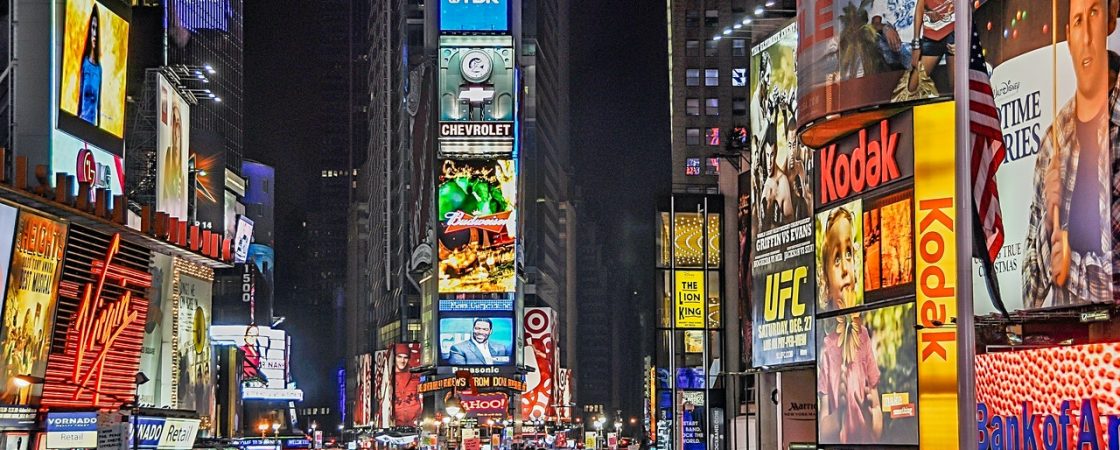
Traditional marketing does not mean that it uses old methods of marketing. It only refers to the medium of marketing employed. Traditional marketing uses radio, print, television, billboards, and point of sale as a means to disseminate information to the public. Some other modes of traditional marketing are conferences, direct post, workshops and sponsorships Whereas Digital marketing as the name suggests uses the internet or digital means of communication. Emails, social media, blogging, paid advertising, and websites to mention a few are some of the modes of digital marketing.
One Way or Two-Way Traffic
In traditional marketing, promotional activities are usually one-sided. Except for point of sales, there is little or no interaction between the buyer and the seller. This one-sided communication makes it difficult to convince an audience who require a bit of persuasion to buy a product or service. The conversion ratio in traditional marketing is lower than that of digital marketing. In digital marketing, there is a possibility of remote interaction between the buyer and seller. For instance, an interactive email. Also Read Reasons To Get Services From A Digital Marketing Agency
Limitations on Updating
When it comes to traditional marketing Vs digital marketing one of the major differences is the limitations in the ability to update an advertisement. Traditional marketing is rigid in this matter. Once an advertisement has been printed, you cannot change or update any information on it. Updating the information on printed material is possible only if you replace the whole advertisement On the other hand, in digital marketing, there is scope for updating and changing the information on an advertisement without replacing it. An excellent example of this could be a print advertisement to promote your retail store. You may include a list of items available in the store on your printed advertisement. If a new product is added to this list, you will be unable to add the item to your print advertisement without replacing the whole advertisement. Whereas in a digital advertisement, you can easily add the item without replacing the whole campaign.
Target Audience
In traditional marketing, your target audience is limited. Your promotional campaign has geographical limitations. For example, your advertisement placed in a local newspaper will reach only those audiences that subscribe to that particular paper. Digital marketing has a wider reach. Social media campaigns, websites, and blogs can be accessed by customers from around the world. The target audience in digital marketing campaigns is wide. As Bill Gates Quote “The internet is becoming the town square for the global village of tomorrow.”
Cost
Traditional marketing promotions are costlier than digital marketing. The cost of putting up a hoarding or advertising on television is much more expensive than putting up an advertisement on a social media site. Also Read Basic Qualities of a Great Digital Marketer
Measuring Success
Measuring the result of a campaign is one of the methods of improving sales for any business. Traditional marketing does not have any set methods to gauge or measure the success of a campaign. Whereas digital marketing has certain tools that measure the success or failure of a digital marketing campaign. Digital marketing employs many tools that can indicate the performance of your advertisement.
Product Information
One major difference between traditional marketing and digital marketing is the ability to disclose all information about the products or services. In traditional marketing, you can disclose limited information about the product due to the lack of space or higher costs. Digital marketing allows you to disclose more information about products and services. Although digital marketing seems to have a slight edge over traditional marketing, we cannot totally ignore traditional marketing. Traditional marketing also has certain advantages. Some of the advantages are
- Easy to reach the local target audience
- A print advertisement has more retaining power than a digital advertisement
- Traditional marketing has success stories too.
You May Also Like Digital Marketing Strategy for B2B
Traditional Marketing vs Digital Marketing Which Is Better for You?
Now that we have discussed traditional Vs digital marketing, let us look at some of the factors that help you decide which marketing strategy is better for your product or service. The answer to this is simple. It depends on certain factors such as the product itself, the price of products, target audience, and the place of marketing. Product – Before marketing a product or service, understanding your product or service is essential. Is your product of local nature? Does your product or service appeal to the masses in general? Is your product especially meant for a particular target audience like women, elderly population? Your product or service is one of the deciding factors when deciding on choosing traditional or digital marketing modes of promotion. If your product or service is more localised in nature then it is advisable to choose the traditional marketing strategies. However, if your product or service appeals more to the masses, employing digital marketing methods is more sustainable. Therefore, there is no particular right or wrong marketing strategy and it depends entirely on the nature of your product or services. Target audience – Once you have identified your target audience, deciding on which type of marketing to employ becomes easier. If your target audience is the older generation, keep in mind that most of this population are not very tech-savvy. Therefore, traditional marketing would be more effective in such a case. However, if your target audience is the young generation or a large section of society then digital marketing will play an important role. Place – The place of the product is a deciding factor when choosing Internet marketing Vs traditional marketing. If your product is local in nature or more effective in a village, be certain that such places may not have great access to internet facilities. In this case, traditional marketing would work better. However, if your product is more global in nature digital marketing will be more effective. Although there is no real right or wrong way of marketing, we can conclude that digital marketing has an edge over traditional marketing for more reasons than one. Today, with an increase in the use of the internet, the world has become a global market. The internet has bridged the communication gaps and shrunk distances across the world. With the internet in your hands, the world is your market place. To rightly quote Stephen Hawking at this juncture, “We are all now connected by the internet like neurons in a giant brain.” Also Read What Are the Benefits Of Web Designing & Development for A Business Website?
Expert insight from L.K. Monu Borkala: India’s digital advertising market reached Rs 39,000 crore in 2024 and is projected to grow at 15% annually through 2028, driven primarily by mobile internet penetration exceeding 850 million users (Statista Digital Advertising India). HubSpot’s 2024 State of Marketing Report found that businesses that align their SEO, content, and social media strategies see 3x higher lead generation than those running disconnected campaigns , a pattern OneCity has consistently observed across its 650+ client engagements in Bangalore and Mangalore (HubSpot State of Marketing 2024). For Bangalore businesses, the most significant growth channel in 2025 is AI search visibility , being cited in Google AI Overviews, Perplexity, and ChatGPT results.
Reference sources: TRAI India internet data.
The False Binary: Why the Choice Is Integration, Not Either/Or
The “traditional vs digital marketing” framing implies a forced choice that most successful Bangalore businesses do not actually make. The real question is not which one to use but which combination of channels best serves each specific business objective at each stage of growth. A Bangalore restaurant uses digital marketing (Google Maps, Instagram, Swiggy) for daily customer acquisition but uses traditional marketing (menu inserts, physical loyalty cards, local area signage) for customer retention and neighbourhood brand awareness. Neither alone is sufficient.
That said, the balance has shifted dramatically. In 2010, a Bangalore small business could build a viable customer base through print advertising, word of mouth, and a Yellow Pages listing. In 2026, the same business without a Google Business Profile, a functional website, and at least basic social media presence is effectively invisible to the majority of prospects who begin their vendor search online. Traditional marketing has not died , it has become the supplementary layer rather than the primary one for most Bangalore business categories.
At OneCity Technologies, we started as a Yellow Pages directory business in 2006 and transitioned into digital marketing from 2017. That history gives us a specific vantage point on how the relative value of traditional and digital channels has actually shifted in the Karnataka market , not in theory but in observable client outcomes over two decades.
Where Traditional Marketing Still Wins
Hyper-Local Brand Awareness
For businesses operating in a defined physical neighbourhood , a Jayanagar clinic, a Malleshwaram retail store, a Koramangala restaurant , physical-world brand presence remains effective and underpriced relative to digital. A well-positioned hoarding near the venue, a standee at a neighbouring complementary business, door-to-door flyer distribution in the surrounding residential streets, and a prominent shopfront sign create ambient brand awareness within the catchment area that digital advertising cannot replicate at equivalent cost.
The mechanism is frequency exposure: a resident who passes your hoarding on their daily commute route sees your brand 20+ times per month without any advertising spend per impression. Digital remarketing achieves similar frequency but requires ongoing spend to maintain it. For hyperlocal businesses with stable geographic catchments, physical brand presence has a better long-term cost structure than equivalent digital frequency campaigns.
Older and Less Digitally Active Demographics
Despite India's high smartphone penetration, significant customer segments remain more reachable through traditional channels. Senior citizen healthcare markets, traditional B2B relationships in manufacturing and trade, rural and semi-urban customers in the areas surrounding Bangalore , these audiences may respond better to direct mail, physical events, and personal visits than to digital campaigns.
A Bangalore healthcare equipment supplier targeting hospitals in smaller Karnataka towns may achieve better results from a well-produced product catalogue sent by post to the purchase manager than from a digital campaign targeting the same audience. Know your specific audience's media habits before allocating channels.
High-Impact Event Marketing
Physical presence at trade shows, industry conferences, and community events produces relationship-quality contacts that digital channels cannot generate. Meeting a prospective client in person at a Bangalore manufacturing expo creates a relationship foundation , a handshake, a face-to-face conversation, a business card exchange , that no digital touchpoint replicates. For B2B businesses where long-term relationships drive contract renewals, the relationship capital built through physical event presence is a legitimate business investment that sits outside the digital vs traditional framing.
Where Digital Marketing Decisively Wins
Measurability and Attribution
The fundamental advantage of digital marketing over traditional is measurability. A Google Ads campaign shows you exactly how many people saw your ad, how many clicked, which specific search queries triggered the ad, what percentage of visitors converted, and what the cost per conversion was. A newspaper advertisement shows you a circulation number and a readership estimate , with no way to determine how many readers saw your specific ad, and no way to measure whether any of them contacted you as a result.
This measurability gap compounds over time. Digital campaigns produce data that enables systematic improvement , A/B testing ad copy, adjusting keyword bids based on conversion performance, reallocating budget from underperforming channels to overperforming ones. Traditional marketing produces intuition at best and guesswork at worst. For Bangalore businesses with limited marketing budgets where every rupee must be justified, measurability is not a nice-to-have , it is the difference between growing revenue and wasting money.
Targeting Precision
Digital marketing allows targeting based on demonstrated intent (search keywords), demographic profiles (age, income, location), behavioural signals (websites visited, apps used, content engaged with), and audience lookalikes (reaching people who resemble your existing customers). A Bangalore B2B software company can target Google Ads specifically at searches by IT managers at companies with 100–500 employees in Bengaluru's tech corridor. No traditional advertising medium can approach this precision.
For Bangalore businesses with niche target audiences , a specialist medical device supplier, an executive coaching firm, a premium wedding photography studio , digital targeting precision makes the marketing investment dramatically more efficient than traditional broad-reach alternatives. You pay only to reach people who meet the specific criteria that define your target buyer.
Compounding Long-Term Assets
Digital marketing produces compounding assets that traditional marketing does not. An SEO-optimised blog post published today generates traffic for 3–5 years without additional spend. A Google Business Profile with 80 reviews continues generating local pack appearances indefinitely. An email list built over 3 years compounds in value as it grows. A YouTube channel with 50 videos builds subscriber momentum that accelerates with each new video.
Traditional marketing produces no permanent assets. A newspaper ad runs once and is gone. A radio spot plays and disappears. An exhibition stand exists for 3 days. The investment is entirely consumed by the campaign with no residual value. Digital marketing's compound asset model produces increasing returns over time on a diminishing marginal cost basis , the opposite of traditional marketing's flat, one-time return model.
Budget Allocation: How Bangalore Businesses Should Think About the Split
A practical framework for allocating between traditional and digital for Bangalore businesses in 2026:
For businesses generating above ₹2 crore annually: 70–80% digital (SEO, Google Ads, social, email, content), 20–30% traditional (events, print for specific contexts, local physical brand presence). Digital's measurability at this revenue level justifies concentration.
For businesses generating ₹50 lakh–2 crore annually: 80–90% digital with selective traditional for event participation and local brand presence. At this revenue level, every marketing rupee needs measurable ROI , digital provides it.
For businesses below ₹50 lakh annually: Near-100% digital with the exception of truly free traditional activities (word of mouth, referral networks, physical signage already paid for). Budget constraints make measurability and efficiency the non-negotiable criteria , digital wins this comparison decisively.
For a digital marketing programme for your Bangalore business built on this framework, contact OneCity Technologies at +91 99023 30233. Author: L.K. Monu Borkala, Founder & CEO, OneCity Technologies, 20 years in business.
The Hybrid Marketing Model: What Works in Practice for Bangalore Businesses
The most effective marketing mix for most Bangalore businesses in 2026 uses digital as the primary acquisition and measurement infrastructure while retaining traditional for the specific contexts where physical presence creates value digital cannot. Three specific hybrid models that produce measurable results:
Model 1 , Digital-led with event anchor: 90% of budget on digital channels (SEO, Google Ads, social), 10% on 2–3 annual industry event participations. The events generate relationship-quality B2B contacts; digital converts those contacts to clients through remarketing and nurture sequences. The event spend is justified by the relationship quality it produces; the digital spend is justified by the measurement it enables. This model works best for B2B professional services in Bangalore.
Model 2 , Digital-led with local physical brand: 80% digital, 20% physical neighbourhood brand presence (signage, local directory listings, area-specific print). The physical presence drives walk-in and neighbourhood word-of-mouth; digital captures search-initiated enquiries. The combination covers the full customer acquisition funnel , ambient awareness through physical presence, active intent capture through digital. This model works best for Bangalore retail, restaurants, clinics, and neighbourhood service businesses.
Model 3 , Digital-first with print collateral: Near-100% digital acquisition, with professional print materials (brochures, proposal documents) used exclusively in sales meetings. The print materials are conversion tools rather than acquisition tools , they do not generate leads but they close them more effectively than digital-only proposals. This model works best for Bangalore professional services businesses where high-value proposals are part of the sales process and where print quality signals investment and seriousness. Contact OneCity Technologies to discuss the right model for your specific business at +91 99023 30233.
Frequently Asked Questions
Is traditional marketing dead for Bangalore businesses?
Not dead, but significantly reduced in relative importance for most categories. The channels that remain genuinely effective , hyperlocal physical signage, industry trade events, targeted print for specific high-value audiences , are the ones where physical presence creates value that digital cannot. Channels that are effectively dead for most Bangalore businesses: newspaper classifieds, generic print ads in mass circulation publications, TV and radio without extremely large budgets for frequency.
How do I measure the ROI of traditional marketing?
Imperfectly, compared to digital. Practical measurement approaches: unique phone numbers in specific print ads (call tracking), unique promo codes in physical materials, event-specific landing page URLs, and pre/post surveys asking new customers how they heard about you. None of these provide the precision of digital attribution, but they provide directional data for budget allocation decisions. If a traditional channel cannot produce any measurable signal after 3 months of consistent use, the investment is not justified.
Can digital marketing replace my sales team for B2B businesses?
Digital marketing generates leads and builds awareness but does not replace the relationship and trust-building function of B2B sales in the Bangalore market. It changes the sales function: rather than cold prospecting, sales teams work warm leads generated by digital marketing , prospects who have already visited the website, read content, or requested an audit. Digital marketing makes the sales team more efficient by providing qualified leads; it does not replace the human relationship element that closes high-value B2B contracts in Bangalore's relationship-oriented business culture.
What is the most cost-effective digital marketing channel for a new Bangalore business?
Google Business Profile optimisation , free, immediate local search visibility, produces enquiries within weeks of proper setup. Second: SEO with a focused content programme targeting low-competition local keywords. Third: Google Ads for immediate lead generation while organic rankings develop. This sequence produces the best return on limited early-stage marketing budgets because it builds permanent organic assets (GBP, SEO content) before investing in paid amplification.
Frequently Asked Questions
What's the main difference between traditional and digital marketing?
Traditional marketing uses channels like print, radio, television, and billboards, while digital marketing uses internet-based channels such as email, social media, and websites.
Is digital marketing more effective than traditional marketing?
Digital marketing typically achieves a higher conversion ratio because it allows two-way interaction between buyer and seller, unlike the largely one-sided communication of most traditional marketing channels.
Should a Bangalore business abandon traditional marketing entirely?
Not necessarily. The right mix depends on the specific business and budget, though digital channels generally offer better targeting and more measurable results for most businesses today.