
Introduction
Search engine optimisation (SEO) is the practice of improving how your pages appear and rank on search engines, so that the right audience can find you without relying on paid ads. In seo digital marketing, SEO sits alongside paid search, social, and email as a durable, compounding channel that reduces acquisition costs over time. At its core, SEO aligns three things: what people are searching for, what your pages actually provide, and how easily both crawlers and users can access that value. When those elements align, search becomes a predictable source of qualified traffic and leads.
Within SEO, two pillars drive performance: on-page and off-page. On-page SEO covers everything you control on your own site content and keywords, title tags and headings, internal linking, page experience, and technical signals that help search engines crawl, index, and understand your pages. Off-page SEO covers what happens away from your domain, such as backlinks, brand mentions, reviews, citations, and signals from platforms like Google Business Profile that establish authority and trust. Both influence how algorithms evaluate relevance and credibility.
Understanding the importance of both on-page and off-page SEO in digital marketing is crucial, as search engines consider these factors together. On-page work ensures your pages are the best answers to specific intents and are easy to parse and use. Off-page signals validate those answers on the broader web, showing that others reference, rate, and rely on your content. If one side is weak, rankings plateau: excellent content without authority struggles to break into competitive SERPs, while strong authority without relevant, well-structured pages fails to convert impressions into clicks and customers.
This guide will clarify the differences, show how they work in tandem, and outline when to prioritise each. You’ll learn practical levers to pull today and a framework for sustainable growth in search engine optimisation. By the end, you’ll know how to balance foundational on-page improvements with authority-building off-page strategies so your seo digital marketing program compounds results over time.
What’s the Difference Between On-Page and Off-Page SEO?
On-page SEO vs. off-page SEO begins with where the work occurs and how search engines interpret the resulting signals. On-page SEO refers to the actions performed on your own web pages to enhance relevance, quality, accessibility, and user experience. It includes keyword-aligned content, HTML elements such as title tags and headings, URL structure, internal linking, image alt text, schema, and performance factors like Core Web Vitals. Off-page SEO refers to actions occurring outside of your domain that influence your perceived authority and popularity, primarily including backlinks, brand mentions, reviews, citations, and activity around your Google Business Profile (GBP).
Why the distinction matters: algorithms evaluate both topical relevance and website authority. On-page optimisation demonstrates that your page is the best match for a query, while off-page signals corroborate that claim across the wider web. In digital marketing, you rarely achieve durable rankings by focusing on only one aspect. A well-structured article without endorsements struggles to compete in saturated SERPs; a site with many links but thin content sees high bounce rates and low conversions.
Think of on-page SEO as demand capture and experience design, and off-page SEO as reputation building. Together, they compound: better content earns more links and shares; stronger authority helps new pages gain traction faster. In highly competitive spaces like search engine marketing, balance is essential. Technical clarity and content depth attract crawlers and users, while credible citations move you into top results.
Example comparison table: key factors
| Area | On-page focus | Off-page focus |
| Primary goal | Relevance, crawlability, UX | Authority, trust, brand signals |
| Core levers | Titles, headings, copy, URLs, internal links, schema, Core Web Vitals | Backlinks, digital PR, reviews, citations, partnerships |
| Data sources | Search Console, analytics, site crawls | Referring domains, brand mentions, and GBP insights |
| Time to impact | Faster on individual pages | Slower but compounding across the site |
| Main risks | Keyword stuffing, duplicate content, and thin pages | Toxic links, manipulative schemes, inconsistent NAP |
On-page SEO proves you deserve to rank for specific intents; off-page SEO proves others agree. For sustainable growth in seo digital marketing, plan and measure both optimise content and structure first, then pursue credible references that validate your expertise. This is the practical core of “on-page SEO vs off-page SEO.”
Practical examples: updating a service page with clear H2S, FAQs, and internal links can lift click-through and dwell time within weeks; a focused outreach campaign that earns placements from industry blogs, local chambers, and data studies can raise domain authority over months. Measure both with query-level rankings, CTR, conversions, and assisted revenue.
Why Are On-Page and Off-Page SEO Important?
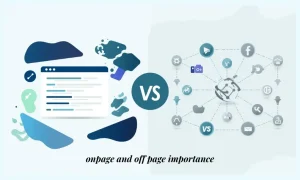
The importance of on-page and off-page SEO in digital marketing is best understood by considering how search engines evaluate two key factors simultaneously: relevance and authority. On-page work teaches algorithms exactly what your page is about and why it satisfies intent. Off-page signals prove that other credible sources recognise your content’s value. When both are present, rankings stabilise, click-through rates improve, and traffic compounds into qualified leads and revenue.
On-page SEO is your controllable foundation. By aligning keywords with search intent, structuring content with clear headings, optimising title tags and meta descriptions, improving Core Web Vitals, and using internal links to surface related resources, you help crawlers parse context and users complete tasks. These actions increase topical clarity and engagement metrics such as time on page, scroll depth, and conversions—signals that reinforce quality. In short, on-page optimisation ensures your page is the right answer and provides a frictionless experience.
Off-page SEO extends that credibility beyond your domain. High-quality backlinks, brand mentions, reviews, local citations, and activity on Google Business Profile operate as third-party endorsements. The more authoritative and topically relevant these references are, the stronger your perceived expertise becomes. This matters because competitive queries often require evidence that your site is trusted within the broader ecosystem, not just well-built.
In practice, both sides work as a single unit, functioning as a flywheel. Excellent content earns links and shares; trustworthy links help new or updated pages rank faster; rising rankings drive more exposure, which attracts further citations. This loop explains why search engine optimisation in digital marketing outperforms many channels over time: once the flywheel spins, marginal gains cost less than buying every click.
From a Google-ranking perspective, on-page factors influence how your page is indexed, matched to queries, and displayed (rich results, sitelinks, FAQs), while off-page factors affect the competitive tier you can access. Without strong on-page signals, link equity is wasted on thin or misaligned pages. Without credible off-page signals, even great pages stall below the fold for head terms.
Strategically, start by fixing what you control: technical health, architecture, and content quality for key intent clusters. Then layer authority building through digital PR, partnerships, niche directories, and customer reviews. Measure relevance with query-level rankings and CTR, measure authority with referring domain quality and brand searches, and connect both to outcomes like leads and assisted revenue. That balance is the fundamental importance of on-page and off-page SEO in digital marketing a durable growth engine that compounds across your entire site.
When Should You Use On-Page vs. Off-Page SEO?
Treat on-page optimisation as your non-negotiable starting point and ongoing maintenance, and deploy off-page SEO once your foundation can convert earned visibility into outcomes. In seo digital marketing, this sequence keeps effort efficient and impact compounding.
Begin with on-page SEO when:
- You’re launching a new site, a new section, or a new page. Establish crawlability, clear information architecture, and intent-aligned content so search engine optimization signals are unambiguous.
- Rankings fluctuate or stall at pages 2–3. Tighten title tags, headings, topical depth, internal links, and page experience (Core Web Vitals) before seeking external endorsements.
- You see low CTR or weak engagement. Improve metadata, add FAQs and schema, refine above-the-fold value, and interlink to related resources to enhance click-through and task completion rates.
Layer in off-page SEO when:
- Priority pages are technically sound but capped by competition. Authority gaps require backlinks, digital PR, and brand mentions to break into top results.
- You’re entering a space dominated by established brands. Third-party validation such as industry publications, local associations, niche directories, and thought-leadership placements signals trust beyond your own site.
- You operate locally. Build and maintain Google Business Profile, NAP citations, and reviews to influence map pack visibility and query-level trust.
Industry-specific recommendations
- Local services (clinics, home care, legal): On-page: service pages per locality, E-E-A-T elements (bios, credentials, policies), conversion blocks. Off-page: GBP optimization, consistent citations, review velocity and response strategy.
- E-commerce: On-page: faceted navigation controls, unique collection and product copy, image alt text, internal linking from guides. Off-page: editorial links from gift guides/buying guides, affiliate/creator partnerships, product review coverage.
- B2B/SaaS: On-page: pillar-cluster architecture, case studies, integration pages, documentation. Off-page: thought-leadership placements, data studies, partner co-marketing, conference mentions.
- Content publishers: On-page: topical mapping, crawl budget hygiene, author pages, structured data. Off-page: newsroom outreach, HARO/press quotes, university/government citations for evergreen resources.
A simple decision rule
- Fix what you control (on-page) until pages load fast, map to clear intents, and convert.
- Compare against top competitors; if content quality and UX are comparable yet rankings lag, prioritise off-page authority acquisition.
- Revisit on-page after each off-page sprint to consolidate gains via internal links and content refreshes.
Executed in this order, search engine optimization efforts waste less time, and off-page wins amplify a site that’s already primed to rank and convert.
On-Page SEO Factors
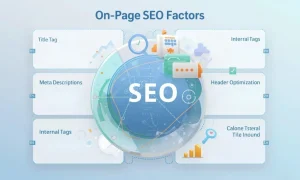
Title Tags
Title tags are the most visible on-page SEO element in search results and the primary cue for both users and crawlers. Treat them like concise headlines that match intent, include the primary keyword, and promise a clear benefit. Keep them under about sixty characters to prevent truncation. Front-load important terms and add a differentiator, such as price, location, or a unique selling point. Assign a unique title to each URL to avoid cannibalisation. Where geography matters, include the city or area; where freshness matters, include the year only when it adds relevance. Use natural language, not keyword stuffing. Pair titles with query families rather than a single term, so coverage matches how people search. Monitor impressions and click-through rate in Search Console and iterate. Suppose CTR is low despite impressions, test variants that sharpen value and specificity. Titles enhance relevance signals in search engine optimisation and increase clicks in SEO digital marketing.
Meta Descriptions
Meta descriptions influence click-through rates by framing why the result is the right answer, even though they do not directly impact page rankings. Write one compelling sentence, then a concise fragment that reinforces value. Aim for about one hundred fifty to one hundred sixty characters, but prioritise clarity over the counter. Echo the core keyword once to align with the query, and address the searcher’s task: compare, buy, book, learn, or contact. Add a credible benefit or proof point, free quote, same-day support, expert team, or verified reviews and a soft call to action like “Explore pricing,” “See options,” or “Book a visit.” Avoid duplicate descriptions; generate unique copy at the template or page level for extensive catalogues. Prevent truncation by placing the hook and benefit early. Use natural language, not stuffed lists. Test variants by tracking CTR in Search Console. Better snippets boost traffic without changing rankings, significantly multiplying returns from on-page SEO.
URL Slugs
Clean, descriptive URL slugs help both users and crawlers understand page context and improve on-page SEO signals. Use readable words separated by hyphens, avoid stopword clutter, and keep slugs concise while retaining the main term and modifier, for example, “/signage-company-riyadh” or “/neet-coaching-mysore-fees.” Remove dates unless news-timeliness is core; long-lived pages should not encode fragile timestamps. Standardise lowercase and ASCII characters, and map canonical versions to prevent duplicate paths. When migrating, preserve equity by using one-to-one 301 redirects and updating internal links to the final destination. Align each slug with search intent and information architecture so related pages share sensible parent folders. Do not chase exact-match stuffing; clarity and stability are more important. If a slug needs to be changed, plan redirects and resubmit in Search Console. Consistent, human-first slugs enhance click confidence, minimise crawl waste, and reinforce the value of search engine optimisation within SEO digital marketing strategies and profitability.
Heading Tags (H1, H2, H3)
Heading tags structure content for readers and help crawlers parse the topical hierarchy. Use a single H1 that states the primary topic, then cascade H2S for core sections and H3S for supporting subsections. Write headings as scannable statements that reflect search intent and include the main term naturally where relevant. Avoid stuffing; prioritise clarity, sequence, and task completion. Keep H1 unique per page and align it with the title tag’s promise, while H2S map to subtopics such as benefits, pricing, locations, FAQs, or comparisons. Use question-style H2S to target answer-box opportunities, and pair sections with concise summaries. Do not skip levels; consistent hierarchy improves accessibility and internal linking opportunities. Measure performance by tracking section-level engagement and featured snippet wins. Well-planned headings strengthen on-page SEO, make content easier to navigate, and reinforce search engine optimization outcomes across seo digital marketing efforts across devices and audiences consistently over time and across content types.
Content Quality
Content quality drives relevance, engagement, and conversions the core goals of on-page SEO. Start with a clear search intent map: informational guides, commercial comparisons, and transactional pages should answer different questions with distinct depth and CTAs. Demonstrate real expertise by citing data, showing processes, naming tools, and providing examples or checklists readers can use. Keep paragraphs short, use plain language, and front-load conclusions so scanners succeed quickly. Enrich with FAQs, comparison tables, pros and cons, and original visuals to earn links and featured results. Refresh essential pages on a cadence tied to demand and industry change; expand sections that underperform, prune duplication, and consolidate thin URLs. Align tone and claims with brand and compliance requirements, and avoid exaggerated promises. Add structured data where appropriate to clarify entities, products, reviews, and organisation details. Measure quality using task completion, return visits, assisted conversions, and ranked queries, not just word count. Finally, connect quality to business by embedding next steps—contact options, calculators, demos, or booking flows—so search engine optimization work contributes directly to pipeline in seo digital marketing. Pair cornerstone pages with supporting cluster articles, interlink to transfer context, authority, and engagement. This creates a durable topic footprint that compounds rankings and lowers acquisition costs.
Image Alt Text
Alt text serves accessibility first and also supplies context for crawlers, image search, and assistive technologies. Describe what the image shows and why it matters to the page, using natural language in a brief phrase or short sentence. Include a relevant keyword only when it accurately reflects the image and user intent; avoid stuffing. For product and service imagery, specify attributes such as model, size, colour, or location to help disambiguate variants. Do not repeat surrounding captions or headings; write unique, specific descriptions. Omit decorative images from alt attributes by leaving them empty when they convey no information. Compress and lazy-load media to protect performance, and provide descriptive file names that mirror the alt text. For icons that trigger actions, use ARIA labels to clarify purpose. Consistent, thoughtful alt text improves on-page SEO, expands discovery through image results, and supports broader search engine optimization outcomes across seo digital marketing channels effectively.
Internal Linking
Internal links distribute context and authority, guide users to the next best step, and help crawlers discover and prioritise pages. Build a logical architecture with hubs and spokes: pillar pages summarise a topic, while clusters cover subtopics in depth. From each cluster article, link back to the pillar using descriptive anchor text, and cross-link laterally to related pieces that answer adjacent questions. Avoid generic anchors like “click here”; use concise, intent-aligned phrases that reflect the destination’s primary topic. Surface high-value URLs in navigation, breadcrumbs, and contextual modules such as “related guides” or “tools.” Keep links crawlable and avoid over-templating that creates repetitive blocks without value. Periodically audit for orphaned pages, redirect chains, and outdated anchors, then fix issues to recover equity. When new content launches, seed links from established pages with impressions to accelerate indexing. Measure impact using crawl stats, impressions per URL, and assisted conversions. Strong internal linking enhances on-page SEO by reinforcing relevance, increasing time on site, and increasing the likelihood of rich results. It also multiplies the payoff of external links by channeling link equity to pages that convert, supporting efficient search engine optimization across priority funnels in seo digital marketing programs for sustained growth and revenue.
Page Experience
Page experience influences satisfaction, engagement, and crawl efficiency. Prioritise Core Web Vitals: largest contentful paint within two and a half seconds, interaction to next paint under two hundred milliseconds, and minimal layout shift. Optimize critical rendering with lightweight CSS and deferred scripts, compress images, and serve modern formats. Ensure mobile responsiveness, accessible contrast, readable typography, and generous tap targets. Reduce friction above the fold by presenting a clear value proposition, primary CTA, and helpful navigation. Limit intrusive interstitials, stabilise ad slots, and avoid layout jumps caused by late-loading assets. Implement caching and a fast CDN, prefer HTTP/2 or HTTP/3, and monitor real-user data in Search Console and analytics. Test templates, not just single pages, since issues often originate in shared components. A fast, stable, and accessible experience strengthens on-page SEO, improves conversions, and supports broader search engine optimization goals across competitive SERPs in seo digital marketing and customer lifetime value.
6. Off-Page SEO Factors
Backlinks
Backlinks are the strongest external trust signal in off-page SEO because they function like citations: credible sites vouch for the worthiness of your page. Quality outweighs quantity. Links from authoritative, topically relevant domains pass more equity than dozens of low-quality mentions. In seo digital marketing, aim for a diversified link profile that looks natural across editorial placements, resource pages, partner sites, local associations, and niche directories that real users consult.
Prioritise relevance first. A single link from a respected industry journal, university resource, or government page can significantly boost the visibility of an entire cluster of pages. Build these through assets that deserve linking, such as original research, data studies, interactive tools, calculators, and standout how-to guides. Complement content assets with ethical digital PR pitch insights, comment on trends, and contribute expert quotes to reporters. Partnerships also help: co-marketing with vendors, integrations, or community organisations often earns contextual links on “partners” or “case study” pages.
Avoid manipulative tactics. Paid link schemes, private networks, and exact-match anchor spam can trigger penalties that set you back months. Keep anchors varied and natural brand names, URLs, and topical phrases that genuinely describe the destination. When you establish a strong link, consolidate gains by interlinking related content, allowing equity to flow to your highest-value URLs.
Measure progress with referring domain quality, link velocity, and the proportion of links pointing to your commercial pages versus informational hubs. Track how new placements correlate with ranking improvements, impressions, and conversions. In search engine marketing, great content earns attention; great off-page SEO makes that attention compounding and defensible.
Google Business Profile
For local visibility, Google Business Profile (GBP) is a foundational element of off-page SEO. It’s your public entity in Google’s ecosystem and a significant input to Map Pack rankings. Complete every field: categories (primary and secondary), description, services, hours, attributes (wheelchair accessible, women-led), and service areas. Add high-quality photos of your team, premises, and work; upload new images regularly to keep your profile up to date.
Post weekly updates such as offers, events, FAQs, and new services so users and crawlers can see activity. Utilise product and service modules to structure your offerings, add pricing ranges where applicable, and link them to conversion pages. Enable messaging and call tracking to attribute leads. For multi-location businesses, maintain a consistent naming convention and tag photos by branch to avoid confusion over asset reuse.
Treat Q&A like pre-sales: seed common questions with helpful answers and upvote accurate community responses. Monitor insights for queries, discovery vs direct searches, and actions (calls, website visits, direction requests). Align your GBP categories and copy with on-site service pages to reinforce topical relevance.
This is SEO digital marketing at street level: accurate NAP, timely updates, real photos, and responsive messaging convert local intent efficiently. Combined with reviews and citations, GBP becomes a durable off-page signal that lifts both rankings and foot-in-door conversions.
Social Media Signals
Social signals don’t pass PageRank, but they influence discovery, brand searches, and link opportunities key inputs to off-page SEO. Treat social as an amplification engine: share new guides, data visuals, and short video explainers that tease value and funnel users to your best pages. Consistent engagement grows branded search volume, which often correlates with stronger organic performance in SEO digital marketing.
Repurpose content by format, not by copy-paste. Convert a 2,000-word guide into a carousel, a stat thread, and a 60-second walkthrough tag partners and experts to spark social sharing. Pin evergreen resources, and include UTM parameters to measure which platforms seed links later.
Listen for questions customers actually ask; those become FAQ sections that earn snippets and natural mentions. Social conversations also reveal publishers and creators likely to nurture those relationships with valuable assets, not generic pitches. In short, social is not a ranking hack; it’s a distribution channel that increases the chances your link-worthy content gets seen, cited, and covered.
NAP Citations
Name, Address, Phone (NAP) citations validate your business entity across the web crucial for off-page SEO for local intent. Consistency is the rule: the exact legal name, complete street address, and primary phone number should appear identically on your website footer, Google Business Profile, major aggregators, and niche directories. Inconsistent formats create doubt and can dilute Map Pack performance.
Start with core aggregators and industry directories your audience actually uses. Complete profiles thoroughly categories, descriptions, hours, photos, and links to relevant landing pages (not just homepage). For multi-location brands, assign each branch a unique page and phone number, and link each citation to its corresponding URL.
Audit quarterly. Close duplicates, update moved addresses, and fix typos: track citation indexation and impressions where platforms provide analytics. Citations won’t replace backlinks, but in search engine marketing, they reduce friction for both crawlers and customers, reinforcing local trust signals that support higher intent conversions.
Reviews and Ratings
Reviews serve as social proof and a ranking factor for local results, making them a high-leverage off-page SEO factor. Build a compliant request flow by asking at logical moments (post-service or delivery), providing direct links, and setting expectations for honest feedback. Don’t incentivise ratings; focus on volume, velocity, and recency from real customers.
Respond to every review. Thank supporters with specifics (“what we fixed, what you liked”), and address negatives with solutions and timelines. Thoughtful responses turn criticism into trust signals for future buyers and demonstrate active stewardship both valued in seo digital marketing.
Utilise review content to enhance on-page elements: extract recurring phrases to refine service pages, FAQs, and schema markup. Where platforms allow, add photos and categorise feedback by service line to guide prospects. Monitor rating distribution and aim for authenticity; a perfect 5.0 is less believable than a healthy 4.6–4.8 with professional responses.
Centralise measurement: average rating, new reviews per month, response time, and conversions from review platforms. Publish select testimonials on your site with permission and structured data. In the round, strong, recent reviews increase clicks, reduce hesitation, and support rankings an off-page SEO asset that compounds every other investment you make.
Start Building Your SEO Strategy

A durable SEO plan blends on-page foundations with off-page authority, executed in repeatable sprints. Here’s a practical, tools-backed approach you can start this week for seo digital marketing.
1) Set your baseline.
Connect Google Analytics and Search Console, crawl the site, and export top queries and pages. Note impressions vs. CTR, average position, Core Web Vitals, index coverage, and internal link depth. Map competitors by topic, not just brand, so you see who wins each intent cluster.
2) Choose one growth theme per quarter.
Examples: “local services in Bangalore,” “NEET admissions hub,” or “signage rentals in Riyadh.” Build a pillar page and 6–10 supporting articles or landing pages. Define one commercial KPI (leads, demo requests, bookings) and one organic KPI (qualified sessions, non-brand clicks).
3) Fix what you control first. For each target page, align titles, H1S and H2S, FAQs, schema, media compression, and internal links from relevant evergreen pages. Improve UX elements above the fold—clarity of value, primary CTA, trust badges, and scannable sections.
4) Ship link-worthy assets. Create one standout asset per theme: a benchmark study, calculator, comparison matrix, or local guide. Publish with clean URLs and embed simple charts. These become your outreach magnets for off-page wins.
5) Run ethical outreach. Pitch the asset to industry blogs, chambers, universities, and creators. Offer unique angles or data excerpts, not generic “link swaps.” Support local SEO with Google Business Profile updates, consistent NAP citations, and a review request flow.
6) Measure weekly, adapt monthly. Use search engine optimization tools to keep score:
- Semrush or Ahrefs for rank tracking, keyword gaps, and referring domains.
- Site Audit to catch crawl errors, slow templates, and duplicate content.
- Link Building Tool to manage prospects and monitor new mentions.
- PageSpeed Insights and CrUX for real-user performance.
7) Close the loop. Add internal links from any page that gains new impressions to your money pages. Refresh underperforming sections with more precise answers, screenshots, or mini FAQs. Consolidate thin pages and redirect to the strongest URL to concentrate equity.
8) Operationalise the cadence. Work in 4-week sprints: week 1 research and briefs; week 2 production; week 3 publication and internal linking; week 4 outreach and analysis. Repeat for each theme until you dominate the SERP set.
Conclusion
Executed consistently, this framework combines authority and relevance exactly how modern SEO and digital marketing turn rankings into pipeline and revenue. Document wins in a living playbook, standardise templates, and re-run the cycle quarterly; the compounding effect arrives when every new page inherits structure, links, and trust.
FAQs
1) What is the difference between on-page and off-page SEO?
On-page SEO is everything you control on your site (titles, content, speed, structure), while off-page SEO is what happens outside (backlinks, citations, reviews, social signals). On-page builds relevance, off-page builds reputation.
2) Why is on-page SEO important for digital marketing?
It helps search engines understand your content, improves user experience, boosts CTR and conversions, and reduces marketing costs by driving free, consistent traffic.
3) How do backlinks help in SEO?
Backlinks signal trust, authority, and relevance. High-quality links from credible sites improve rankings and visibility more than sheer link quantity.
4) Can I do SEO without off-page strategies?
You can rank for low-competition terms with strong on-page SEO alone, but for competitive keywords, off-page authority-building is essential.
5) What are the best SEO tools for beginners?
Start with Google Search Console and Analytics. Use Semrush or Ahrefs for advanced insights, and PageSpeed Insights for performance optimization.


