Bangalore Local SEO Checklist: What Actually Moves the Needle
Updated: 1 September 2026
Generic local SEO advice was not built for a city where Koramangala and Whitefield behave like two different markets and every category is already crowded. Here is what actually matters here.
Reviewed against the June 2026 Spam Update, March 2026 Spam Update, December 2025 Core Update
Most local SEO checklists read the same regardless of city: claim your Google Business Profile, get reviews, build citations. None of that is wrong. All of it is incomplete for Bangalore specifically, a city large and fragmented enough that a checklist written for a single-market town misses exactly the factors that separate a business that gets found from one that does not.
Why Bangalore Needs Its Own Checklist
Bangalore is not one local market. It is a collection of neighbourhood-level markets, Koramangala, HSR Layout, Indiranagar, Whitefield, Jayanagar, each with distinct search behaviour, competitive density, and customer expectations. A generic local SEO approach treats the whole city as a single target. A business that instead understands which specific neighbourhood actually drives its customer base, and optimises deliberately for that area rather than the city as a whole, consistently outperforms a broader, less specific approach.
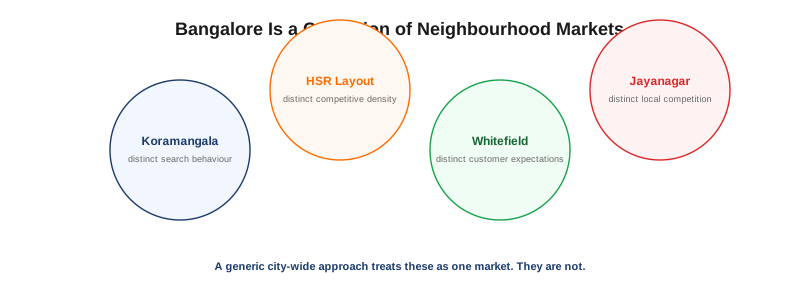
This matters more here than in a smaller city precisely because Bangalore's scale supports genuine neighbourhood-level specialisation. A search for "dentist near me" from someone in Whitefield and the same search from someone in Jayanagar are effectively different searches with different relevant results, and a business's Google Business Profile and content need to acknowledge that reality directly.
Google Business Profile: Precision Over Generic Categories
In a market this saturated, category precision matters differently than it would in a thinner field. It is not about standing out against a handful of competitors, it is about surviving in a category where dozens of nearly identical businesses compete for the same searches. The businesses that win choose the most specific accurate category available, keep hours, photos, and service areas genuinely current, and treat their Business Profile as an actively managed asset rather than a one-time setup task.
- Primary category is the single most specific accurate option, not a broad default
- Service area explicitly covers the actual neighbourhoods served, not the whole city by default
- Photos updated within the last quarter, not left from initial setup
- Business description names actual neighbourhoods and landmarks, not generic city-wide language
- Q&A section actively monitored and answered, not left to accumulate unanswered questions
Neighbourhood-Level Content Beats City-Wide Content
A single page targeting "best [service] in Bangalore" competes against every business in the city plus every agency's own city-wide landing page. A set of genuinely distinct pages, or genuinely distinct sections within one page, addressing specific neighbourhoods a business actually serves captures search intent a single broad page cannot. This does not mean fabricating a presence in neighbourhoods a business does not genuinely serve. It means being specific and honest about the areas that are real, rather than defaulting to vague city-wide language that matches nobody's actual search intent precisely.
A genuine local SEO strategy built around this principle treats neighbourhood specificity as a core structural decision, not an afterthought bolted onto a generic city-wide page.
The Neighbourhood-Level Content Question, Answered Specifically
Deciding which neighbourhoods genuinely deserve their own dedicated content, versus which should simply be mentioned in passing, depends on real customer data rather than guesswork. Pull your Google Business Profile insights and note which specific areas your actual customers are searching from most frequently. A business genuinely serving customers across Koramangala, HSR Layout, and Indiranagar in meaningful volume benefits from distinct content addressing each area specifically. A business with occasional customers from a dozen scattered neighbourhoods, with no clear concentration, likely does not need a dedicated page for each one, and attempting to build this out anyway produces thin, undifferentiated content that reads the same regardless of which neighbourhood name sits in the heading.
The specificity that matters is not simply naming a neighbourhood in a page title. It is describing something genuinely true and useful about serving customers in that specific area, actual landmarks, actual traffic patterns affecting service times, actual local competition context, that a generic city-wide page could never include.
Citations and Directory Presence: Consistency Over Volume
Bangalore's directory landscape is crowded with options, and the temptation is to list a business everywhere possible. Volume matters less than consistency. The same business name, address, and phone number, letter for letter, across every listing, matters more than being present on the largest possible number of directories. A single inconsistent address on one directory can create more confusion for local ranking signals than being entirely absent from that directory would.
- Name, address, and phone number identical across Google Business Profile, website, and every directory
- Category selections consistent across platforms, not varying listing to listing
- Old or duplicate listings from a business's earlier history identified and either corrected or removed
- Directory presence audited at least twice a year, not set up once and forgotten
Local Directory Presence Beyond Google: What Actually Matters in Bangalore
Beyond Google Business Profile itself, a handful of India-specific and Bangalore-specific directories genuinely matter for local citation consistency, Justdial, Sulekha, and industry-specific directories relevant to your particular category. The same consistency principle covered earlier, identical name, address, and phone number across every listing, applies here directly. A business that has accumulated old, duplicate, or outdated listings across these platforms over years of operation should audit and consolidate them specifically, since Google's own local ranking systems weigh citation consistency partly by comparing your Google Business Profile against exactly these third-party sources.
Reviews: Volume Alone Does Not Win in This Market
A crowded market means most competitors already have a reasonable review count. Standing out increasingly depends on review recency, specificity, and response quality rather than raw count alone. A business with fewer but more recent, more specific reviews, and visible, genuine responses to each one, often reads as more trustworthy to both customers and to Google's own signals than a business with a larger but stagnant, unresponded-to review base.
A Direct Comparison
| Factor | Generic Approach | Bangalore-Specific Approach |
|---|---|---|
| GBP category | Broad default category | Most specific accurate option, actively reviewed |
| Content targeting | City-wide generic pages | Genuine neighbourhood-level specificity |
| Directory strategy | Maximum volume of listings | Consistency across fewer, verified listings |
| Reviews | Chasing raw count | Recency, specificity, and response quality |
| Service area | Defaults to entire city | Honestly reflects actual neighbourhoods served |
Why This Matters More Since Recent Updates
Google's June 2026 spam update and the ongoing tightening of review authenticity enforcement, including a new Google Business Profile dialog specifically asking whether a business offers incentives for reviews, both reward exactly the disciplined, honest approach this checklist describes. A business relying on inflated review volume or inconsistent directory padding is increasingly exposed by enforcement aimed at precisely those tactics.
How Bangalore's Neighbourhood Fragmentation Affects Review Strategy Specifically
Reviews mentioning specific neighbourhoods, service details, or genuinely specific experiences carry more weight in Bangalore's saturated market than generic five-star ratings with no detail. A business can influence this legitimately by asking satisfied customers open-ended questions when requesting a review, "what specifically did you find helpful about our service in [neighbourhood]," rather than simply requesting a rating. This is not about scripting or incentivising specific language, which risks exactly the kind of review authenticity enforcement Google has been tightening, but about genuinely inviting more detailed, useful feedback that naturally produces richer, more specific reviews than a bare request for stars.
Red Flags in a Local SEO Proposal
- A proposal promising city-wide dominance without asking which neighbourhoods actually matter to your business
- No mention of Google Business Profile category strategy beyond "we'll optimise it"
- Review generation tactics that sound like they involve incentives or exchanges
- Directory submission counted by sheer volume rather than accuracy and consistency
- No plan to audit and correct existing inconsistent listings before adding new ones
What a Genuine Local SEO Audit Should Actually Check
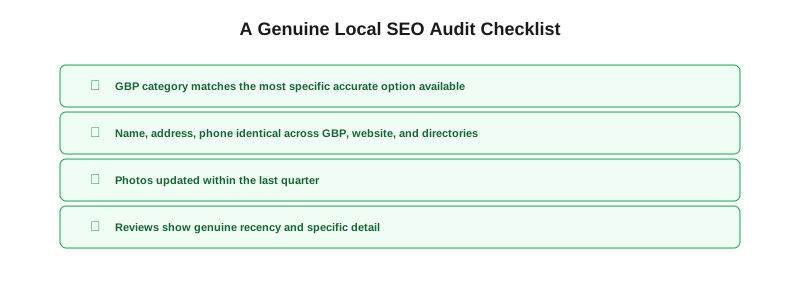
- Google Business Profile category matches the most specific accurate option available
- Name, address, and phone number identical across GBP, website, and all directories
- Photos updated within the last quarter across relevant neighbourhood or seasonal contexts
- Reviews show genuine recency and specific detail, not just accumulated volume
- Neighbourhood-specific content exists only where real customer concentration justifies it
An Illustrative Example of Neighbourhood Specificity Done Well
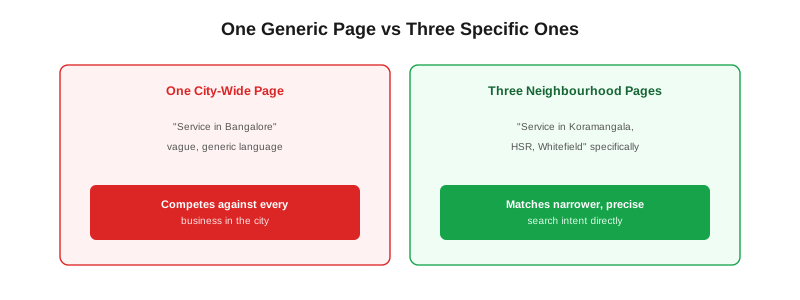
Consider a hypothetical case reflecting a common pattern: a Bangalore home services business genuinely serving Koramangala, HSR Layout, and Whitefield, with occasional jobs elsewhere in the city. A generic approach builds one city-wide service page mentioning all Bangalore vaguely. A more effective approach builds three genuinely distinct sections, or three separate pages, each naming specific streets or landmarks within that neighbourhood, specific response-time expectations given actual traffic patterns to that area, and genuine local context a searcher from that specific neighbourhood would recognise as accurate rather than generic.
The difference in search performance between these two approaches compounds over time. The generic page competes against every other citywide service page using similar broad language. The three specific pages each compete in a narrower, more precisely matched search intent, "[service] Koramangala" specifically, where genuine local specificity gives a real, defensible advantage over competitors who never bothered to differentiate beyond the city level.
Why Vertical-Specific Categories Compound the Local Advantage
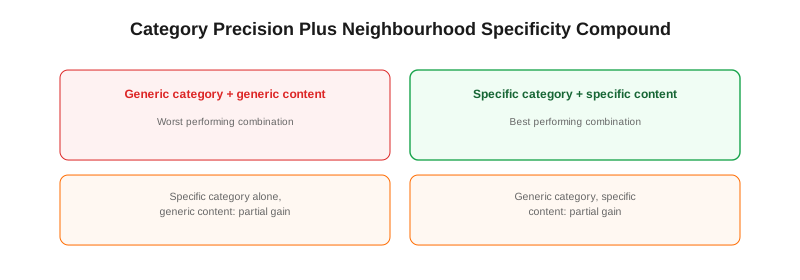
Beyond neighbourhood specificity, the interaction between Google Business Profile category precision and your specific industry vertical matters more than either factor alone. A healthcare business choosing between "Doctor" and a more specific specialty category, a restaurant choosing between "Restaurant" and a specific cuisine-and-service-style category, gains a compounding advantage when this precision is paired with genuine neighbourhood specificity in supporting content. A generic category with generic city-wide content performs worst. A specific category with specific neighbourhood content performs best. The two dimensions reinforce each other rather than operating independently.
Seasonal and Event-Driven Local Search Patterns Worth Planning For
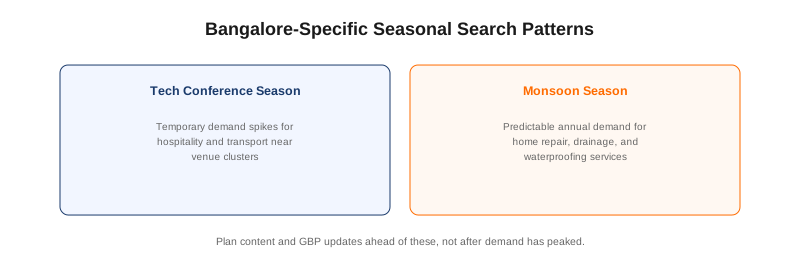
Bangalore's local search behaviour shifts around specific, predictable events worth building content and Google Business Profile updates around deliberately, rather than reacting after demand has already peaked. Major tech conferences and events drive real, temporary demand spikes for hospitality, transport, and business services businesses located near common venue clusters. Monsoon season shifts demand patterns for certain service categories, home repair, drainage, waterproofing, predictably each year. A business in a category affected by any such pattern benefits from planning Google Business Profile posts and content updates ahead of the relevant season, the same discipline covered for Dasara-season planning in Mysuru, applied to Bangalore's own specific seasonal and event-driven patterns.
Measuring Whether This Is Actually Working
Track visibility in the Google Business Profile "local pack," the map-and-three-listings block that appears above traditional organic results for local searches, separately from standard organic rankings. A business can rank well organically while still being invisible in the local pack, or the reverse, and conflating the two metrics hides which lever actually needs attention. Track this by neighbourhood-relevant search terms specifically, not just the broadest city-wide version of a keyword, since local pack visibility often varies meaningfully by the exact phrasing and implied location of a search.
Direct call and message volume through the Google Business Profile itself, visible in the profile's own performance data, is often a more honest signal of real local SEO health than website traffic alone, since a meaningful share of local search intent ends in a call or a message rather than a website visit at all.
Frequently Asked Questions
Does my business need separate content for every Bangalore neighbourhood it serves?
Only for neighbourhoods that genuinely drive meaningful customer volume. A business honestly serving three specific areas benefits from content reflecting those three areas specifically, rather than either one generic city-wide page or an exhaustive, padded list of every neighbourhood in the city.
How often should Google Business Profile information be reviewed?
At minimum quarterly, and immediately after any change to hours, services, or service area. A profile left unattended for a year in a market this competitive falls behind competitors actively maintaining theirs.
Is it better to have more reviews or better reviews?
Recency and specificity matter more than raw count once a business has a reasonable baseline. A smaller number of recent, specific, responded-to reviews often outperforms a larger but stagnant review base in a market this saturated.
Should I list my business on every available Bangalore directory?
No. Consistency across fewer, accurate listings outperforms volume across many, especially if that volume introduces inconsistent name, address, or phone details anywhere.
Does this checklist apply the same way to a business with only one Bangalore location?
Yes, the same principles of category precision, honest service-area definition, and directory consistency apply regardless of how many locations a business has, though the neighbourhood-specificity point matters most for businesses serving multiple distinct areas.
What is the biggest mistake businesses make with Bangalore-specific directories?
Accumulating old or duplicate listings over years without ever auditing or consolidating them, leaving inconsistent name, address, or phone details across platforms that directly undermine the citation consistency Google's local ranking systems weigh.
Should I ask customers specific questions when requesting reviews?
Yes, open-ended questions about specific aspects of their experience naturally produce more detailed, useful reviews than a bare request for a star rating, without crossing into scripting or incentivising specific language.
Related Reading
SEO Company in Bangalore
Our flagship Bangalore SEO service, built around the standards covered in this checklist.
SEO Agency in Bangalore
ROI-focused SEO for Bangalore businesses across industries.
Local SEO & Maps
Our full local SEO service, covering Google Business Profile, citations, and reviews.
How to Choose an SEO Company in India
The full traditional hiring checklist worth pairing with this one.
SEO for Mysuru Businesses
Why the same local-SEO thinking looks completely different outside Bangalore.
Our Story
How OneCity started in 2006 and what changed along the way.
SEO Company in Bangalore
Our flagship Bangalore SEO service, built around the standards covered in this checklist.
SEO Agency in Bangalore
ROI-focused SEO for Bangalore businesses across industries.
Local SEO & Maps
Our full local SEO service, covering Google Business Profile, citations, and reviews.
How to Choose an SEO Company in India
The full traditional hiring checklist worth pairing with this one.
SEO for Mysuru Businesses
Why the same local-SEO thinking looks completely different outside Bangalore.
Our Story
How OneCity started in 2006 and what changed along the way.
OneCity Technologies Pvt Ltd (CIN: U72100KA2009PTC048911, incorporated 2009) has run SEO campaigns since 2006. Every recommendation in this checklist reflects what we apply to our own client work. Written by L.K. Monu Borkala, Founder & CEO. Verify our registration at the MCA21 portal. | Updated:
Want Us to Run This Checklist Against Your Business?
Send us your Google Business Profile and we will tell you honestly what is holding your local visibility back, no obligation to work with us afterward.
Rajajinagar, Bengaluru · Kankanady, Mangaluru · Kuvempu Nagara, Mysuru