Written by L.K. Monu Borkala, Founder, OneCity Technologies (CIN: U72100KA2009PTC048911), Bangalore. 20+ years in SEO. +91 99023 30233.

Reference sources: Android developer documentation | Apple developer documentation.
Mobile Apps for Your Business
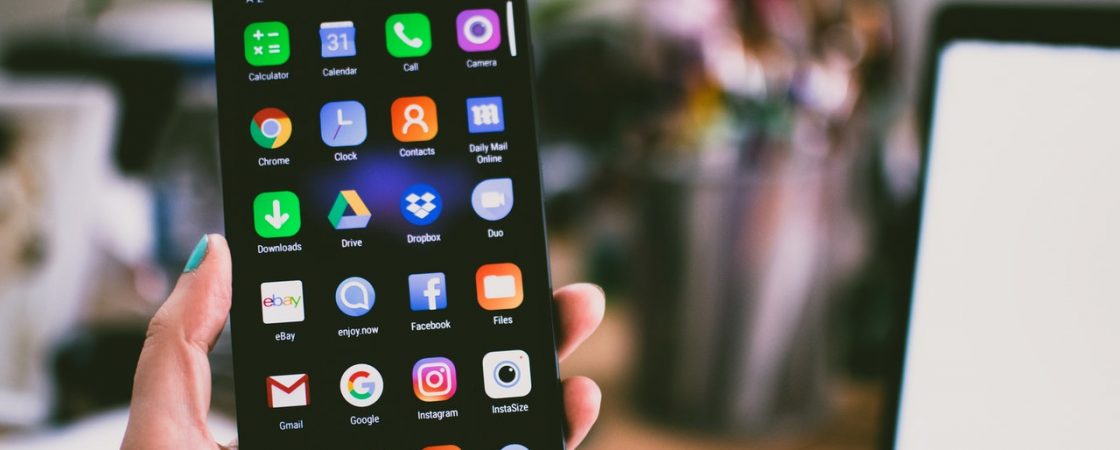
In the age of technology, mobiles are no longer a luxury but a necessity. Mobiles are convenient and highly efficient. The advancements in technology are so significant. Mobiles are used for practically everything nowadays, including wireless money transfers and even virtual meetings. This is the power of modern automation. There has been a significant increase in the use of apps on mobiles by users over the years. A study by Neilson company shows that US Android and iPhone users age 18 and above spend 65% more time each month using apps than they did just two years ago. You May Also Like E-Commerce -The Next Big Thing
Your Business and Mobiles – The Nexus
With almost every transaction done wirelessly through mobiles nowadays, the importance of mobile phones cannot be ignored. Having your business on a mobile application has become one of the major factors in garnering more profits for businesses. Therefore, we can rightly and aptly say that mobile applications for your business is the way forward. Before zeroing in on an app for your business, it is advisable to look at the advantages you stand to gain from the applications. After all, your business is here to make a profit. So, let’s look at some of the benefits of mobile apps for your business
One to One Communication
Since a mobile app is downloaded on individual devices it becomes more of a personalised communication between your business and the customer. You can reach the right target audience through mobile apps. It is a known fact that all age groups use mobile phones and apps today to get their work done. Almost every section of society has a mobile, if not two. Kids, teenagers, adults, and senior citizens alike. Therefore, whichever age group your business caters to, they are easily accessible through mobile apps. A study by the Neilsen Company showed that smartphone owners ages 25-44 use the greatest number of apps per month. The youth between 18-24-year-olds spend the most time on mobile apps. Even those aged 55+ spend more than 21 hours across an average of 22 different apps per month.
Brand Awareness
Mobile apps allow you to communicate with users or customers through pop up notifications and reminders. The customer is always aware of your latest offers and deals at all times. This encourages customers to make purchases which helps increasing your sales and profits. Constant reminders and notifications keep the customer familiar with your brand of products and services. This is where the customers’ loyalty towards your brand can be built. It brightens your chances of being selected over your competitors’ products and services.
Marketing Advantage
Customers are able to select products and services from a range of other items available. They are able to view all your company products and services at one point. An in-house view of available products may be tiring for customers. Mobile apps make this an effortless job. Also, company advertisements and promotions are easily displayed on mobile apps without much effort and marketing expenses from the business owner. Mobile apps have another benefit that they can use certain tools to track user activity and behaviour. Thus, allowing you to improve your marketing strategies. You May Also Like Reasons To Get Services From A Digital Marketing Agency
Customer Information
One of the advantages of mobile apps for businesses is that it allows you to attain instant customer information and feedback. A customer on your company application is more likely to reveal customer information like email address and phone number than when you have an in-house visit from the customer.
On the Go
Mobile apps are nothing but your business on the move. Gone are those days where transactions were made only at the point of sales. The fast-moving life of today makes it possible to purchase while traveling, waiting for the bus, or even on the park bench.
Instant Customer Feedback and Response
One of the main benefits of mobile apps is the fact that you can get instant feedback and respond to customer queries almost immediately. Customers usually require an immediate response to their concerns. This instant response from the seller impresses customers and attracts them to stay loyal to you. One of the greatest advantages of mobile apps for your business is that you can do just that. Stay in constant touch with your customers and respond almost instantaneously to queries about the products and services offered.
Edge Over Your Competitors
Have a mobile application gives you a competitive edge over other rival business owners who do not possess a mobile application. You are more likely to make a sale through the app than a seller who does not own an app for the business.
You Are Out There
With a mobile app for your business, you are out in the open. You attract new customers almost every day. This is due to the ease of doing business through an app. A website lets the world know what you have in store and an app usually converts this knowledge into a sale and so profits for your business.
Push Notifications
Another advantage of mobile apps is the use of push notifications as a communication channel. Apps have the capability of reminding customers about their existence. With innumerable apps available, customers have a hard time remembering what apps they have. Push notification helps to display information to customers which helps reminding customers of their presence. Push notifications are an effective way of reminding customers about the app on their mobile phones. It also serves as a marketing strategy displaying promotional offers and deals to customers. Push notifications through mobile apps are used as communication channels for businesses. A study by Martin Pielot, Karen Church, and Rodrigo de Oliviera of the Telephonica Research Barcelona, Spain stated that mobile users receive an average of about 63.5 notifications per day through messages and emails.
Strengthens Customer Loyalty
Mobile apps necessarily strengthen customer loyalty. Many companies using mobile apps introduce loyalty programs and schemes for their valued customers. For example, some companies attract customers with a discount on the next order or a point system redemption coupon on later in-app purchases. With such attractive offers and schemes, customers tend to be loyal to your business in order to use the coupon redemption or discounts.
24 Hours 365 Days
A mobile application makes sure visibility every moment. A customer need not wait for the store to open or make a purchase before it closes. Your trade is open for business 24 hours a day. This offers flexibility to customers who can even make a midnight purchase.
Easy Payment Options
One of the benefits of a mobile app is the availability of different payment options to customers. This choice of mode of payment makes it easier for customers to choose your brand over another. Mobile applications offer various modes of payments like bank transfers, payment gateways, or cash on delivery.
Shopping Made Easy
Customers shopping through mobile apps may find it easier to shop for a product or service. This is because a mobile app directs you with every step in advance. Shopping in a store can at times be cumbersome for a customer who doesn’t know where a particular product is located. Shopping through mobile apps make it easier to search for products. Customers can add products to the cart for billing without actually lifting the weight of the bag. You May Also Like E-Commerce -The Next Big Thing
Conclusion
With an increase in the use of apps over the years, it is the best time to build an app for your business. Jump into the bandwagon and stay with the times. Technology is moving ahead at full speed and before you know it, you might miss the bus. Having a mobile app is one of the ways to make sure that your business stays ahead of its time. Also Checkout Importance of Mobile Friendly Website
The Mobile App Decision for Bangalore Businesses: When It Makes Sense
A mobile app is not appropriate for every Bangalore business. A well-optimised mobile website serves most business needs at a fraction of the cost of app development and maintenance. The question that determines whether a mobile app investment is justified is specific: does your business have a recurring, engagement-driven user interaction that a native app experience serves better than a website? If yes, an app makes sense. If the answer is “we want an app because it seems professional,” a website delivers higher ROI at lower cost and complexity.
The business cases where a mobile app genuinely adds value over a mobile website for Bangalore businesses: food delivery or quick commerce operations where order tracking, push notifications, and payment integration justify native development; service businesses with regular bookings where appointment management, reminders, and loyalty features drive repeat visits; and enterprise B2B tools where offline functionality, camera integration, or device sensor access are required for operational workflows.
At OneCity Technologies, we build mobile app development in Bangalores for Bangalore businesses when the use case justifies native development , and we recommend mobile-first responsive websites when it does not. The guide below covers the specific operational improvements that a mobile app can deliver for businesses where the investment is justified.
Operational Improvement 1: Field Team Efficiency
Bangalore businesses with field teams , service technicians, delivery personnel, sales representatives, site supervisors , see some of the highest operational ROI from mobile apps. A field team app replaces the phone calls, WhatsApp messages, and manual forms that currently coordinate field operations with a structured, data-capturing digital workflow.
Specific field team app functions that produce measurable efficiency gains:
- GPS-tracked job assignment: Dispatch assigns jobs to the nearest available field agent; the agent receives a notification with job details, customer address, and navigation link. Eliminates the coordination overhead of manual dispatch and the disputes about job completion times.
- Digital job completion forms: Field agents complete a checklist on the app at job completion , photos of work done, customer signature, parts used, time taken. Data flows directly into the back-office system without manual data entry re-work from paper forms.
- Real-time inventory tracking: Field agents scan items used on site; inventory deductions update in real time without warehouse reconciliation delays. For Bangalore businesses in maintenance, installation, or service delivery, this eliminates the 2–3 day inventory reconciliation lag that disrupts reordering.
A Bangalore HVAC service company that deployed a field team app reported reducing average job completion documentation time from 25 minutes (paper form + WhatsApp photo + phone call to office) to 6 minutes (app form with photo capture and auto-sync). At 15 jobs per day across 8 technicians, this is 304 minutes of productive time recovered daily , equivalent to hiring an additional technician.
Operational Improvement 2: Customer Engagement and Retention
Push Notifications: The Highest-Engagement Channel
Push notifications from a mobile app achieve open rates of 30–60% , significantly higher than email (20–25%) and SMS (45% but with regulatory constraints in India). For Bangalore businesses with repeat customer relationships , restaurants, salons, fitness studios, retail brands, healthcare providers , push notifications are the most direct path to triggering repeat visits and purchases.
The critical constraint: push notification effectiveness is directly proportional to message relevance. A salon app that sends “Book your next appointment” every week produces notification fatigue and app uninstalls. A salon app that sends “Your preferred stylist has availability this Saturday , want to book?” based on the customer's actual booking history converts at 3–5x the rate of generic notifications. Personalised, contextually relevant notifications require the data infrastructure to know individual customer preferences and behaviour patterns , which the app collects from usage, but which must be acted on intelligently.
Loyalty Programme Integration
App-based loyalty programmes outperform physical loyalty cards for Bangalore businesses because they eliminate the “I forgot my card” friction that reduces programme participation. A restaurant loyalty programme built into the app , where every order automatically credits points, and the customer can see their balance and rewards at any time , achieves higher programme participation and repeat visit rates than the equivalent stamp card programme.
For Bangalore retail businesses: an app that tracks purchase history and automatically applies tier-based benefits (Gold customer gets free delivery on all orders, Silver gets free delivery above ₹500) creates the perception of personal recognition that builds brand loyalty without requiring staff to manually manage tier tracking.
Operational Improvement 3: Data Collection and Business Intelligence
A mobile app collects structured operational data that manual processes and web analytics cannot capture with equivalent granularity. App usage analytics reveal: which features are used most frequently (indicating high-value functionality to prioritise), which steps in booking or checkout flows produce drop-offs (conversion problems to fix), which customers are at risk of churning (those whose usage frequency has declined), and which product or service categories drive the most engagement.
For a Bangalore food delivery business, app analytics show that customers who place their first order between 7–9pm have a 40% higher 90-day retention rate than those who first order at lunch. This insight drives a targeted new customer acquisition campaign focused on dinner-hour promotions , a strategy invisible without the granular behavioural data the app provides.
The data advantage compounds over time: each month of app usage produces richer customer profiles, more accurate demand forecasting, and better personalisation capability. Businesses that built apps in 2019–2021 and used the data systematically now have 5+ years of behavioural data that informs every operational and marketing decision , a competitive advantage that is impossible for late entrants to replicate quickly regardless of budget.
App Development Options for Bangalore Businesses
Native vs Cross-Platform
Native apps (separate iOS and Android codebases) provide the best performance and access to platform-specific features but require double the development cost and ongoing maintenance. Cross-platform frameworks , Flutter (increasingly the standard for Bangalore app development), React Native, and Kotlin Multiplatform , produce a single codebase that deploys to both iOS and Android, reducing development cost by 30–50% compared to dual-native development with acceptable performance trade-offs for most business app use cases.
For most Bangalore small to mid-size businesses, Flutter development is the practical choice: single codebase, near-native performance, strong developer community in Bangalore, and excellent support for Indian payment gateway integrations (Razorpay, PayU Flutter SDKs are well-maintained).
Progressive Web Apps: The Middle Path
A Progressive Web App (PWA) is a website built with app-like capabilities: offline functionality, push notifications (on Android; limited on iOS), home screen installation, and full-screen display without browser chrome. PWAs provide 70–80% of native app functionality at website development company in Bangalore cost , typically ₹80,000–2,00,000 vs ₹5,00,000–15,00,000 for a full native app.
For Bangalore businesses evaluating whether the ROI of a full native app is justified, a PWA serves as both a lower-cost alternative and a proof-of-concept , if the PWA drives adoption and engagement, the case for investing in a full native app is validated by real user data rather than projections. Contact OneCity Technologies at +91 99023 30233 to discuss whether a mobile app or PWA is the right investment for your specific operational requirements. Author: L.K. Monu Borkala, Founder & CEO, OneCity Technologies, 20 years in business.
Mobile App vs Mobile Website: The Decision Framework for Bangalore Businesses
The practical decision between a mobile app and a mobile-optimised website hinges on four specific capability requirements. If your business needs one or more of these, a native app is justified. If none apply, a high-quality mobile website delivers better ROI.
Offline functionality: Does your use case require the app to work without internet access? A field inspection app used by engineers in areas with poor connectivity, a route optimisation app for delivery drivers, or an inventory app used in warehouse environments with limited WiFi , these require offline data storage and sync that native apps handle well and mobile websites cannot reliably provide.
Hardware integration: Does the app need to access device hardware , camera for document scanning, GPS for location tracking, barcode scanner for inventory, or NFC for payment or identification? Native apps access these hardware features reliably across Android devices. Mobile websites have limited and inconsistent hardware access, particularly on Android where permission models vary by manufacturer.
Push notifications: Is regular, unprompted engagement with existing users a core business requirement? Push notifications from native apps achieve 30–60% open rates. Browser-based web push notifications (available to Progressive Web Apps) achieve lower rates and have inconsistent iOS support. If driving repeat usage is central to the business model, native push notifications justify the app investment.
Complex local state management: Does the app maintain complex state between sessions , a shopping cart, a multi-step booking in progress, a game state, a partially completed form , that benefits from native storage and session management? Native apps handle complex local state more reliably than web storage, particularly on low-memory Android devices that aggressively clear browser state. For app development consultation for your Bangalore business, contact OneCity Technologies at +91 99023 30233.
Frequently Asked Questions
How much does a mobile app cost for a Bangalore business?
A basic cross-platform (Flutter) app with user authentication, one primary workflow (booking, ordering, or field operations), and standard payment integration: ₹3,00,000–6,00,000. A mid-complexity app with multiple user roles, complex business logic, admin dashboard, and analytics: ₹8,00,000–15,00,000. Enterprise apps with offline sync, complex integrations, and custom features: ₹15,00,000+. Ongoing maintenance (bug fixes, OS compatibility updates, feature additions) typically costs 15–20% of the original development cost annually.
How long does app development take for a Bangalore business?
A basic cross-platform app: 3–4 months from signed brief to app store submission. Mid-complexity app: 5–7 months. Timelines are heavily influenced by client-side factors , delayed feedback on designs, scope changes mid-development, and App Store review times (Apple's review process takes 1–3 business days for first submission; rejections require additional development time). Budget for 1–2 months beyond the estimated development timeline for App Store approval and post-launch bug fixing.
Does having a mobile app improve SEO?
Indirectly. Google indexes app content through App Indexing for Android apps, which can surface app content in search results for users who have the app installed. App Store Optimisation (ASO) , optimising the app title, description, and screenshots in the Google Play Store , is a separate discovery channel from web SEO. The primary SEO benefit of a mobile app for Bangalore businesses is brand signal improvement: businesses with apps are perceived as more established and trustworthy, which correlates with higher branded search volume and better review acquisition rates , both of which feed indirectly into organic search performance.
What is the best way to get users to download our business app?
The most effective app download drivers for Bangalore consumer businesses: in-store QR code with a specific first-download incentive (₹100 off first in-app order, free delivery for 30 days), post-order email and WhatsApp with app download link and benefit (track your order in real time), and social media campaign specifically highlighting an app-exclusive feature. App downloads from incentive campaigns produce higher retention than downloads from generic promotion , users who downloaded for a specific feature are more likely to continue using the app after the incentive period ends.
Frequently Asked Questions
How much has mobile app usage grown?
A Nielsen study found that Android and iPhone users aged 18 and above spend 65 percent more time each month using apps than they did just two years prior.
What's the main advantage of a business having its own mobile app?
A mobile app enables direct, personalised one-to-one communication with customers through their individual devices, reaching audiences across virtually every age group.
How do mobile apps help with brand awareness?
Apps allow businesses to send push notifications and reminders directly to users, keeping customers continuously aware of offers and updates without relying on them to check elsewhere.