What to Expect in Your First 90 Days with an SEO Agency
Updated: 1 September 2026
Choosing an agency is the decision everyone prepares for. What happens in the 90 days right after signing determines whether that decision was actually a good one.
Reviewed against the June 2026 Spam Update, March 2026 Spam Update, December 2025 Core Update
Most guidance on hiring an SEO agency stops at the contract signature. What happens next, the actual onboarding, the first audit, the first real month of work, determines whether the relationship succeeds far more than the vetting process that led to signing. A business that skips scrutiny here often does not discover a problem until month four or five, well after real money and time have already gone in.
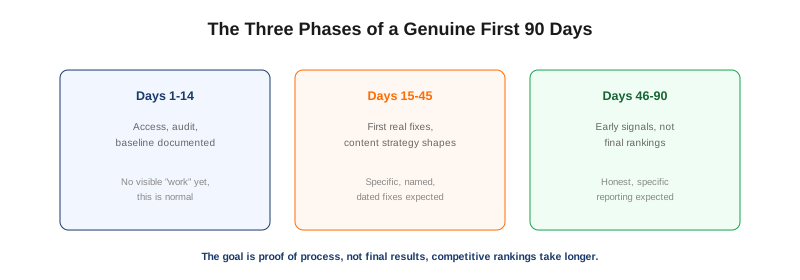
Days 1 to 14: Access, Audit, and Baseline
The first two weeks should involve almost no visible "work" in the sense of new content or rankings changing. What should happen instead is foundational: the agency requesting owner-level access to your Google Search Console, GA4, and Google Business Profile, not agency-owned logins you cannot see into directly. A genuine technical audit specific to your actual website, not a generic checklist that could apply to any business, should be underway, along with a clear baseline snapshot of your current rankings, traffic, and technical health.
- You retain owner-level access to Search Console, GA4, and Google Business Profile
- A written technical audit specific to your website is delivered, not a generic template
- A clear baseline of current rankings and traffic is documented before any changes begin
- You have a named point of contact, not a rotating queue of unnamed team members
- A realistic 90-day plan with specific milestones is shared in writing
Days 15 to 45: The First Real Fixes
By the midpoint of the first month and into the second, genuine technical fixes identified in the initial audit should be underway, and you should be able to see specific evidence of this, not just a status update claiming progress. This is also when content strategy should take real shape: which pages will be built or rewritten, based on which actual keyword research, not a generic content calendar copied across every client.
A Direct Comparison
| What to Check | Weak Onboarding | Strong Onboarding |
|---|---|---|
| Access | Agency-owned logins, no visibility | You retain owner access throughout |
| Audit | Generic checklist | Specific to your actual site |
| Fixes | Vague "optimisation in progress" | Named, specific fixes with dates |
| Content plan | Copy-paste calendar | Built from real keyword research for your business |
| Communication | Irregular, reactive only | Scheduled check-ins with specifics |
Why Early Technical Work Matters More Since Recent Updates
Google's spam update activity through 2026 has consistently rewarded sites with genuine technical health and penalised sites relying on shortcuts. An agency that skips technical fundamentals in favour of jumping straight to content volume is building on an unstable foundation, exactly the kind of approach recent spam updates have targeted.
Days 46 to 90: Early Signals, Not Final Results
By the end of the first 90 days, meaningful ranking improvements for competitive terms are genuinely unlikely, and any agency promising otherwise is making a claim the timelines covered in most hiring guides directly contradict. What you should see instead are early, honest signals: improved technical health metrics, the first pieces of genuinely researched content live, and a clear, specific report showing exactly what was done and why, not a vague summary of "ongoing optimisation efforts."
- No specific report of what was actually done, only vague reassurance
- Pressure to sign a longer contract before any real evidence of competence has been shown
- Reluctance to explain findings in plain language when you ask direct questions
- No change in your actual Search Console access or data visibility since day one
- Content published that reads generically, with no specific detail about your actual business
What a Strong First 90 Days Actually Proves
The point of this window is not to prove an agency has already delivered results, since genuine SEO timelines rarely allow for that. It is to prove the agency does what it said it would do, on the timeline it promised, with specific evidence rather than reassurance. A genuine SEO company in Bangalore confident in its own process should welcome this level of scrutiny rather than treating it as an inconvenience, since it is exactly the evidence a client needs to trust a longer engagement.
Daily and Weekly Checkpoints Worth Watching, Not Just the 90-Day Milestones
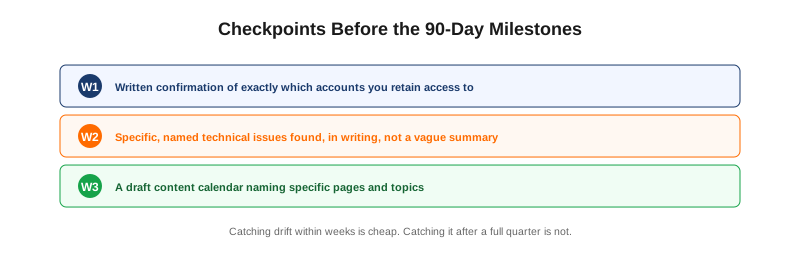
Beyond the broad day 1-14, day 15-45, and day 46-90 windows, a handful of smaller, specific checkpoints tell you whether the engagement is on track before an entire phase concludes. Within the first week, you should have received a written confirmation of exactly which accounts you retain access to and which the agency needs added to. Within the first ten days, a specific list of technical issues found, not a vague "several issues identified," should exist in writing. By the end of week three, at least a draft content calendar naming specific pages and topics, not just a general commitment to "regular content," should be in your hands.
These smaller checkpoints matter because a 90-day window is long enough for a genuinely disorganised engagement to drift without any single moment feeling like a clear failure. Checking for these specific, earlier deliverables catches drift within weeks rather than allowing an entire quarter to pass before any real problem becomes obvious.
What a Sample Weekly or Biweekly Update Should Actually Look Like
Beyond the formal monthly report, many well-run engagements include a shorter, more frequent check-in, a brief email or message covering what was worked on that week, any blockers encountered, and what is planned next. This does not need to be lengthy. A useful biweekly update might read: "Completed technical fixes on the pricing and services pages this week, addressing the duplicate title tag issue found in the initial audit. Beginning research for the two blog posts planned for next week, targeting [specific topic]. No blockers currently." This kind of specific, brief cadence gives you continuous visibility without waiting a full month for the next formal report, and its absence, silence between monthly reports, is itself worth asking about directly.
How Expectations Differ by Business Type During Onboarding
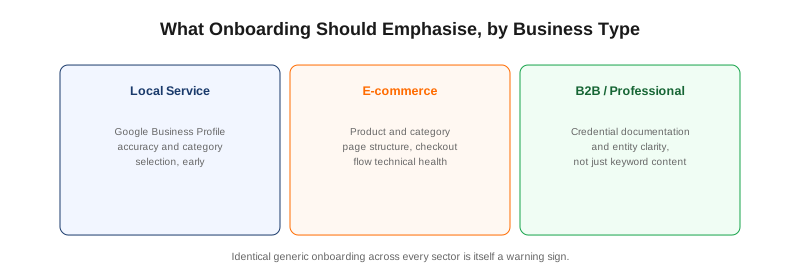
A local service business should expect early attention to Google Business Profile accuracy and category selection alongside the broader technical audit, since local pack visibility often responds faster than competitive organic terms and provides an earlier, encouraging signal during the first 90 days specifically. An e-commerce business should expect the initial audit to cover product page structure, category page organisation, and checkout flow technical health specifically, not just blog-style content planning, since these structural elements often matter more to a retail site's SEO foundation than content volume alone. A B2B or professional services business, similar to the manufacturing exporters and CA firms covered elsewhere in this content series, should expect the first 90 days to include genuine attention to credential documentation and entity clarity, not just generic keyword-targeted content, given how heavily these signals weigh for this category specifically.
Red Flags Specific to Certain Onboarding Patterns
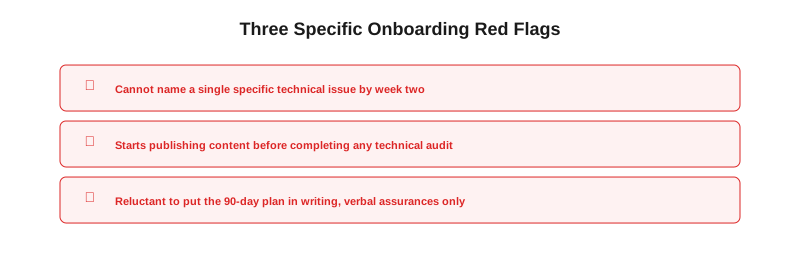
Beyond the general red flags already covered, a few more specific patterns deserve direct attention. An agency that cannot name a single specific technical issue found in your website by the end of the first two weeks, despite claiming an audit was completed, likely ran an automated scan without genuine manual review. An agency proposing to begin publishing new content before completing any technical audit at all is prioritising visible activity over the foundational work that actually determines whether that content will perform. And an agency reluctant to put its 90-day plan in writing, offering only verbal assurances, is avoiding the kind of accountability a written plan naturally creates.
Why Recent Algorithm Activity Makes Early Diligence More Important
Google's spam update activity through 2026, covered throughout this content series, has consistently targeted low-effort, quickly-produced content and shortcut-based technical practices. This context matters directly for evaluating a new agency's first 90 days: an agency rushing to publish high volumes of thin content in its first month, or applying quick technical fixes without genuine understanding of your site's specific structure, is building on exactly the foundation recent updates have made riskier. A slower, more deliberate onboarding that prioritises genuine quality over visible speed is not underperforming. It is working in a way more likely to hold up under continued algorithm scrutiny.
The Cost of Skipping This Scrutiny
A business that signs with an agency and simply waits passively for 90 days, checking in only when the first invoice comes due, loses the single window where course-correction is cheapest and least disruptive. Catching a vague, unspecific audit in week two costs little, a direct conversation, possibly a request for more specificity before proceeding further. Catching the same problem in month five, after real budget has been spent and real time has passed, costs considerably more, both in wasted spend and in the compounding opportunity cost of months where genuine progress could have been happening instead.
This is precisely why the specific, checkable deliverables covered throughout this guide matter as much as the broader 90-day narrative. A business owner who knows what to look for in week one, week three, and month one is positioned to catch a genuine problem early, when the cost of addressing it is still low, rather than discovering it only once a full quarter, and a meaningful budget, have already passed.
An Illustrative Example of Two Different First 90 Days
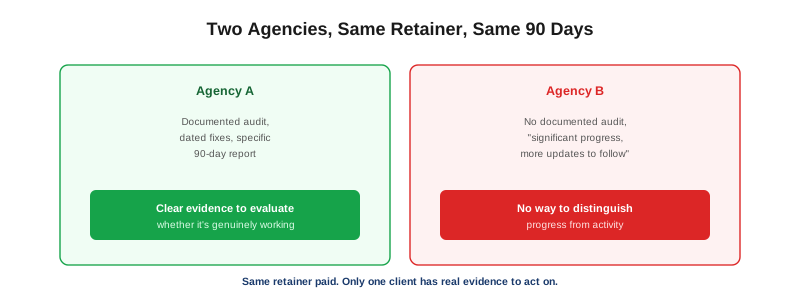
Consider a hypothetical case reflecting a common pattern: two Bangalore businesses sign with different agencies in the same month, each paying a comparable monthly retainer. The first agency spends its initial two weeks on genuine access setup and a specific, documented audit naming real issues, ships its first technical fixes by week four with dated confirmation, and delivers a detailed 90-day report showing exactly which pages were touched and why. The second agency sends a generic welcome email, begins publishing blog posts within the first week without ever completing a documented audit, and delivers a 90-day report reading only "significant progress made across multiple fronts, more updates to follow."
By the end of the 90-day window, the first business has a clear, specific record of what changed and why, genuine evidence to evaluate whether the engagement is working as intended. The second business has vague reassurance and no real way to distinguish genuine progress from simple activity. Both businesses may have paid identical amounts. Only one has the specific evidence needed to make an informed decision about continuing, adjusting, or ending the relationship.
Setting Up Your Own Tracking Alongside the Agency's
Even with a genuinely diligent agency, maintaining your own simple record during the first 90 days protects you and creates a useful shared reference point. Note the date you granted access to each account, the date you received the initial audit, and the date each major deliverable, the content calendar, the first technical fixes, the first monthly report, actually arrived relative to when it was promised. This does not require sophisticated tools, a simple note or spreadsheet entry each time something is delivered is sufficient.
This record serves two purposes. It gives you an objective basis for any conversation about pacing or delays, rather than relying on memory or general impression. And it demonstrates to your agency, implicitly, that you are tracking the engagement closely, which tends to reinforce the kind of specific, timely communication a well-run onboarding should already include. Businesses that track this way from day one rarely find themselves in month four wondering vaguely whether things are on schedule, since they have a clear, specific record answering that question directly.
How to Verify Progress Without Technical Expertise
You do not need to understand SEO technically to verify whether the first 90 days went well. Ask to see the actual Search Console data yourself, not a summarised screenshot, and confirm the numbers in any report match what you can see directly in your own account. Ask for specific examples: which three pages were changed and why, which two pieces of content were published and what research informed them, which technical issues were fixed and how you can verify the fix yourself by viewing the page source or a tool like Google's Rich Results Test. An agency confident in its work will walk through this without hesitation. One relying on vague reassurance will resist specifics or redirect to generic industry explanations instead of your actual account.
What Genuinely Stays the Same
None of this replaces the fundamentals covered in choosing the right agency in the first place or in verifying AI search readiness specifically. This 90-day window is where those earlier promises either get proven true or revealed as sales language that did not survive contact with actual work. A business that applies the specific, checkable standards covered throughout this guide protects itself from months of ambiguous progress, replacing anxious guesswork with a clear, evidence-based read on whether the relationship is genuinely delivering what was promised.
Frequently Asked Questions
Should I expect ranking improvements within the first 90 days?
For competitive terms, generally no. Low-competition local terms sometimes move within this window, but competitive city-wide or national terms typically take four to eight months of consistent work. What you should see in 90 days is evidence of real technical and content work, not final rankings.
What if my agency says results take longer than 90 days to even evaluate?
That can be genuinely true for competitive terms, but it should not prevent them from showing specific, verifiable work completed so far, technical fixes with dates, content published with real research behind it, a clear baseline established at the start.
Is it normal to not see much change in the first month?
Yes, the first month is typically foundational, audits, access setup, baseline documentation, rather than visible ranking movement. Concern is warranted if this foundational work itself is vague or unverifiable, not if rankings simply have not moved yet.
What should I do if red flags show up in the first 90 days?
Raise them directly and specifically rather than waiting to see if things improve. An agency's response to direct, specific concern early in the relationship tells you a great deal about how the rest of the engagement will go.
How does this connect to choosing the right agency in the first place?
This builds directly on the traditional hiring checklist. Good vetting before signing reduces but does not eliminate the need for continued scrutiny during onboarding, since even a well-vetted agency needs to actually execute what it promised.
Should onboarding expectations differ based on my business type?
Yes, meaningfully. A local service business should see early Google Business Profile attention, an e-commerce business should see structural and category-page focus, and a B2B or professional services business should see genuine credential and entity-clarity work, not identical generic content planning applied regardless of sector.
What is the single most important document to have by the end of week two?
A specific, written list of technical issues found during the initial audit, naming actual pages and problems, not a general statement that "issues were identified." This single document reveals more about audit quality than almost anything else in the first two weeks.
How often should I expect updates beyond the formal monthly report?
A brief biweekly or weekly check-in, even a short email covering what was worked on and what is next, is a reasonable expectation for a well-run engagement and provides continuous visibility between the less frequent formal reports.
Related Reading
SEO Company in Bangalore
Our flagship Bangalore SEO service.
SEO Agency in Bangalore
ROI-focused SEO for Bangalore businesses across industries.
How to Choose an SEO Company in India
The full hiring checklist to use before you sign.
Questions to Ask Before Hiring an SEO Agency
The AI-search specific questions to add to your evaluation.
SEO Company Contract Red Flags
What to check before signing anything.
Our Story
How OneCity started in 2006 and what changed along the way.
SEO Company in Bangalore
Our flagship Bangalore SEO service.
SEO Agency in Bangalore
ROI-focused SEO for Bangalore businesses across industries.
How to Choose an SEO Company in India
The full hiring checklist to use before you sign.
Questions to Ask Before Hiring an SEO Agency
The AI-search specific questions to add to your evaluation.
SEO Company Contract Red Flags
What to check before signing anything.
Our Story
How OneCity started in 2006 and what changed along the way.
OneCity Technologies Pvt Ltd (CIN: U72100KA2009PTC048911, incorporated 2009) has run SEO campaigns since 2006. Every recommendation in this guide reflects what we apply in our own client onboarding. Written by L.K. Monu Borkala, Founder & CEO. Verify our registration at the MCA21 portal. | Updated:
Curious What Your First 90 Days With Us Would Look Like?
Ask us to walk through our actual onboarding process before you sign anything, not just after.
Rajajinagar, Bengaluru · Kankanady, Mangaluru · Kuvempu Nagara, Mysuru