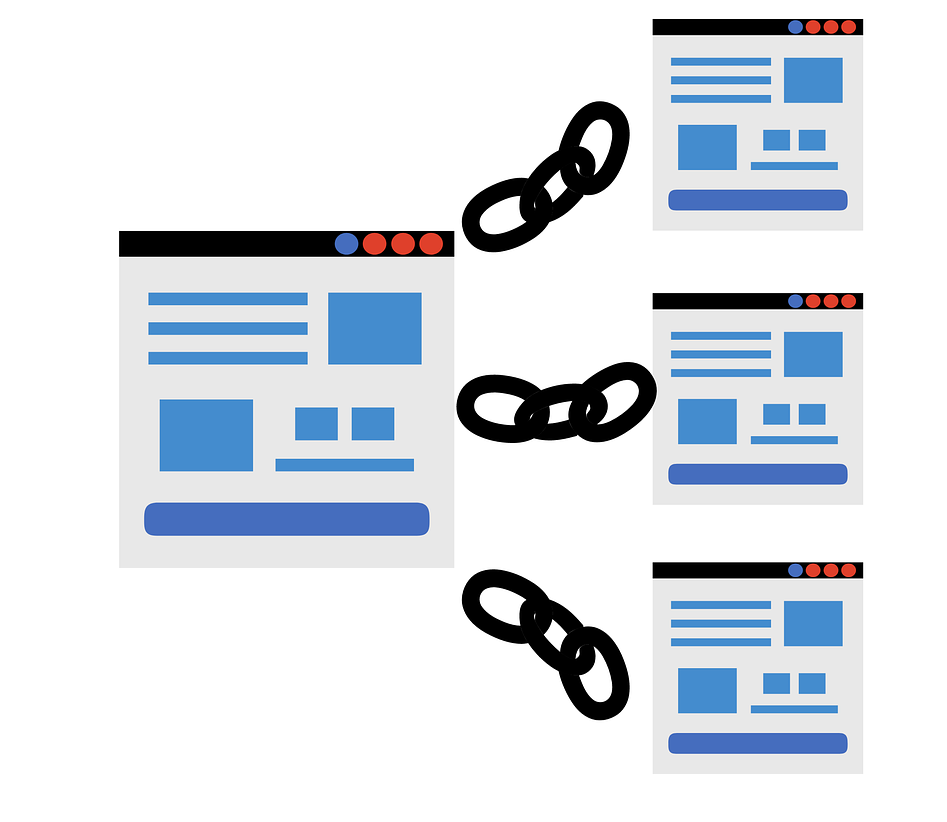
The short answer: outbound links are not a confirmed direct ranking factor, but controlled experiments show that pages linking to authoritative external sources consistently rank higher than identical pages without outbound links. Google treats outbound links as quality signals — they help search engines understand your content’s context, verify your claims, and assess whether you are citing credible sources under the E-E-A-T framework.
This guide covers the evidence, Google’s own statements, the Reboot Online experiment data, and a practical outbound link strategy for business websites. If you manage a blog or service pages for an Indian business, this tells you exactly when, where, and how to link externally — and when not to.
What Google Actually Says About Outbound Links
Before looking at experiments and correlation data, here is what Google’s own people have said on record. These statements matter because they define the boundary between confirmed ranking factors and observed effects.
| Who | When | Statement | Context |
|---|---|---|---|
| John Mueller | August 2023 | “Nothing happens. Why should it?” — on linking to Wikipedia to boost rankings | Reddit AMA, responding to whether linking to popular sites helps SEO |
| Google SEO Starter Guide | Current | Links “can provide more context on a topic, both for users and search engines, which may help demonstrate your knowledge on a topic” | Official documentation — phrased as “can” and “may,” not “will” |
| Gary Illyes | 2019 | Nofollow, sponsored, and ugc are treated as “hints” not directives since September 2019 | Google announcement changing how nofollow links are processed |
| Matt Cutts | 2009 (historical) | Linking to relevant, quality external resources can be a good signal for search engines about the topic of your page | Google Webmaster Help video |
The consistent message: outbound links are not a confirmed direct ranking factor. Google will not bump your page up because you linked to Wikipedia. But outbound links provide context signals that help Google understand what your page is about, who you are citing, and whether your content is well-researched. That distinction — direct factor vs contextual signal — is what most SEO guides get wrong.
The Reboot Online Experiment: What the Data Shows
The most cited study on outbound links and rankings is the Reboot Online experiment, conducted in 2016 and repeated in 2020. Here is exactly what they did and found.
Methodology
- Registered 10 brand-new domains simultaneously (aveoningon.co.uk through jundbaramn.co.uk)
- Each site published a single 300-word article with identical structure and keyword density
- Tracked rankings for two made-up keywords with zero existing search volume: “Phylandocic” and “Ancludixis”
- 5 domains included dofollow outbound links to authoritative sources (Oxford University, Cambridge University, US National Human Genome Research Institute)
- 5 domains had identical content but no outbound links
- Sites were indexed in alternating order to reduce sequence bias
Results
After five months, all five sites with outbound links ranked above all five sites without outbound links — for both tracked keywords. The separation was consistent and complete: not a single non-linking site outranked any linking site.
Reboot Online repeated the test on fresh domains in April 2020 and confirmed: “External links remain a ranking factor and good SEO best practice.”
What This Proves and What It Does Not
| What the Experiment Shows | What It Does Not Show |
|---|---|
| Pages with outbound links to authoritative sources rank higher than identical pages without them, in an isolated test environment | That outbound links are a stronger signal than content quality, backlinks, or user engagement |
| The effect is reproducible (confirmed across two separate tests four years apart) | The magnitude of the ranking boost relative to other factors |
| Linking to authoritative .edu and .gov sites created a measurable positive signal | Whether linking to any external site (including low-quality ones) produces the same effect |
| The effect persisted over a 5-month observation period | How this interacts with competitive keywords where hundreds of other signals are in play |
This is the best controlled experiment available on this topic, but it tested a narrow scenario: new domains, made-up keywords, zero competition. Real-world SEO involves dozens of overlapping signals. Treat the Reboot data as evidence that outbound links contribute positively — not as proof that adding external links will override poor content or weak backlink profiles.
How Outbound Links Function as Quality Signals
Even though outbound links are not a confirmed direct ranking factor, they serve multiple indirect functions that affect your rankings and visibility. Understanding these functions helps you link strategically rather than linking randomly.
Topical Association and Contextual Signals
When your page about SEO services in Bangalore links to Google Search Central documentation, Moz’s ranking factor study, or a Search Engine Journal analysis, Google gains additional context about your page’s topic. Your outbound links tell the algorithm: “this page is about SEO, and the author is citing recognized sources in this field.” That contextual signal helps Google categorize and rank your content for relevant queries.
E-E-A-T and Source Attribution
Google’s E-E-A-T guidelines (Experience, Expertise, Authoritativeness, Trustworthiness) reward content that demonstrates credible knowledge. Citing verifiable sources through outbound links is one of the clearest signals of expertise. A blog post claiming “SEO generates 53% of all website traffic” with a link to the BrightEdge study that produced that statistic signals: the author did the research, found the source, and is transparent about where the data comes from.
Content without outbound citations — especially data-driven content — looks like it was either made up or generated by AI. In 2026, with Google’s March and August Spam Updates specifically targeting AI-generated and unverified content, source attribution through outbound links is a trust signal that separates legitimate content from thin, unverified pages.
User Experience Signal
Outbound links to relevant resources improve the user’s experience on your page. A reader researching technical SEO terms benefits from links to Google’s official documentation for specific concepts. That reader stays engaged longer, finds your content more useful, and is more likely to return — all behavioral signals that Google tracks through Chrome data and search result click patterns.
AI Search Visibility
The OppAlerts study of approximately 167,000 domains found a +0.148 correlation between top Google rankings and AI assistant citations. Well-sourced pages with quality outbound links are more likely to be cited by AI search tools including Google AI Overviews. As AI Overviews now appear in 40%+ of local search queries, building pages that AI can verify through your cited sources becomes increasingly important for visibility.
Types of External Links: Dofollow, Nofollow, Sponsored, and UGC
Not all outbound links carry the same weight or serve the same purpose. Google recognizes four types of link attributes, and using the correct one for each context protects your site and sends the right signals.
| Link Type | HTML Attribute | What It Tells Google | When to Use |
|---|---|---|---|
| Dofollow | (no attribute — default) | You endorse this page; pass link equity | Research papers, government data, industry studies, official documentation, non-competitive authoritative sources |
| Nofollow | rel=”nofollow” | You are linking but do not necessarily endorse; treated as a “hint” since September 2019 | Competitor sites, social media profiles, any link where you cannot vouch for future content quality |
| Sponsored | rel=”sponsored” | This link was paid for or part of a sponsorship | Affiliate links, paid partnerships, advertiser links, sponsored content references |
| UGC | rel=”ugc” | This link was added by a user, not the site owner | Blog comments, forum posts, community contributions, user-submitted content |
Important since September 2019: Google treats all three non-dofollow attributes (nofollow, sponsored, ugc) as “hints” rather than directives. This means Google may choose to crawl and count a nofollow link if it deems the link valuable. The attributes inform Google’s understanding but do not absolutely block link equity flow.
Outbound Link Strategy: When and How to Link Externally
Here is a practical framework for outbound linking that works across blog posts, service pages, and content marketing pages. This approach is based on what we implement across content writing projects at OneCity for clients in Bangalore, Mangalore, and Dubai.
Links That Help Your SEO
- Primary research and studies. Linking to the original study (Reboot Online, ANA/DMA, BrightEdge) when you cite a statistic. Not the blog post that quoted the study — the actual source.
- Government and regulatory data. TRAI reports for telecom data, RBI publications for financial data, MEITY guidelines for IT compliance, NASSCOM reports for industry statistics. These .gov.in links carry inherent authority.
- Industry standard references. Google Search Central for SEO guidance, W3C for web standards, Schema.org for structured data documentation. These are the canonical sources that Google itself recognizes.
- Academic institutions. University research papers, published studies from IIMs, IITs, or international research institutions. The Reboot experiment itself showed that .edu and .gov links created positive ranking signals.
- Tools and calculators. Linking to Google PageSpeed Insights when discussing page speed, or to Schema Markup Validator when discussing structured data. These are utility links that help your reader take action.
Links That Hurt or Add No Value
- Linking to boost rankings. Adding links to Wikipedia, Forbes, or Harvard just to “borrow authority” does nothing. John Mueller’s 2023 statement was direct: “Nothing happens.”
- Linking to competitors’ service pages. Never link to a competitor’s homepage, service page, or product page. If you must reference a competitor, link to a specific data point or study they published — and use nofollow.
- Excessive linking to one domain. Linking to the same external site 8–10 times in one article looks like a paid placement. Vary your sources.
- Linking to content farms and aggregators. Links to low-quality blogs, content farms, or sites with spammy backlink profiles can associate your page with bad neighborhoods. Google’s link graph is bidirectional — where you link reflects on you.
- Broken links. 66.5% of links to sampled sites since 2013 have rotted (Ahrefs). A page full of broken outbound links signals abandoned content. Audit quarterly.
How Many Outbound Links Per Post
There is no Google-specified number. A practical guideline based on what works across our client portfolio:
| Content Length | Recommended Outbound Links | Dofollow | Nofollow |
|---|---|---|---|
| Under 1,000 words | 1–2 | 1–2 | 0 |
| 1,000–2,000 words | 2–4 | 2–3 | 0–1 |
| 2,000–4,000 words | 3–6 | 2–4 | 1–2 |
| 4,000+ words (guides) | 4–8 | 3–6 | 1–2 |
These numbers are guidelines, not rules. A data-heavy article citing 12 studies can justify 12 outbound links. A how-to guide that relies on your own expertise might only need 2. Link when it serves the reader — not to hit a count.
Outbound Links vs Internal Links: Getting the Balance Right
Outbound links send readers (and link equity) to other websites. Internal links keep readers on your site and distribute authority across your pages. Both serve SEO, but they serve different purposes.
| Factor | Outbound Links | Internal Links |
|---|---|---|
| Primary purpose | Cite sources, provide context, signal expertise | Distribute authority, guide navigation, reduce bounce rate |
| Link equity | Passes to external domain | Stays within your domain |
| Recommended ratio | 2–4 per 1,500 words | 8–12 per 1,500 words |
| Risk of excess | Leaks equity, signals thin content | Over-optimization, unnatural anchor text patterns |
| SEO function | E-E-A-T, topical authority, trust | Crawlability, site architecture, topic clusters |
The practical rule: your internal links should outnumber outbound links by 3:1 to 4:1. A 2,000-word blog post should have 8–10 internal links and 2–4 outbound links. The internal links keep users on your site and build your topic cluster structure. The outbound links demonstrate that your content is researched and connected to credible sources.
Common Outbound Link Mistakes on Business Websites
After auditing hundreds of business blogs across Bangalore, these are the outbound link mistakes I see most frequently — and what to do instead.
- No outbound links at all. Pages with zero outbound links look self-referential and unresearched. Even a single link to an authoritative source (a government regulation, an industry standard, a cited study) is better than none. This is especially problematic for data-driven content making specific claims without sources.
- Linking to the wrong level of source. Instead of linking to the original study, most blogs link to another blog that quoted the study. Google values primary sources. If you cite a statistic from BrightEdge, link to the BrightEdge research page — not to the Neil Patel article that mentioned it.
- Opening outbound links in the same tab. Every outbound link should include
target="_blank"to open in a new tab. Sending readers away from your page without a return path increases bounce rate and reduces session duration. Addrel="noopener"for security alongside the target attribute. - Never auditing for broken links. With 66.5% of links rotting over time, quarterly audits are not optional. Use Screaming Frog or Ahrefs to crawl your site and flag 404 outbound links. Fix them by updating the URL, replacing with a current source, or removing the link if the source no longer exists.
- Using generic anchor text. “Click here” and “read more” waste the anchor text signal. Use descriptive anchors that tell both users and Google what the linked page is about: “Reboot Online’s outbound link experiment” is better than “this study.”
- Dofollow links to competitors. If you must reference a competitor’s work, use
rel="nofollow". Passing dofollow equity to a direct competitor’s domain is giving them free ranking juice — especially damaging if they rank for the same keywords you target. - Linking in the first paragraph. Placing an outbound link in your opening paragraph risks losing the reader before they have read your content. Let the reader engage with your expertise first. Place outbound links in the body and conclusion, not the introduction.
- Ignoring link context. A link surrounded by relevant text carries more topical signal than a link dropped randomly. When citing a study, summarize the key finding and then link. The surrounding text helps Google understand why the link is there and how it relates to your page’s topic.
Outbound Link Audit Checklist
Run this checklist quarterly across your blog and service pages. It takes about 30 minutes per 50 pages if you use a crawling tool, or you can have your SEO agency include it in regular site audits.
| Check | Action If Failed | Tool |
|---|---|---|
| Any broken outbound links (404, 500)? | Update URL, replace source, or remove link | Screaming Frog, Ahrefs, Google Search Console |
| Any dofollow links to competitors? | Add rel=”nofollow” or replace with non-competitor source | Screaming Frog outbound link report |
| All outbound links opening in new tab? | Add target=”_blank” rel=”noopener” | Screaming Frog, manual check |
| Any pages with zero outbound links? | Add 1–2 relevant authoritative citations | Screaming Frog custom extraction |
| Any pages with 10+ outbound links? | Review for relevance; remove low-value links | Screaming Frog link count report |
| Affiliate/sponsored links marked correctly? | Add rel=”sponsored” to paid links | Manual audit of affiliate content |
| Anchor text descriptive (not “click here”)? | Rewrite anchor to describe destination content | Screaming Frog anchor text report |
| Linked domains still authoritative? | Replace any that have been compromised, expired, or turned spammy | Ahrefs domain rating check |
Outbound Link Strategy for Different Page Types
Blog Posts
Blog posts have the most room for outbound links because they are informational content. Cite every statistic, reference primary research, and link to tools or resources the reader can use. For an SEO-optimized blog post, 3–5 quality outbound links is the range that signals research without diluting your page authority.
Service Pages
Service pages should have fewer outbound links — typically 0–2. A link to a relevant industry standard or regulation that your service addresses is appropriate (e.g., a hospital software page linking to ABDM compliance documentation). Avoid linking to competitors or comparison sites from service pages.
Product Pages
Keep outbound links to zero on product pages unless linking to manufacturer documentation, compliance certifications, or testing standards that validate your product claims. Every outbound link on a product page is a potential exit point before purchase.
About and Trust Pages
Link to your company registration (MCA portal), industry certifications, awards, press mentions, and professional association memberships. These outbound links reinforce E-E-A-T directly by connecting your claims to verifiable third-party sources.
How OneCity Handles Outbound Link Strategy
At OneCity Technologies, outbound links are part of every content brief. When we write a blog post or service page for a client, the content brief specifies: which statistics to cite, which sources to link (primary source preferred over secondary), link attributes (dofollow for authoritative sources, nofollow for competitors), and anchor text guidelines.
Our quarterly SEO audit includes outbound link health checks across the entire site — broken links, attribute compliance, anchor text quality, and competitive leakage (dofollow links to competitor domains). For clients running content at scale, we maintain a source library of pre-vetted authoritative domains organized by industry and topic.
Founded in 2006 in Bangalore (CIN: U72100KA2009PTC048911), OneCity Technologies manages SEO and content strategy for 650+ clients across Bengaluru, Mangaluru, Mysuru, and Dubai. Contact +91 99023 30233 or visit our contact page.
About the Author
L.K. Monu Borkala is the founder of OneCity Technologies Pvt Ltd (CIN: U72100KA2009PTC048911), a Bangalore-based SEO and digital marketing agency established in 2006. With 20+ years of search marketing experience and hands-on work across 650+ client sites, Monu has managed outbound link strategies, content audits, and E-E-A-T compliance across competitive verticals including healthcare IT, real estate, education, and professional services. Contact: +91 99023 30233.
